Many aspects of daily life, from playtime and study to electronic device usage, can impact a child's vision. Certain daily habits can help reduce eye strain and support children in maintaining healthy eyesight as they grow.
Encourage daily outdoor activities
Parents should encourage children to spend one to two hours outdoors daily. When outside, children's eyes can focus on distant objects, reducing the constant near-vision strain associated with phones, computers, or indoor reading. Activities like walking, cycling, playing soccer, badminton, or simply enjoying outdoor play can be beneficial.
Allow eyes to rest after periods of near-vision tasks
When studying, reading, or using devices, children should take breaks instead of engaging in prolonged near-vision tasks. The European Society of Ophthalmology recommends that children rest their eyes after approximately 30-45 minutes of near work. During these breaks, children can look away from their books or screens, focus on distant objects, or switch to a different activity. These short breaks help relax the eyes and reduce eye strain from extended near focusing.
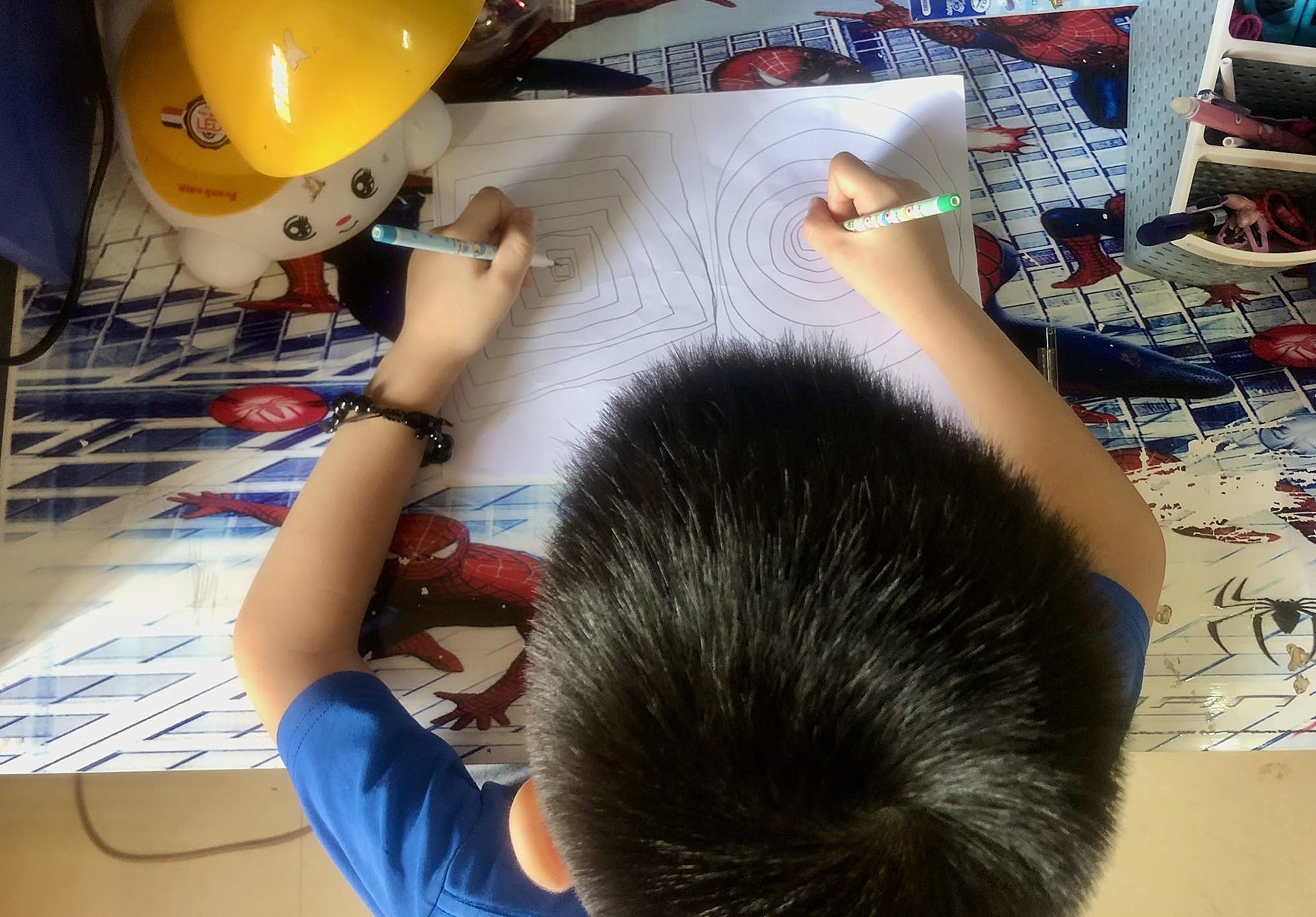 |
A child focuses on an eye exercise by tracing lines on paper. Photo: Pham Duy |
A child focuses on an eye exercise by tracing lines on paper. Photo: Pham Duy
Maintain proper distance when reading and using devices
Children should avoid reading, writing, or using phones and computers at excessively close distances. Experts advise maintaining an appropriate distance (at least 30 cm), preventing books, notebooks, or screens from being too close to the eyes during near-vision activities. Viewing at an overly close range can lead to eye strain. In addition to maintaining proper distance, parents should remind children to sit upright rather than leaning too close when studying or playing.
Ensure adequate lighting for studying and reading
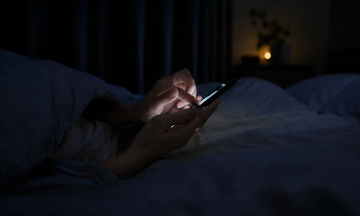
Children should study and read in well-lit areas, avoiding situations where their eyes must strain to focus on books or screens in dim environments. Besides increasing outdoor time, myopia prevention guidelines also advocate for optimizing lighting in living and learning spaces.
However, it is important not to interpret this as reading in the dark directly causing myopia. The key is to create a comfortable visual environment, preventing children from leaning too close or straining their eyes while reading.
Seek eye exams for unusual signs
Regular eye exams help detect vision problems early, especially in children whose parents have myopia or who are at high risk. Early detection is crucial because the younger the age of myopia onset, the higher the risk of progression later in life.
Signs to watch for include a child frequently squinting when looking at distant objects, sitting too close to the television, holding books or phones near their face, struggling to see words on the board, or often complaining of eye strain or headaches. If these signs appear, children should undergo a specialized eye examination to check their vision.
Bao Bao (Synthesis)
| Readers can submit questions about ophthalmological conditions here for doctors to answer. |