Ms. Hanh wore a waist trainer for 6-8 hours daily. After three days, the skin around her abdomen became red, itchy, and burned. About one week later, tiny blisters appeared, oozed fluid, and crusted over. Self-treatment did not improve her condition; the blisters spread to her back, chest, arms, thighs, armpits, and groin. Her skin became intensely itchy, thick, and cracked, with many areas developing painful, oozing ulcers.
Doctor Nguyen Thi Viet Ha from Tam Anh Cau Giay General Clinic diagnosed Ms. Hanh with severe irritant contact dermatitis. The condition originated from skin areas directly exposed to the waist trainer's synthetic materials. The inflammatory reaction spread systemically due to the body's auto-sensitization to the initial inflammatory triggers, resulting in a widespread acute dermatitis that is complex to treat.
Waist trainers are often made from synthetic rubber, nylon fibers, and polyester, frequently with a heat-retaining lining designed to increase perspiration. When worn tightly for many hours, the skin experiences continuous friction, and sweat becomes trapped, creating a moist, high-temperature environment. Simultaneously, dyes, rubber, and adhesives from the materials directly contact the skin. These factors create favorable conditions for irritant contact dermatitis.
When the skin's protective barrier is compromised, inflammatory agents penetrate, causing redness, swelling, itching, and oozing. In some cases, the body triggers an auto-sensitization reaction, leading to widespread and increasingly severe inflammation. Continued use of the waist trainer causes repeated irritation, with lesions spreading beyond the abdominal area to other parts of the body.
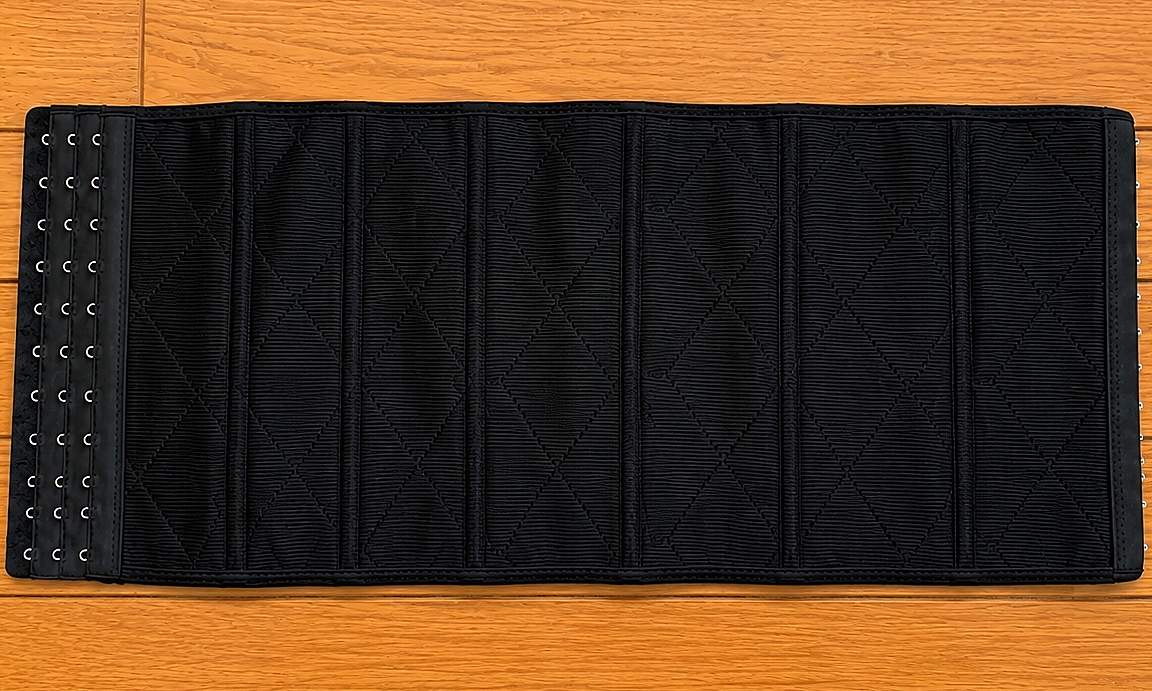 |
The type of waist trainer Ms. Hanh used previously. *Photo: Patient provided* |
Doctors prescribed Ms. Hanh a treatment regimen including topical medications, systemic anti-inflammatory and anti-allergic drugs, combined with intensive skin care and bandaging of ulcerated areas to prevent infection. Due to the extensive affected area, significant oozing, and high risk of secondary infection, treatment lasted many days. If treatment is delayed, widespread skin ulcers can lead to skin infections, or even sepsis if bacteria enter through areas where the skin's protective barrier is lost.
After almost two weeks of intensive treatment, the inflammation was controlled, and her skin began to regenerate. However, patients require long-term monitoring due to the risk of post-inflammatory hyperpigmentation and scarring.
Doctor Ha advises against prolonged use of waist trainers, especially if the skin shows signs of irritation. If use is necessary, individuals should wear them for only short periods, choose breathable materials, and closely monitor their skin's reaction. Contact dermatitis typically recovers quickly if treated in its early stages. However, if left untreated, lesions can spread, making treatment complex and increasing the risk of long-term complications.
Thanh Ba