Thao, 64, from Xuan Du commune, Thanh Hoa province, was bitten by a dog three days ago but refused to get a rabies vaccination. The bite on his right leg left several tooth marks and bled profusely. However, he did not get vaccinated or inform the dog's owner, out of deference to his neighbor and a belief that pet dogs are safe.
That evening, while speaking with his son's family who live and work in Ha Noi, Thao recounted the dog bite incident. Tuan, his son, immediately urged his father to get vaccinated. However, by the evening of the second day, seeing his father still unwilling to go, Tuan, unable to request official leave, accepted a penalty and a one-day salary deduction to take a bus back to his hometown and ensure his father received the rabies vaccination.
"After the holiday, my company has an urgent project, so I have to be on call, making it very difficult to request leave. But I know my father's personality; only I can make him go get vaccinated," Tuan said.
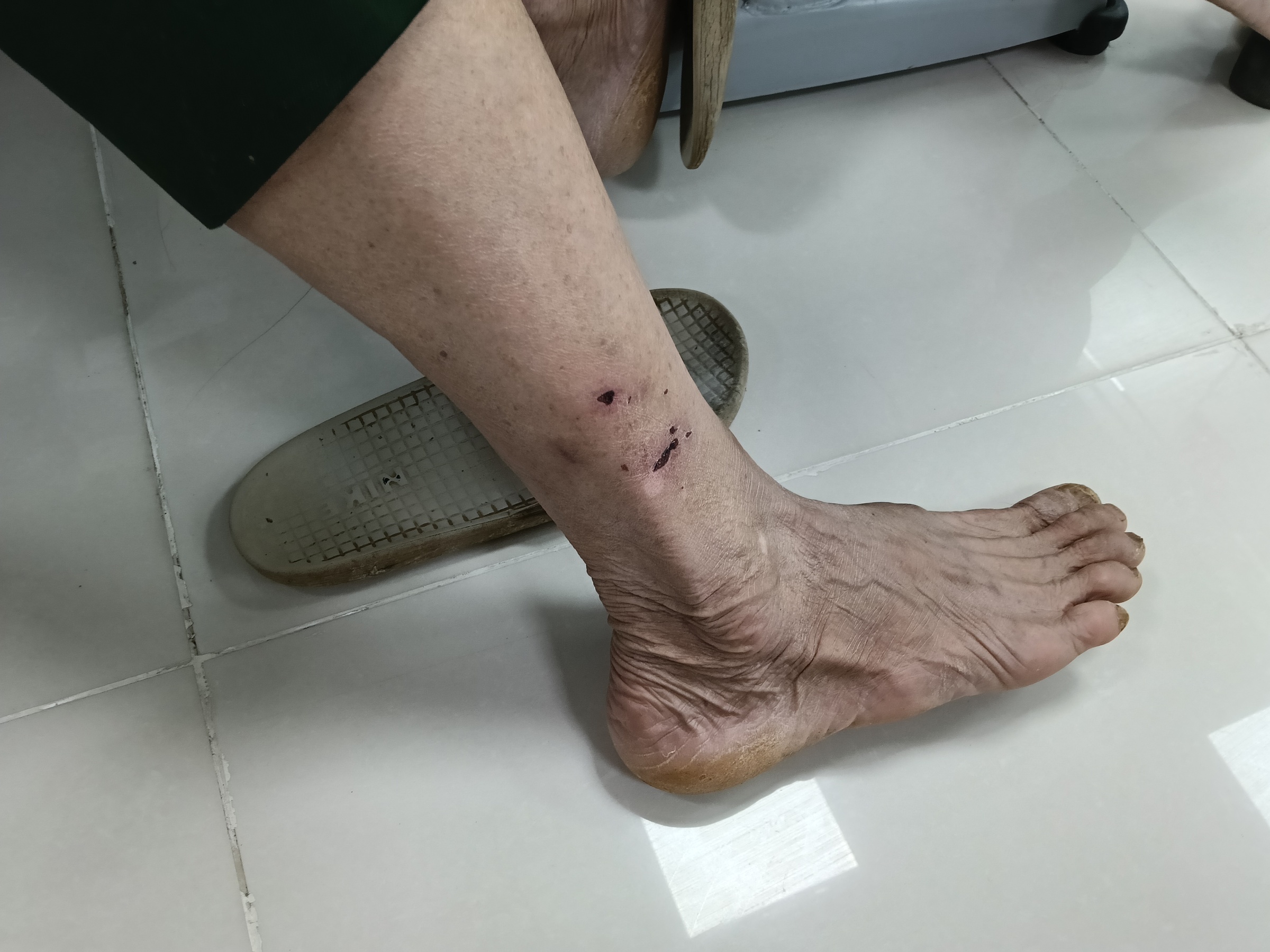 |
Thao's leg wound on the 6th day, when he received his second vaccine dose at VNVC Trieu Son vaccination center, Thanh Hoa. Photo: Tuan Kiet |
Quynh, 58, from Lam Dong, was scratched by a wild cat on the back of her hand, breaking the skin and drawing blood, while working in the fields in early May. She considered it a minor injury, common in rural areas where cat and dog scratches are frequent, so she paid little attention.
Her daughter urged her mother to get a rabies vaccination, but to no avail. Unexpectedly, the next morning, her daughter arrived at the house, both pleading and insisting her mother get on the motorbike to be taken for the shot.
"I thought my daughter was overreacting; it was just a tiny cat scratch, why would I need a shot? I only went to ease my daughter's mind so she could go to work, fearing she would quit her job again, which would affect her career," Quynh said.
Dr. Le Thi Minh Nguyet, Medical Manager at VNVC Vaccination System, stated that many elderly people often hesitate to get rabies vaccinations, only reluctantly agreeing after persuasion from their children or grandchildren, as seen in the cases of Thao and Quynh. The reasons include concerns about vaccines affecting nerves and memory, complacency due to believing pet dogs and cats are harmless, underestimating minor injuries, or being reluctant to spend money.
The doctor warned against complacency regarding rabies, as there is currently no cure. Nearly 100% of rabies cases result in death. Besides dogs and cats, many other warm-blooded animals such as monkeys, squirrels, weasels, and bats can also transmit the disease. In the first five months of this year (2026), the country recorded at least 30 deaths, with numerous outbreaks of rabid dogs appearing. Some deaths occurred months after being scratched by a cat or bitten by a dog.
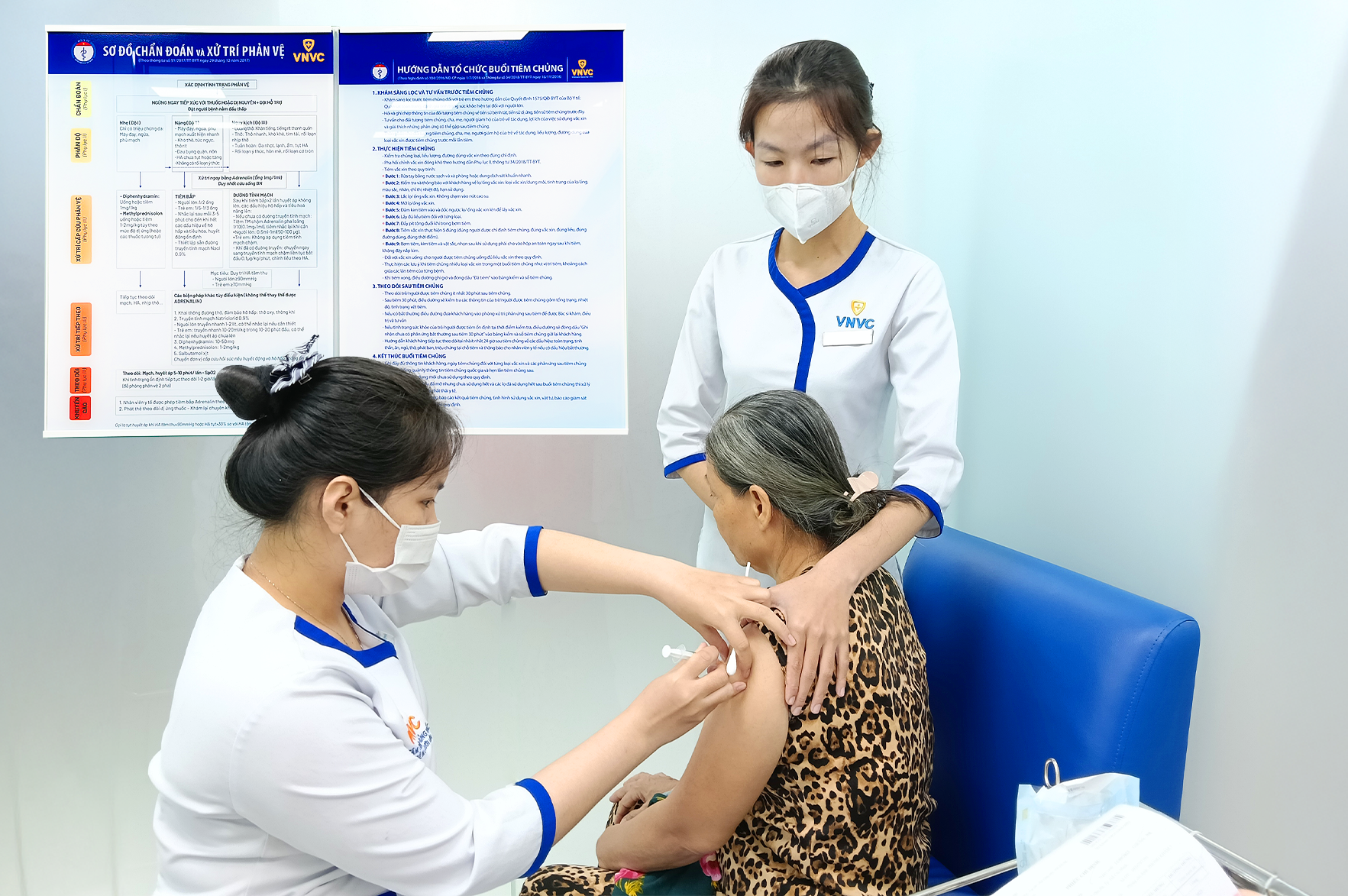 |
An elderly woman receives a rabies vaccine after a dog bite at VNVC. Photo: Hoang Duong |
The rabies virus has an incubation period of 2–8 weeks, which can be as short as 10 days or extend to several years. According to the Ministry of Health, regardless of whether an animal has been vaccinated, people still need to complete their full vaccination course. This is currently the only preventative measure for the disease.
Before vaccination, Dr. Nguyet advised that individuals properly manage the wound by washing it under continuously running clean water with soap for at least 15 minutes and disinfecting it with alcohol or an antiseptic solution before seeking vaccination.
Additionally, individuals frequently exposed to dogs, cats, or warm-blooded wild mammals can proactively get pre-exposure rabies vaccinations, which consist of three doses. If a full course of pre- or post-exposure vaccines has already been administered, any subsequent bites or scratches will only require two booster vaccine doses, without the need for serum.
Tuan Kiet