Answer:
Children can still experience recurrent pneumonia during the summer due to sudden temperature changes, overly cold air-conditioned rooms, and excessive sweating that is not promptly dried. Untreated upper respiratory infections also pose a significant risk.
Parents should prevent children from experiencing sudden changes in environmental temperature. If using air conditioning, families should maintain the temperature around 25-26 degrees Celsius and avoid directing airflow directly onto the child's face or chest. After a child returns from playing outdoors in the sun, after bathing, or after physical activity, parents should dry their sweat and stabilize their body temperature before allowing them into an air-conditioned room.
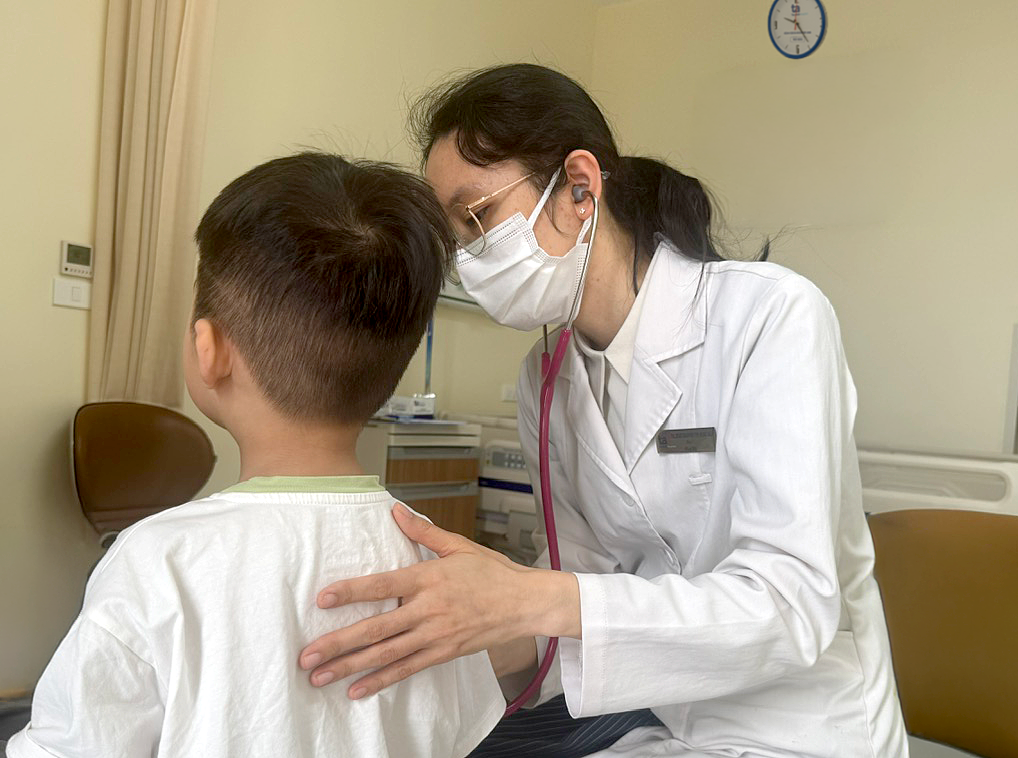 |
A doctor listens to a child patient's lungs. *Photo: Tam Anh Cau Giay General Clinic*
Avoid keeping children in sealed air-conditioned rooms for too long. Turn off the air conditioner and open the door to allow the room temperature to gradually balance with the outside temperature before taking the child out. Rooms should be well-ventilated, and air conditioners should be cleaned regularly. Opening windows or using a fan can help circulate air at appropriate times. Families may also consider using a humidifier, maintaining humidity levels between 40-70%.
Children should engage in physical activity during cooler periods, such as early morning or late afternoon, to help them adapt to harsh weather conditions and build resilience.
For children who have previously had pneumonia, it is crucial to maintain clean airways, ensure adequate hydration, provide sufficient nutrition, and ensure enough sleep to support their immunity. Parents should properly clean the child's nose and throat with physiological saline solution. Limit the child's exposure to individuals who are coughing, feverish, or have a runny nose, and avoid cigarette smoke and dusty environments.
Children should receive all vaccinations according to schedule, especially vaccines that reduce the risk of respiratory illnesses such as influenza, pneumococcal disease, and the 6-in-1 vaccine, as advised by a doctor. If a child experiences persistent high fever, progressively worsening cough, rapid breathing, wheezing, difficulty breathing, refusal to eat, extreme fatigue, bluish lips, or chest indrawing during breathing, they should be taken to a medical facility immediately. Parents must not administer antibiotics without a doctor's prescription.
Doctor Bui Thi Khuyen, Specialist in Pediatrics
Pediatrics Department
Tam Anh Cau Giay General Clinic
| Readers can submit respiratory health questions here for doctors to answer |