When kidney function declines severely, the body loses its ability to eliminate toxins, excess water, and balance electrolytes. In such cases, patients may be prescribed kidney replacement therapies, including hemodialysis, peritoneal dialysis, or kidney transplantation, according to Dr. Ho Tan Thong, from the Nephrology and Dialysis Unit at Tam Anh District 7 Polyclinic.
Hemodialysis is a common treatment. Typically, each blood purification session lasts about four hours and is performed three times a week, depending on the patient's health. Dr. Thong outlines the four stages of the hemodialysis process:
The first stage involves a pre-dialysis check. Patients have their blood pressure, pulse, temperature, and weight measured. The doctor also assesses symptoms such as shortness of breath, fatigue, edema, muscle cramps, and the weight after the previous session. This step helps evaluate the amount of excess fluid in the body, allowing for appropriate adjustments to the filtration level.
Next, the patient is connected to the dialysis machine. A nurse connects the patient to the blood purification system via an arteriovenous fistula (AV fistula) in the arm or a dialysis catheter.
The third stage is the commencement of blood purification. Blood from the body flows through a dialyzer, where toxins like urea and creatinine are removed, excess water is withdrawn, and electrolytes are rebalanced. The purified blood then returns to the body.
Throughout the dialysis process, patient indicators such as blood pressure, heart rate, and filtration speed are continuously monitored. Should a patient exhibit signs like low blood pressure, muscle cramps, or mild fatigue, the doctor or nurse provides support to stabilize their condition.
The final stage is the conclusion of the session. After approximately four hours, the machine returns all blood to the body, the needle is removed, and a compression bandage is applied to stop bleeding. The patient is weighed again to check the amount of fluid removed; if stable, they can go home.
Dr. Thong states that the blood purification process is generally gentle, with only some individuals experiencing mild pain during needle insertion. During dialysis, patients can eat, rest, read, use their phones, or converse. After an adaptation period, most patients gradually become accustomed to the regular dialysis schedule and maintain a relatively stable daily routine; some even take the opportunity to work on-site.
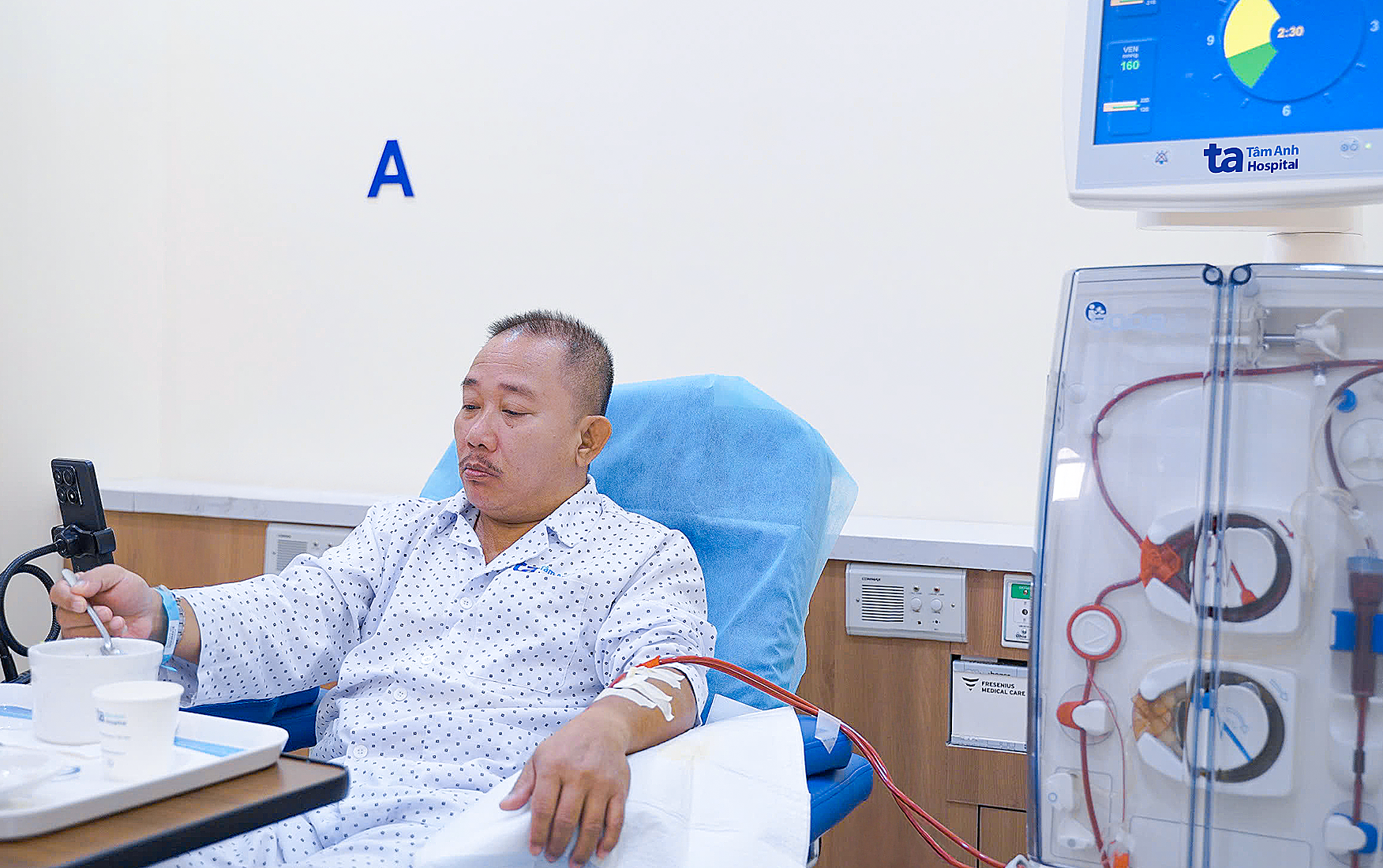 |
A patient undergoing regular hemodialysis using the HDF online method. Photo: Tam Anh District 7 Polyclinic |
Dialysis not only helps eliminate toxins but also improves quality of life, enabling many kidney failure patients to continue their studies, work, and daily activities long-term. Tam Anh General Hospital implements online hemodiafiltration (HDF online), an advanced blood purification technique that enhances the removal of medium-molecular-weight toxins and reduces symptoms like itchy skin and fatigue for patients.
For effective treatment, patients must adhere to their dialysis schedule, limit excessive fluid intake between sessions, maintain a suitable diet, and monitor their vascular access (AV fistula) daily. If symptoms such as shortness of breath, significant edema, fever, or pain appear, patients should seek hospital examination promptly.
Dinh Lam