On 23/1, Doctor Nguyen Minh Hao Hon, Head of the Rhinology Department at Ho Chi Minh City Ear, Nose, and Throat Hospital, reported that the patient's left eye was protruding and misaligned, causing a heavy sensation and mild vision loss. About a year prior, the eye protrusion gradually worsened, accompanied by watery eyes and clear nasal discharge. As there was no headache or nasal congestion, the patient did not seek medical attention.
The patient's medical history revealed a traffic accident in 2003 that caused head and facial trauma. He underwent eye surgery about 19 years ago for eye protrusion, but no records were available. Doctors believe this trauma likely initiated the slow, long-term development of the mucocele.
A CT scan revealed a left frontal sinus mucocele, approximately 3 cm in size, which had destroyed the frontal sinus bone and the superior and medial walls of the left eye socket. It was also accompanied by chronic pansinusitis. The mass compressed and displaced the eyeball and ocular muscles, leading to the pronounced eye protrusion.
The patient underwent endoscopic sinus surgery, utilizing a 3D navigation system and an auxiliary incision to drain the mucocele. Concurrently, the frontal sinus was obliterated using abdominal fat. Following the operation, the left eye ceased to protrude, and the patient's vision improved. He was discharged after seven days.
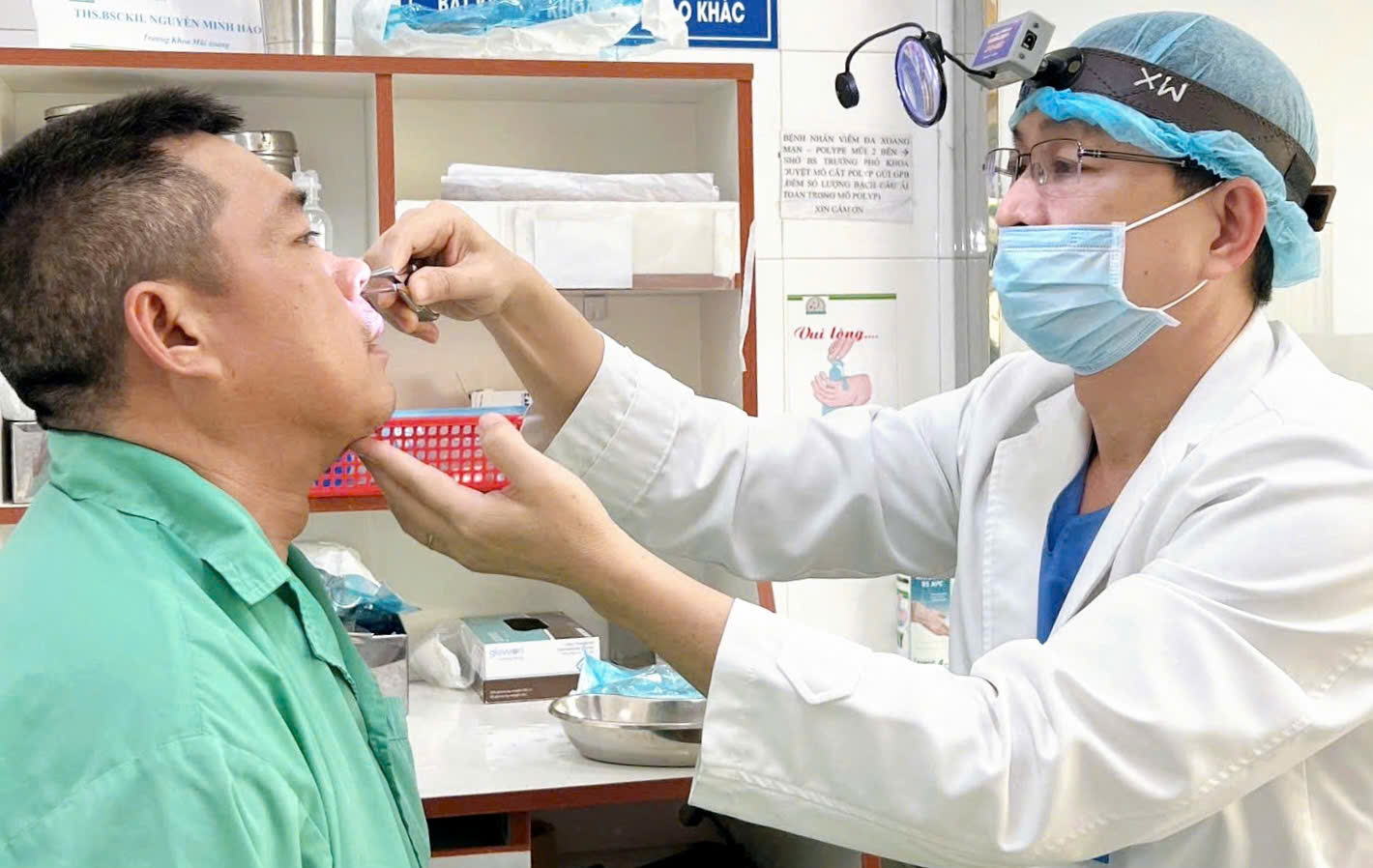 |
Doctor Hon examines the patient after surgery. Photo: Hospital provided |
According to Doctor Hon, frontal sinus mucoceles are rarely spontaneous. They are primarily secondary, often appearing many years after facial trauma or sinus surgery. The condition progresses silently, potentially incubating for decades before causing severe complications such as eye protrusion, vision loss, or intracranial invasion. In the past 20 years, the hospital has recorded only two similar complex cases of frontal sinus mucocele.
Associate Professor Doctor Le Tran Quang Minh, Director of Ho Chi Minh City Ear, Nose, and Throat Hospital, advises against overlooking signs such as eye protrusion, vision loss, or prolonged nasal discharge. Early detection and prompt surgery can significantly reduce the risk of permanent blindness and other serious complications.
Le Phuong