Dengue fever is exhibiting unusual signs, with the disease no longer adhering to old patterns, stated Master of Science, Doctor Vo Hai Son, Deputy Director of the Department of Preventive Medicine (Ministry of Health). He made these remarks at the "Dengue Fever: Unpredictable Developments in Vietnam" symposium, organized by Suc Khoe & Doi Song Newspaper on June 10, commemorating ASEAN Dengue Prevention and Control Day.
Previously, dengue outbreaks typically subsided by the end of the year. However, in 2025, the number of cases remained high through November and December. This trend has continued into 2026, leading to over 50,000 cases recorded in the first five months of the year.
The hot, humid weather interspersed with prolonged rain since the beginning of the year has created favorable conditions for Aedes aegypti mosquito development. Furthermore, the DENV-2 serotype is now dominant, increasing the risk of severe cases.
The disease is not only increasing in numbers but also significantly expanding its geographical reach. The World Health Organization (WHO) reports that climate change, rapid urbanization, and the unpredictable nature of the epidemic are enabling dengue to emerge in areas that previously had few or no recorded cases, including several northern provinces.
Doctor Angela Pratt, WHO Representative in Vietnam, highlighted that this trend is part of a global phenomenon, with dengue cases worldwide increasing 10 times between 2010 and 2019. WHO currently ranks dengue fever among the top 10 global public health threats.
Experts also note that dengue fever is no longer concentrated primarily among children. Associate Professor, Doctor Nguyen Thanh Hung, Vice President of the Vietnam Pediatric Association, explained that over a decade ago, approximately 60-70% of cases in the southern region were children under 15 years old. Today, the incidence rate between children and adults is nearly equal.
"This means anyone in the family is at risk of contracting the disease", Mr. Hung said.
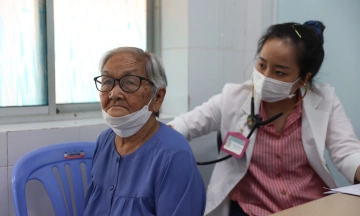
Complacency remains the greatest barrier, according to Associate Professor Hung. Many people consider dengue fever a common illness, self-medicate, or do not seek follow-up care when symptoms improve. However, the most dangerous phase of the disease often occurs between day three and day five, after the fever has subsided. This is when patients can develop severe complications such as dengue shock, severe hemorrhage, or multi-organ failure. Many cases are admitted to the hospital too late, making treatment difficult, and sometimes impossible to save lives.
Beyond the risk of mortality, severe cases can also leave lasting sequelae such as memory impairment, lack of concentration, insomnia, depression, hair loss, or vision problems. Treatment costs also pose a significant burden. Some severe cases requiring dialysis or ventilators can cost hundreds of millions of VND, with some individual cases reaching 500-600 million VND.
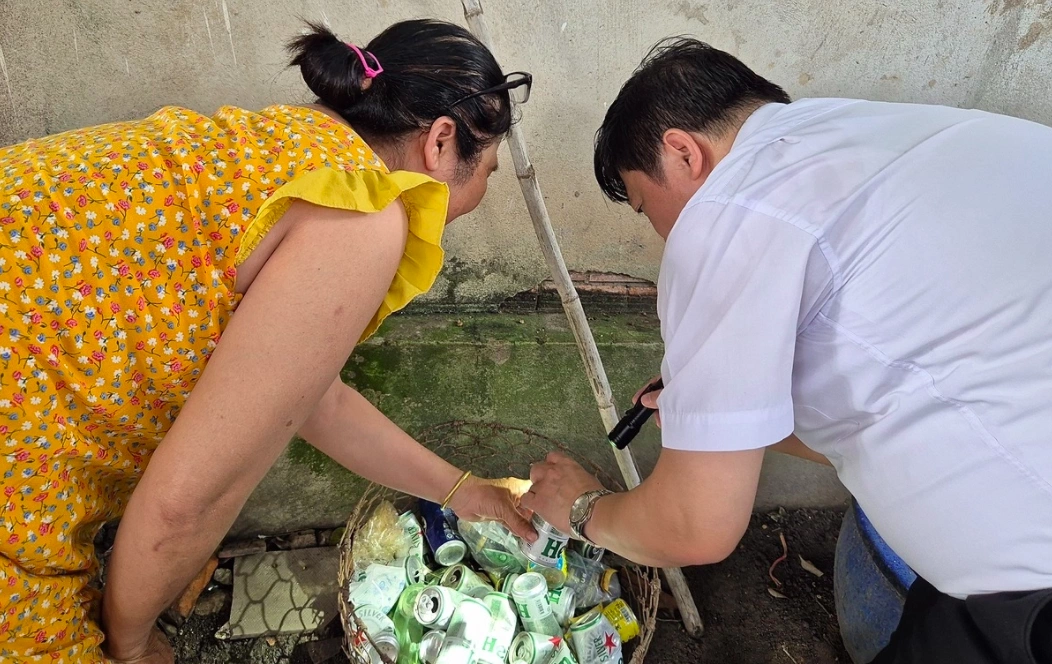 |
Rainwater collected in cans left outdoors, with mosquito larvae living inside. Photo: Le Phuong |
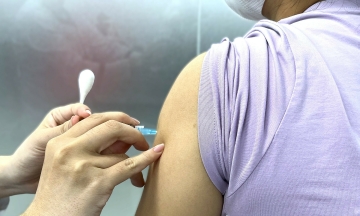
In addition to traditional measures like mosquito and larval eradication and epidemiological surveillance, experts believe new prevention tools offer more effective disease control. According to Doctor Angela Pratt, artificial intelligence (AI)-powered early warning systems are improving the accuracy of outbreak predictions. Furthermore, the dengue vaccine is a proactive preventive tool, helping to reduce the risk of infection and the rate of severe progression.
A representative from the Department of Preventive Medicine stated that the health sector is researching the implementation of pilot vaccination programs in some localities. Concurrently, efforts continue to strengthen vector control, enhance treatment capacity, and apply weather and environmental data for early epidemic warnings.
WHO aims to achieve zero deaths from dengue fever by 2030. Experts emphasize that to reach this goal, alongside the efforts of the health sector, the public needs to change perceptions and proactively implement early prevention measures.
Le Nga