This proposal is part of a draft circular developed by the Ministry of Health, which outlines health insurance payments for family medicine, home healthcare, and telemedicine services. The circular is expected to take effect from 1/1/2027 if enacted. Its primary goals are to enhance access to healthcare services within communities and alleviate the burden on hospitals. The policy specifically targets individuals whose health conditions or illnesses prevent them from traveling to medical examination and treatment facilities.
According to the draft, seven groups will be eligible for this policy: individuals with severe and extremely severe disabilities; those aged 75 and older with limited mobility; patients with mental illnesses who cannot care for themselves; chronically ill patients who are paralyzed or have restricted movement; individuals requiring palliative care in their end-of-life stage; residents of social welfare facilities receiving assistance; and children under 36 months old and elderly individuals without family care.
Healthcare facilities contracted with the health insurance fund will dispatch doctors or medical staff to the patient's home, social welfare facility, or other legal residence to conduct examinations. The health insurance fund will cover consultation fees, along with the costs of medicines, medical equipment, supplies, tests, and other medical services provided during the examination and treatment, within the current scope of benefits.
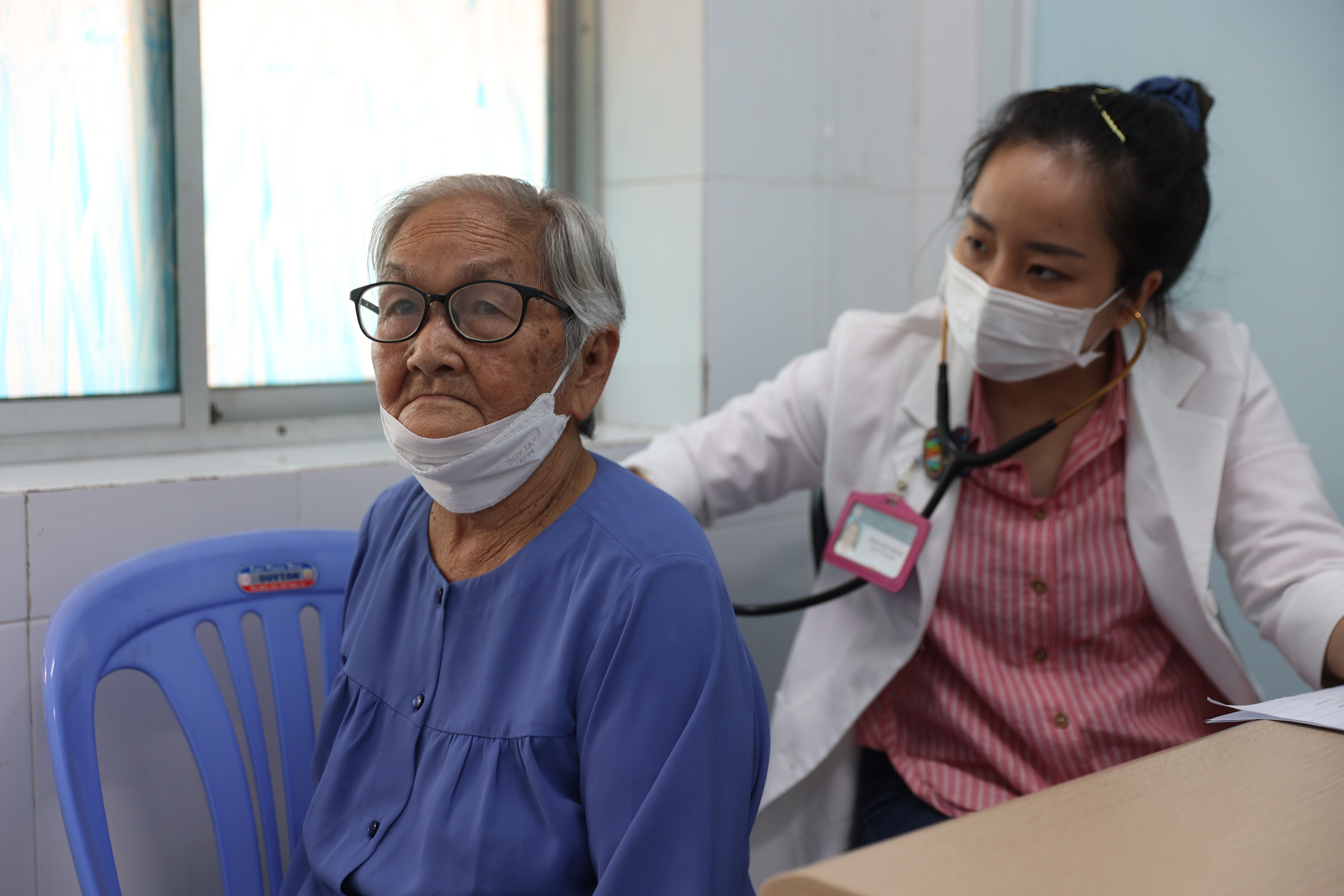 |
Residents of Ho Chi Minh City participate in free periodic health check-ups. Photo: Quynh Tran |
Medical staff can bring testing equipment to the patient's home or collect samples for analysis at the medical facility. Medicines and medical equipment will also be dispensed directly at the patient's residence. Regarding payment rates, if the cost of home examination is not higher than that at a medical facility, the health insurance fund will cover the entire amount. If the home examination cost is higher, the health insurance fund will pay 50% of the difference, with the patient covering the remaining 50%. When a specific home examination price is not yet available, the health insurance fund will pay based on the corresponding service price at a medical facility, while any additional costs incurred due to home service will be borne by the patient.
The draft circular also introduces, for the first time, a mechanism for health insurance payments for family medicine and telemedicine services. Under family medicine, patients will have health records established, receive lifelong health management, periodic examinations, disease screenings, chronic disease management, and referrals when necessary. For telemedicine, the health insurance fund will cover consultation fees, technical services, medicines, medical supplies, and information technology costs, all within the current scope of benefits.
Le Nga