Dr. Nguyen Xuan Phong, from the Imaging Diagnostics Unit at Tam Anh Cau Giay General Clinic in Hanoi, states that lung CT scans provide much higher resolution images compared to X-rays. This method helps detect lesions just a few millimeters in size, allowing doctors to determine appropriate treatment plans.
Detecting small lung nodules and tumors
Lung CT scans can identify small lung nodules (just a few mm in size), ground-glass opacities, or tumors with irregular borders that invade surrounding tissue. This enables early detection of lung cancer, increasing the chances of successful treatment and improving patient prognosis.
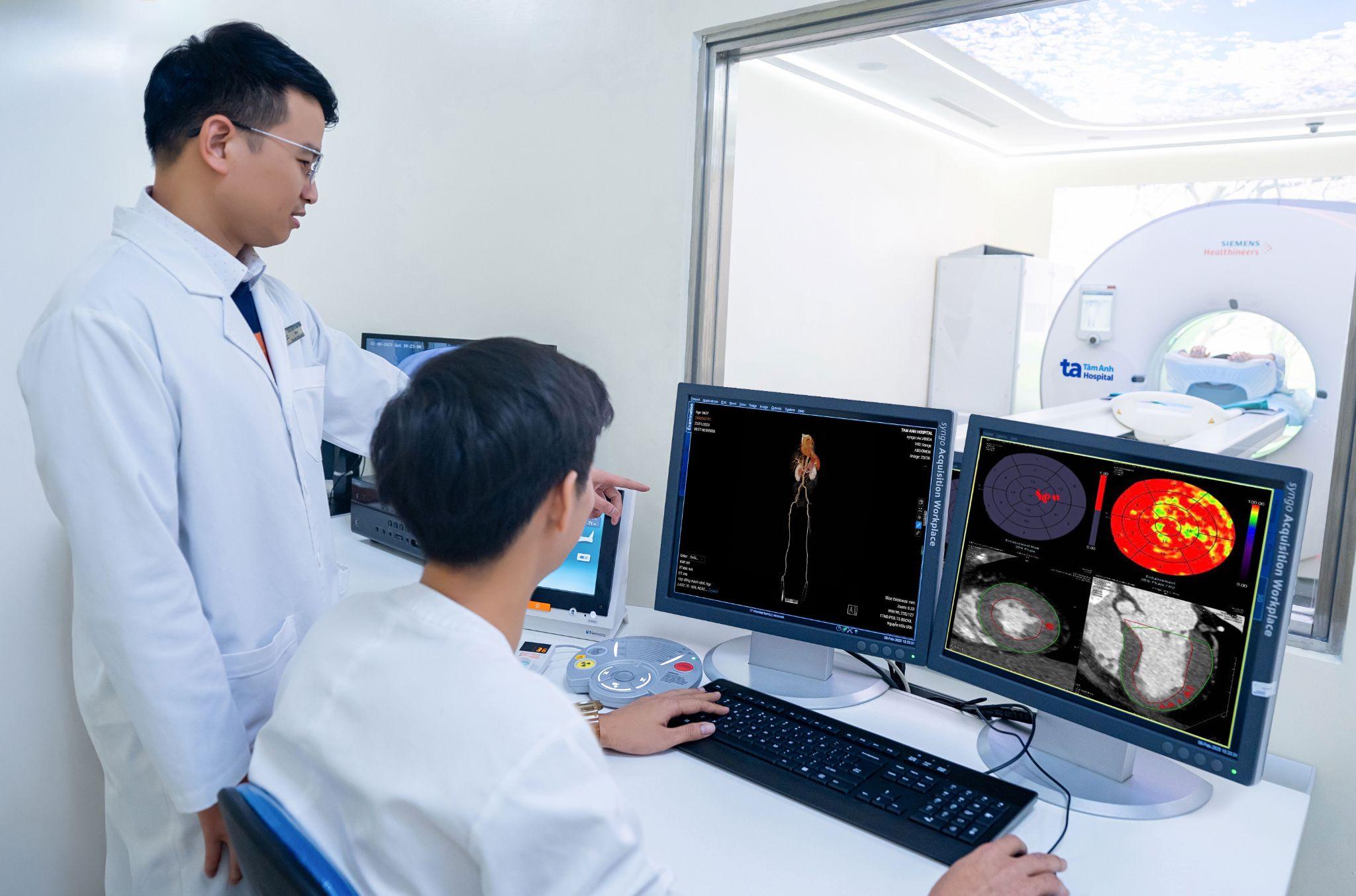 |
Low-dose lung CT scans help detect cancer and other lung diseases early. Photo: Tam Anh Hospital
Lung infections
Lung CT images reveal parenchymal consolidation, ground-glass lesions, or interlobular septal thickening, aiding in the differentiation of various pneumonia types. In atypical pneumonia cases, those with poor treatment response, or suspected complications, CT scans can detect conditions like lung abscesses, parenchymal necrosis, or pleural effusion early.
Pulmonary tuberculosis
In its early stages, pulmonary tuberculosis may present with non-specific clinical symptoms, and X-ray images are sometimes unclear. Lung CT scans identify small disseminated nodules, small tuberculosis cavities, or lesions predominantly in the lung apex. These characteristics guide doctors toward an early diagnosis, prompting tests such as sputum microscopy or culture to confirm the disease.
Interstitial lung disease
Interstitial lung disease encompasses several complex conditions, often progressing chronically and leading to pulmonary fibrosis. Lung CT images show signs like interstitial thickening, reticulation, or honeycombing, with specific distributions depending on the disease type.
Pulmonary embolism
Pulmonary embolism occurs when a blood clot obstructs a pulmonary artery. The condition can manifest as sudden shortness of breath, chest pain, or even sudden death if not diagnosed promptly.
Computed tomography pulmonary angiography (CTPA), a lung CT scan with contrast injection, is a crucial diagnostic standard. It helps identify blood clots within the pulmonary arteries, assess the degree of obstruction, and guide decisions on anticoagulant therapy or intervention.
Chronic obstructive pulmonary disease
Lung CT scans are valuable for evaluating chronic conditions such as chronic obstructive pulmonary disease and bronchiectasis. CT images can reveal emphysema, areas of reduced parenchymal attenuation, or dilated, thickened bronchi. This information is crucial for classifying disease severity, monitoring progression, and guiding long-term treatment.
The decision to perform a lung CT scan must be based on clinical assessment, risk factors, and a specialist's recommendation. Dr. Phong noted that modern CT systems, such as the Somatom VB 30, offering over 100,000 slices, facilitate early lung cancer detection and reduce radiation dose by up to 85% compared to conventional machines, ensuring safety for those undergoing screening.
Hieu Nguyen
| Readers can send questions about respiratory diseases here for doctors to answer. |