The American College of Obstetricians and Gynecologists (ACOG) recommends that all couples planning to have children undergo a pre-pregnancy health check-up, even if they show no unusual symptoms.
Many individuals, despite being asymptomatic, may have underlying conditions such as high blood pressure, thyroid disease, diabetes, anemia, or sexually transmitted infections. Additionally, certain medications, including anticoagulants, obesity treatments, or epilepsy medications, pose a risk of birth defects and require adjustment several months before conception.
Couples may also carry genes for common recessive genetic disorders such as Thalassemia (a blood disorder), cystic fibrosis, spinal muscular atrophy, or fragile X syndrome, even without a family history of these conditions. For instance, if both partners are healthy carriers of the Thalassemia gene, each pregnancy carries a 25% risk of the child developing severe Thalassemia, which can lead to death or lifelong blood transfusions.
Therefore, the goal of a pre-pregnancy health check-up is to identify and address early risk factors related to genetics, lifestyle, or environment that could affect fertility. It also aims to manage any chronic diseases effectively and provide appropriate nutritional guidance.
The examination process includes evaluating medical, surgical, and obstetric history, along with laboratory tests and blood pressure readings. Doctors advise taking appropriate doses of folic acid for one to three months before pregnancy to prevent neural tube defects in the fetus. Timely vaccination against important diseases like rubella, chickenpox, hepatitis B, and influenza helps protect both mother and baby.
Both partners undergo screening for infectious diseases such as HIV, hepatitis B, hepatitis C, and other sexually transmitted infections, as well as cervical cancer screening and male reproductive health assessments. If the mother has a chronic condition like epilepsy, high blood pressure, thyroid disease, or cancer, doctors will collaborate with specialists in neurology, cardiology, or oncology to optimize the treatment plan for the pregnancy.
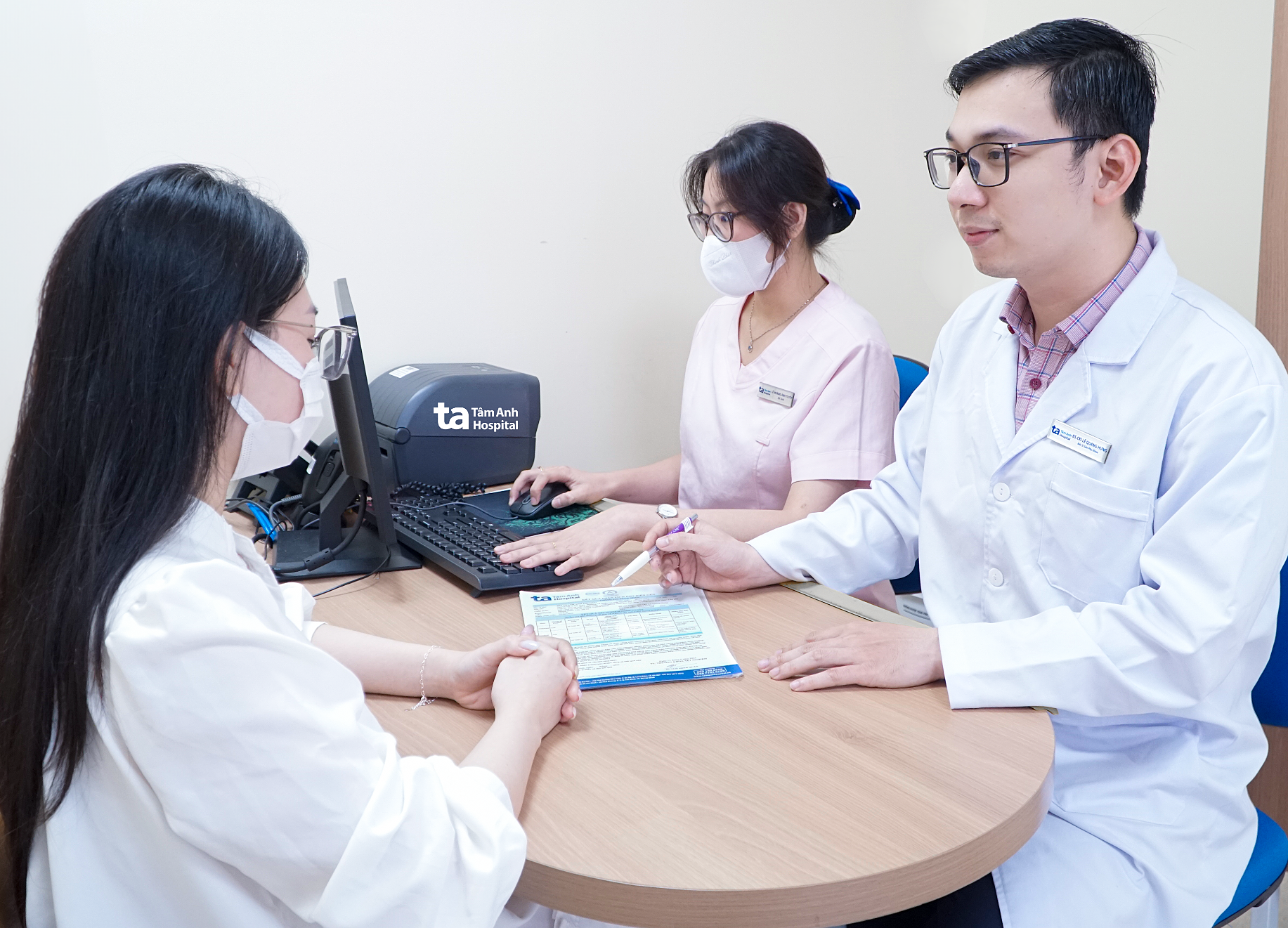 |
Doctor Le Quang Hung provides pre-pregnancy genetic counseling for women. Illustration: *Tam Anh General Hospital*.
Couples should undergo genetic screening as recommended by the American College of Medical Genetics and Genomics (ACMG). If both partners carry the same disease gene, doctors will advise on a personalized pregnancy monitoring plan to minimize the risk of having a child with a severe genetic disorder or suggest interventions like preimplantation genetic testing (PGT) for a healthy birth.
While pre-pregnancy health check-ups are not mandatory for everyone, they are particularly important for couples with chronic diseases, a history of pregnancy complications, a family history of genetic disorders or birth defects, recurrent miscarriages, or exposure to chemicals or radiation. Proactive health screening helps identify preventable risks and ensures optimal preparation for parenthood.
Doctor Le Quang Hung
Center for Fetal Medicine
Tam Anh General Hospital, Ho Chi Minh City
| Readers can submit questions about obstetrics and gynecology here for doctors to answer. |