Ms. Nam was admitted to Tam Anh General Hospital Ho Chi Minh City with a triglyceride level of 8,370 mg/dL, over 8 times the normal range. Her pancreatic lipase, an enzyme produced by the pancreas, also increased by approximately 11 times to 562 U/L. A CT scan of her abdomen revealed severe acute pancreatitis, with edema around the portal area, gallbladder wall, and duodenum, along with significant fluid in the abdominal cavity.
Doctors diagnosed the patient with acute pancreatitis and prescribed plasma exchange to rapidly reduce blood triglycerides. This specialized resuscitation technique is considered by doctors based on triglyceride levels, pancreatitis severity, symptom progression, and treatment response.
The pregnant woman was transferred for monitoring in the intensive care unit (ICU). Doctor K Bus, from the ICU department, inserted a small catheter into the right jugular vein under ultrasound guidance to perform plasma exchange using a specialized machine system. Meanwhile, the obstetrics team continuously monitored the fetal heart rate, vital signs, electrolytes, coagulation, and triglyceride levels.
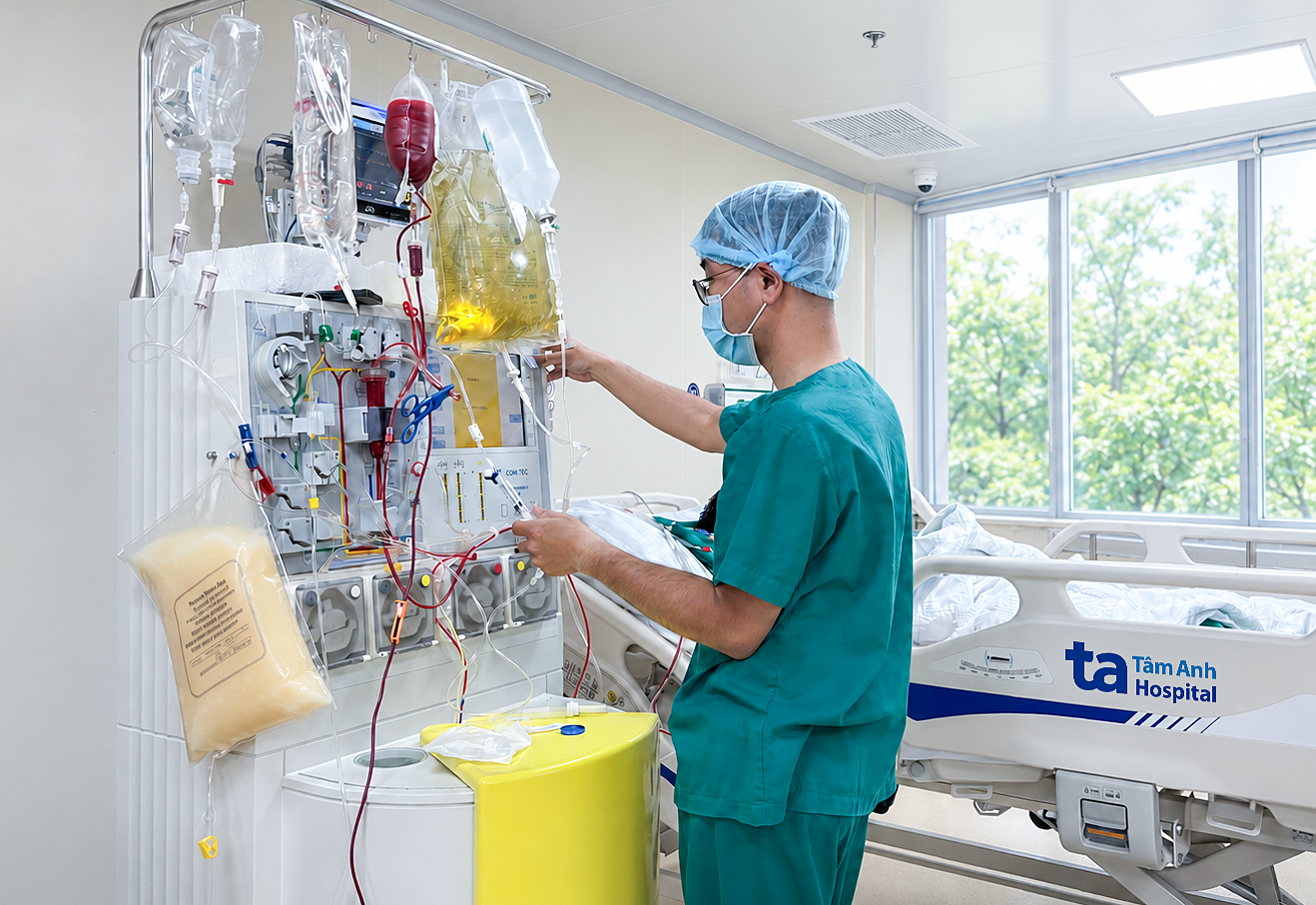 |
The opaque yellow bag containing blood lipids separated during the pregnant woman's plasma exchange. *Photo: Tam Anh General Hospital* |
The pregnant woman developed uterine contractions, with a fetal heart rate of approximately 140 beats per minute and recurrent late decelerations. Doctor Phan The Thi, from the Obstetrics and Gynecology Center, determined the fetus showed signs of acute oxygen deprivation and ordered an emergency cesarean section. While the obstetrics team performed surgery, the ICU team collaborated to monitor and manage circulatory, respiratory, and other vital abnormalities, preparing for the mother's intensive care post-surgery.
A baby girl was born weighing 2,5 kg. Doctors from the Neonatal Center resuscitated her, provided special care, and fed her milk via a feeding tube. The baby was discharged after one week, while her mother continued treatment for acute pancreatitis with intravenous fluids, insulin, electrolyte control, pain relief, and antibiotics. The team performed two additional plasma exchanges to control triglyceride levels. The patient was lucid after 12 days of treatment, with reduced abdominal pain, improved eating, and was discharged for outpatient care.
According to doctor K Bus, triglycerides tend to increase during pregnancy due to hormonal and metabolic changes. Most women experience only physiological increases without complications. However, in individuals with pre-existing lipid metabolism disorders or other risk factors, triglycerides can rise significantly, causing acute pancreatitis.
Doctors recommend that women with a history of high triglycerides, familial lipid disorders, or previous pancreatitis due to elevated triglycerides should have their lipid levels checked before pregnancy. Their diet should be controlled according to medical guidance, limiting fats and simple sugars, avoiding alcohol, and managing weight and blood sugar.
Pregnant women should not self-medicate with lipid-lowering drugs. Pregnant women with a history of lipid disorders who experience severe or persistent epigastric pain, pain radiating to the back, nausea, or vomiting should seek early medical attention.
Nhat Thanh
*Patient's name has been changed
| Readers can send questions about obstetrics and gynecology here for doctors to answer. |