Mr. Trung frequently experienced constipation, which he attributed to age. However, after losing 13 kg in one month, feeling fatigued, and having a poor appetite, he sought examination at Tam Anh General Hospital, TP HCM.
Doctor Tran Thanh Binh from the Center for Endoscopy and Gastrointestinal Endoscopic Surgery diagnosed him with advanced stage colon cancer. The tumor had invaded adjacent structures, and the cancer had metastasized to multiple sites in the liver and the left adrenal gland.
He received systemic chemotherapy. After two cycles of chemotherapy, Mr. Trung developed severe abdominal pain, bloating, and an inability to pass stool.
Colonoscopy results revealed a ring-shaped lesion approximately 30 cm from the anal verge, severely narrowing the colonic lumen. CT images showed a lesion about 7 cm in size, invading adjacent structures. Fat stranding was observed around the lesion, and stool impaction was noted proximal to the obstruction.
According to Doctor Binh, the tumor grew circumferentially within the colon, further constricting the already narrow bowel lumen. Additionally, the ongoing treatment may have altered the bowel wall structure, exacerbating the narrowing of the colon and leading to bowel obstruction.
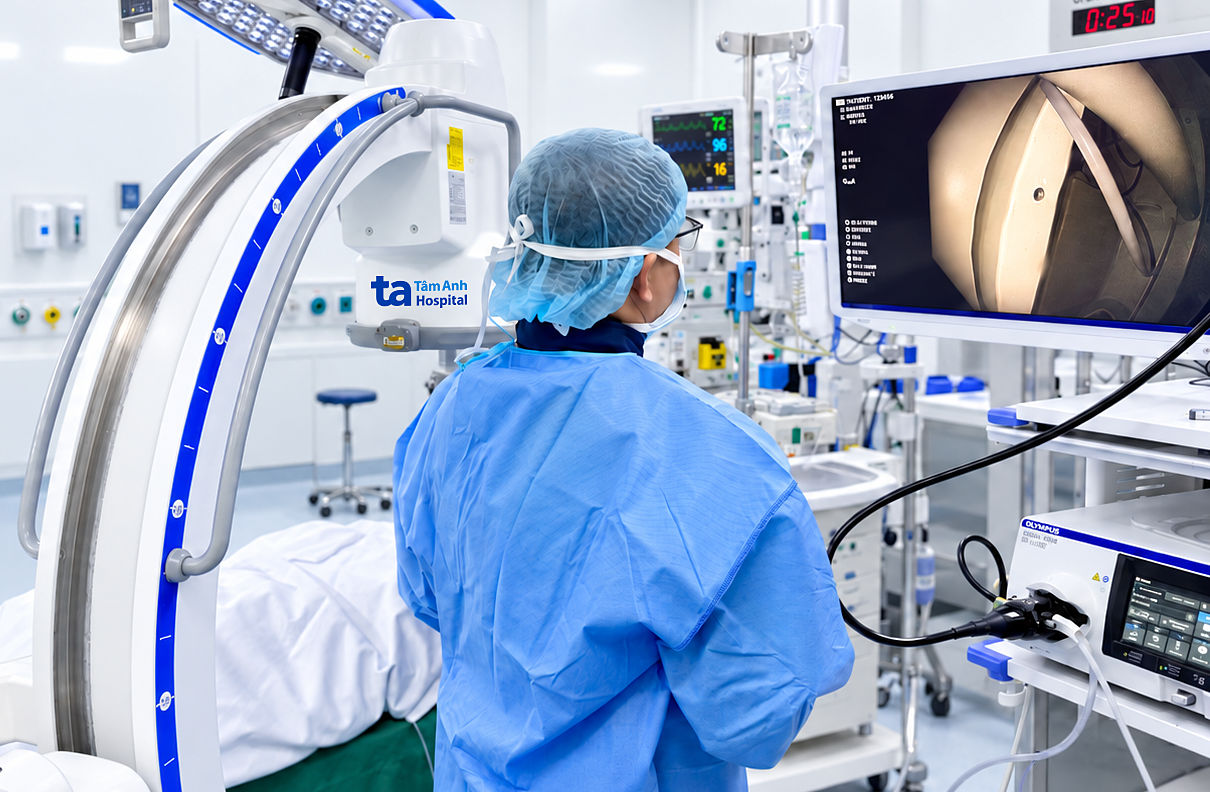 |
Doctor Binh placing a colon stent for Mr. Trung. Photo: Tam Anh General Hospital |
Following a multidisciplinary consultation, doctors opted for endoscopic self-expanding metallic stent placement to relieve the obstruction and restore bowel patency, avoiding emergency surgery. Stent placement addresses the blockage, rapidly alleviates symptoms, and allows the patient to continue systemic cancer treatment.
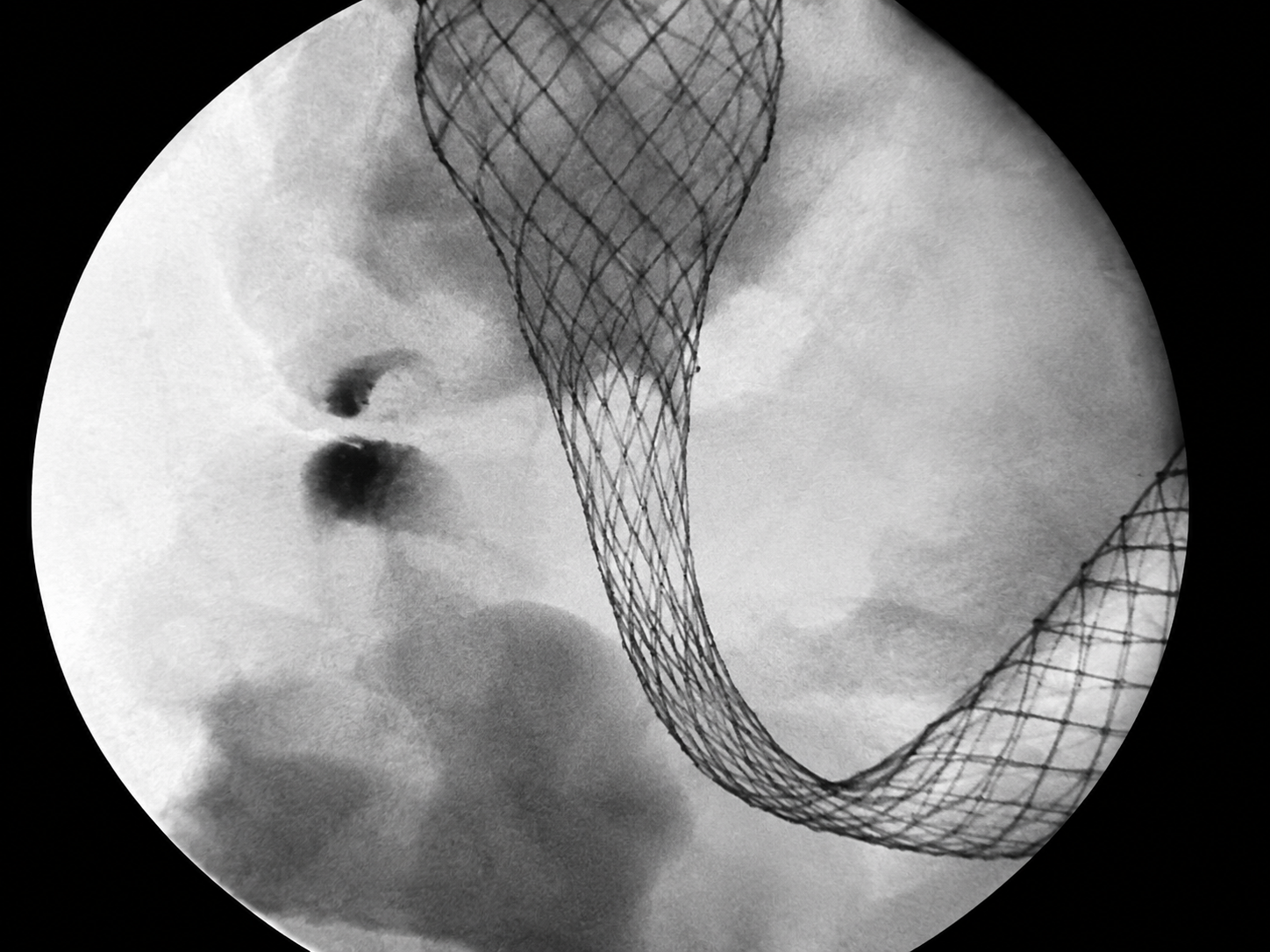 |
The metallic stent placed by doctors at the site of the colon obstruction. Photo: Hospital provided |
Doctors advanced a guidewire through the narrowed segment under endoscopic guidance. Subsequently, a metallic stent, 25 mm in diameter and 120 mm long, was deployed over the guidewire under c-arm system guidance. The stent's position was verified and secured with clips to minimize migration risk. Finally, doctors used a dilation balloon to further expand the narrowed segment within the stent.
Post-intervention, accumulated fluids and stool proximal to the obstruction were released, significantly reducing Mr. Trung's abdominal pain. He was able to consume liquid food and pass stool again, allowing him to resume chemotherapy for cancer control.
The choice between colon stent placement and surgery depends on factors such as the location and severity of the obstruction, the patient's overall health, the risk of bowel perforation, tumor characteristics, and treatment goals. This method does not replace cancer treatment but primarily manages complications, enabling patients to continue their systemic treatment plans.
Previously, patients with advanced colon cancer experiencing bowel obstruction often required emergency surgery, which sometimes included a colostomy to divert stool. While this resolved the obstruction, it could significantly impact daily life and quality of life.
Doctor Binh advises that individuals experiencing prolonged constipation, sudden changes in bowel habits, thin or flattened stools, blood in the stool, abdominal pain, or unexplained weight loss should seek medical examination to identify the cause and receive timely treatment.
Early detection and appropriate treatment of colon cancer significantly increase the chances of cure. When the disease has metastasized, treatment typically involves a combination of methods to control systemic cancer, reduce complications, and maintain quality of life.
Quyen Phan
* Patient's name has been changed
| Readers can submit questions about digestive diseases here for doctors to answer. |