Jellyfish do not transmit tetanus bacteria. However, stings that cause blistering, ulcers, necrosis, or contamination can still create an entry point for bacteria, necessitating an assessment of tetanus risk.
Jellyfish tentacles contain stinging cells that release venom upon contact with skin, even if the tentacles have detached from the body. The venom, composed of various proteins and enzymes, can cause burning pain, inflammation, tissue damage, and even severe allergic reactions, depending on the jellyfish species, venom quantity, and the individual's physical condition.
Most stings result in sharp pain, skin redness, and swelling along the tentacle marks, typically subsiding within a few hours but sometimes lasting for several days. Severe cases can lead to blisters, ulcers, or tissue necrosis. If a large amount of venom is injected, the affected person may experience nausea, dizziness, muscle pain, rapid heartbeat, and difficulty breathing. Signs such as labored breathing, cyanosis, confusion, seizures, or a drop in blood pressure require emergency medical attention.
If stung by a jellyfish, immediately exit the water. Rinse the affected area with seawater. Use tweezers or gloves to remove any remaining tentacles; do not rub the skin. Avoid using alcohol, spirits, lemon juice, or herbal remedies. Mild cases can be managed with skin care and common pain relievers. Seek medical attention if the pain is severe, the lesion spreads, or if there are blisters, ulcers, discharge, fever, or if the sting is on the face, eyes, mouth, or genital area. Young children, older adults, and individuals with underlying health conditions require close monitoring.
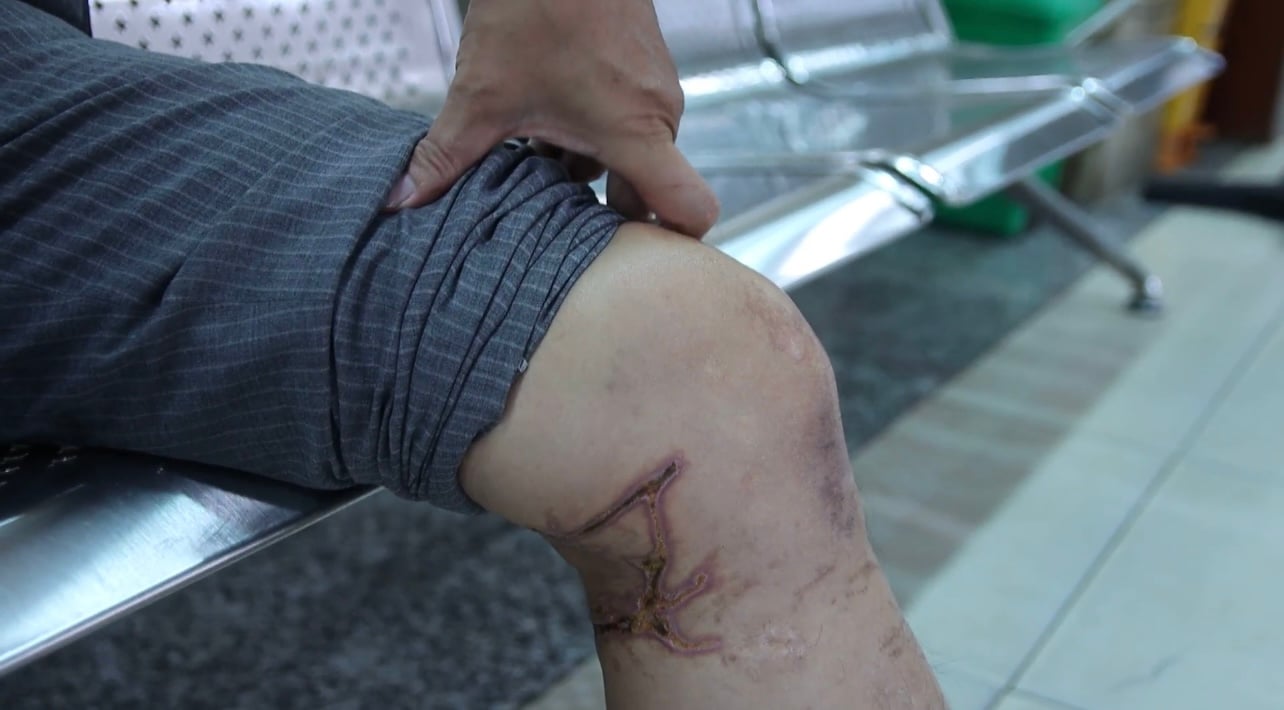 |
A patient with contact dermatitis after a jellyfish sting, treated at Ho Chi Minh City Hospital of Dermatology. Photo: Ho Chi Minh City Hospital of Dermatology |
For tetanus, stings that cause only redness and burning, without breaking the skin, typically do not require post-exposure vaccination. Vaccination is considered when there is an open wound, ruptured blisters, ulcers, necrosis, or contamination. Tetanus risk can also arise from other beach accidents, such as stepping on seashells, sharp rocks, nails, fish spines, or coral.
Tetanus bacteria are widespread in the environment and can cause severe complications. Vaccination is an effective way to prevent the disease, offering protection up to 95%.
The tetanus vaccine schedule depends on an individual's vaccination history. Booster doses are needed every 10 years or after an injury to ensure long-lasting protection. For adults with an unknown vaccination history, the regimen includes three doses: the second dose one month after the first, and the third dose six months after the second. Children from two months of age receive vaccines containing a tetanus component, such as 5-in-1 or 6-in-1 vaccines (which can be administered as early as six weeks of age). After the primary vaccination series, children are recommended to receive tetanus-containing vaccines at 16-18 months, 4-6 years, and 9-15 years. Pregnant women should receive a single tetanus vaccine or a combined diphtheria-pertussis-tetanus (Tdap) vaccine during pregnancy to protect themselves and the fetus, and to reduce the incidence of neonatal tetanus when the baby is born.
Individuals can also proactively get vaccinated against tetanus before any injury occurs. Afterward, if there is a risk of developing the disease, only one booster dose of the vaccine is needed, without requiring tetanus immunoglobulin (TIG) or tetanus antitoxin (SAT).
Doctor Pham Dinh Dong
Medical Manager, VNVC Vaccination System
Readers can submit vaccine-related questions for a doctor's consultation here.