The patient was rushed to the emergency department at Thuan An Regional Medical Center. Doctors administered medication to elevate his heart rate and blood pressure, while also conducting a remote consultation with Thu Duc General Hospital. After initial stabilization, he was transferred to Thu Duc General Hospital. Despite this, he experienced multiple episodes of asystole and brief periods of unconsciousness during the transfer.
Upon arrival at Thu Duc General Hospital, doctors made the decision to implant an emergency temporary pacemaker. An electrode was carefully guided through a vein into the right heart chamber, then connected to an external pacemaker. This device stimulated the heart to contract, successfully raising his heart rate from approximately 30 to 80 beats per minute.
Subsequent tests confirmed the patient's condition as acute myocarditis accompanied by a third-degree atrioventricular block. After 5 days of treatment, his heart rate recovered, and his overall health improved significantly. The temporary pacemaker was then removed, and the patient was discharged 7 days after admission.
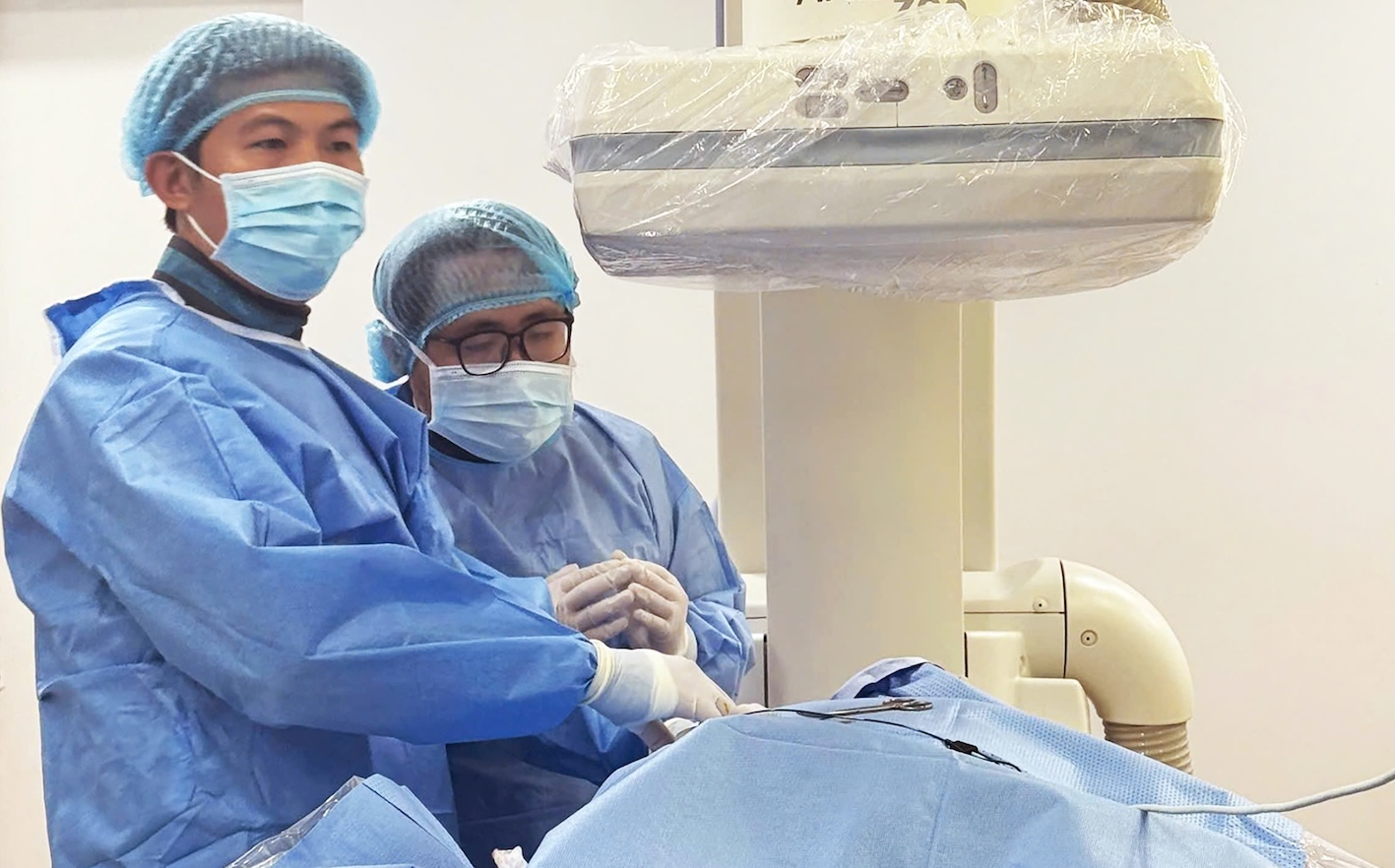 |
Doctors intervene to place a temporary pacemaker for the patient. *Photo: Hospital provided*
On 28/8, Dr. CK2 Le Duy Lac, Head of Cardiac Resuscitation and Interventional Cardiology at Thu Duc General Hospital, stated that acute myocarditis can lead to severe arrhythmias. A third-degree atrioventricular block is a dangerous complication that can cause fainting, asystole, and even death if not managed promptly.
Dr. Lac emphasized that in this particular case, early recognition and emergency care at the local facility, combined with remote consultation with a specialized hospital, were crucial for stabilizing the patient before his transfer. The temporary pacemaker played a vital role in maintaining his heart rate during the critical phase, allowing time for the heart muscle to recover.
This case is part of a professional support program between Thu Duc General Hospital and Thuan An Regional Medical Center, initiated in July under a decision by the Ho Chi Minh City Department of Health. The two medical units collaborate on consultations, training, and technology transfer, thereby enhancing their capacity to handle severe emergency cases at the grassroots level.
Le Phuong