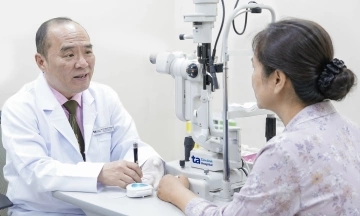
On 29/8, Dr. Nguyen Quang Tu, Head of the Surgery Department at Ho Chi Minh City Ear, Nose, and Throat Hospital, reported that an endoscopic procedure under anesthesia successfully removed a fish bone, approximately 1,5 x 2 cm, from the patient's trachea. The bone was located above the carina, the point where the trachea divides into two main bronchi. Following the foreign body's removal, the patient received treatment to prevent infection and has since been discharged.
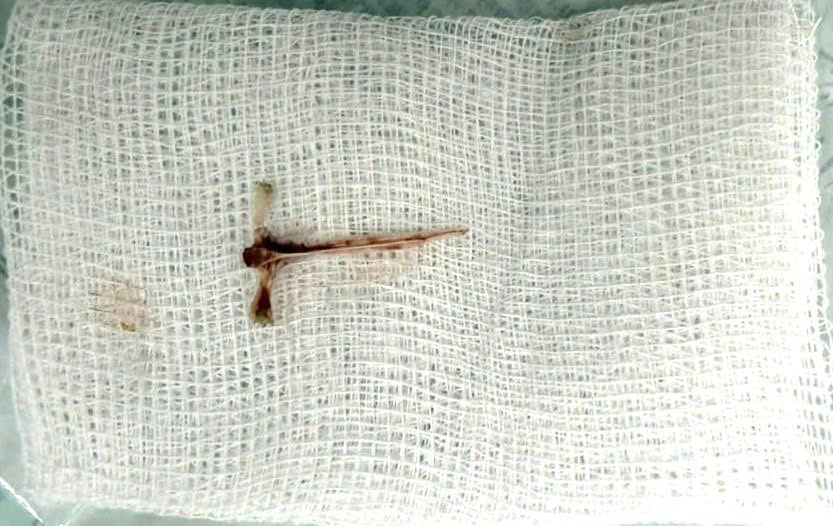 |
The T-shaped fish bone was removed endoscopically. Photo: Hospital provided |
Dr. Tu emphasized that if a foreign body in the airway is not detected and treated promptly, it can lead to various complications. These include pneumonia, pneumothorax, mediastinitis, abscesses, and in some cases, even death.
Dr. Nguyen Thanh Vinh, Deputy Director of the hospital, explained that when a foreign body enters the airway, patients may exhibit aspiration syndrome symptoms. These can include violent coughing, cyanosis, stridor, and respiratory retractions. However, not all cases present with severe symptoms immediately.
In some instances, overlooked foreign bodies might only cause prolonged coughing, chest pain, persistent hemoptysis, or recurrent pneumonia. Patients undergoing treatment in various places without improvement should be evaluated for the possibility of an airway foreign body.
Doctors advise against laughing or talking while eating or drinking. Parents should also avoid forcing children to eat or drink while they are crying. Young children should be limited from interacting with small toys or objects with many detachable parts and encouraged not to put pen caps, musical instruments, or other small items in their mouths.
For bedridden or mobility-restricted adults, caregivers must exercise particular caution during feeding. This vigilance helps prevent choking, swallowing, or aspirating foreign bodies.
Le Phuong