Many people believe sleep apnea only affects adults, but children can also suffer from this respiratory disorder during sleep. Master of Science, Doctor Phung Thi Thom, from the Respiratory Department at Tam Anh Cau Giay General Clinic, emphasizes that early detection of sleep apnea signs in children is crucial for ensuring good sleep and optimal physical development.
Frequent snoring
Unlike adults, snoring related to sleep apnea in children does not necessarily have to be loud. Instead of solely focusing on the volume of snoring, parents should observe the frequency of snoring and their child's breathing patterns during sleep. If a child snores, snorts, gasps, experiences periods of breath-holding, or takes deep breaths, a medical examination is necessary.
Sleeping with an open mouth, tilted head
Children who frequently sleep with an open mouth or with their head and neck tilted back may be attempting to clear their airway. This posture helps children draw air into their lungs more easily when their airway is obstructed.
If parents notice their child consistently sleeps in this position, they should seek medical attention to determine the cause, especially if accompanied by snoring, difficult breathing, or pauses in breathing during sleep.
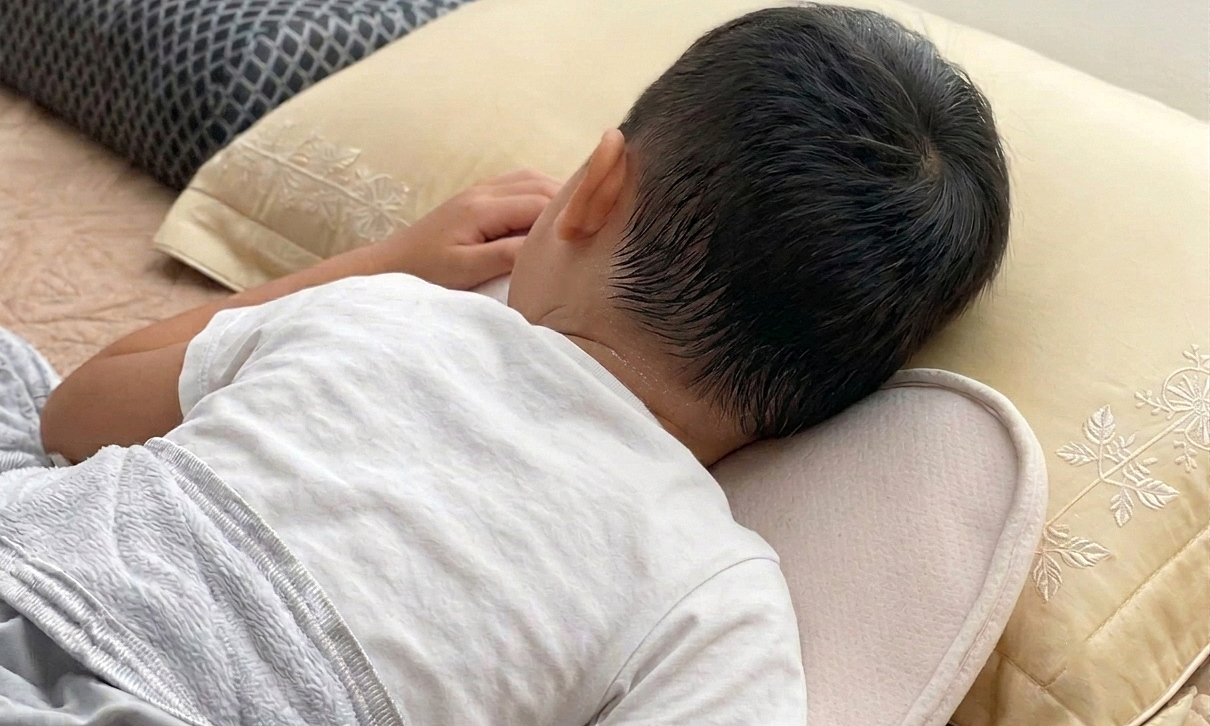 |
Parents should pay attention if their child frequently sweats excessively or sleeps restlessly. Photo: Duy Anh |
Restless sleep, excessive sweating
Children with sleep apnea may experience restless sleep, frequently tossing and turning, waking up, or sweating excessively during sleep. When the airway is obstructed, the child may constantly change positions to breathe more easily. As a result, parents often observe their child in unusual sleeping positions, with disheveled blankets and pillows, or a significantly disturbed bed after a night's sleep.
Bedwetting
Nighttime bedwetting is common in children, but if it occurs frequently, especially in older children (over 5 years old), parents should investigate the cause to rule out other health issues, including sleep apnea. Many children with sleep apnea may experience bedwetting, which is linked to impaired secretion of antidiuretic hormone and increased bladder muscle activity.
Daytime hyperactivity, difficulty concentrating
Children with obstructive sleep apnea often experience insufficient or repeatedly interrupted sleep, which affects their concentration and behavior during the day. Instead of feeling drowsy like adults, children may exhibit hyperactivity, difficulty sitting still, excessive talking, forgetfulness, poor concentration, or difficulty controlling their behavior. Doctor Thom notes that these symptoms can resemble attention deficit hyperactivity disorder (ADHD), making them easily overlooked or misdiagnosed.
Night terrors, night frights
Night terrors differ from typical nightmares and are a form of sleep disorder in children that can worry parents. Children may scream, jump out of bed, thrash, sweat, breathe rapidly, or have a fast heartbeat, but they are usually not fully awake and may not remember the event the next morning.
Night terrors are quite common in children and are usually not a sign of a serious problem. However, this condition can sometimes be linked to sleep-related respiratory disorders, including sleep apnea.
Minh Duong
| Readers can submit questions about respiratory illnesses here for doctors to answer. |