Young children do not always realize they have poor vision, especially if only one eye is affected. Some children can still read, play, and engage in normal activities using their good eye, while the weaker eye goes undetected without individual eye checks.
According to doctor Le Thi Huong Giang, from the High-Tech Eye Center at Tam Anh General Hospital Hanoi, before the new school year is an ideal time for parents to check their child's vision, especially if unusual signs appear. Undetected refractive errors, strabismus, or amblyopia can affect learning and visual development.
Squinting
Frequent squinting when looking at the board, watching television, or observing distant objects could be a warning sign. Squinting can temporarily improve clarity, but if a child squints often, parents should seek a vision check.
One common cause is refractive error, particularly myopia. However, squinting alone is not enough to diagnose myopia; vision measurement and a refraction exam are necessary. Children with refractive errors do not always complain of blurry vision, especially if only one eye is affected.
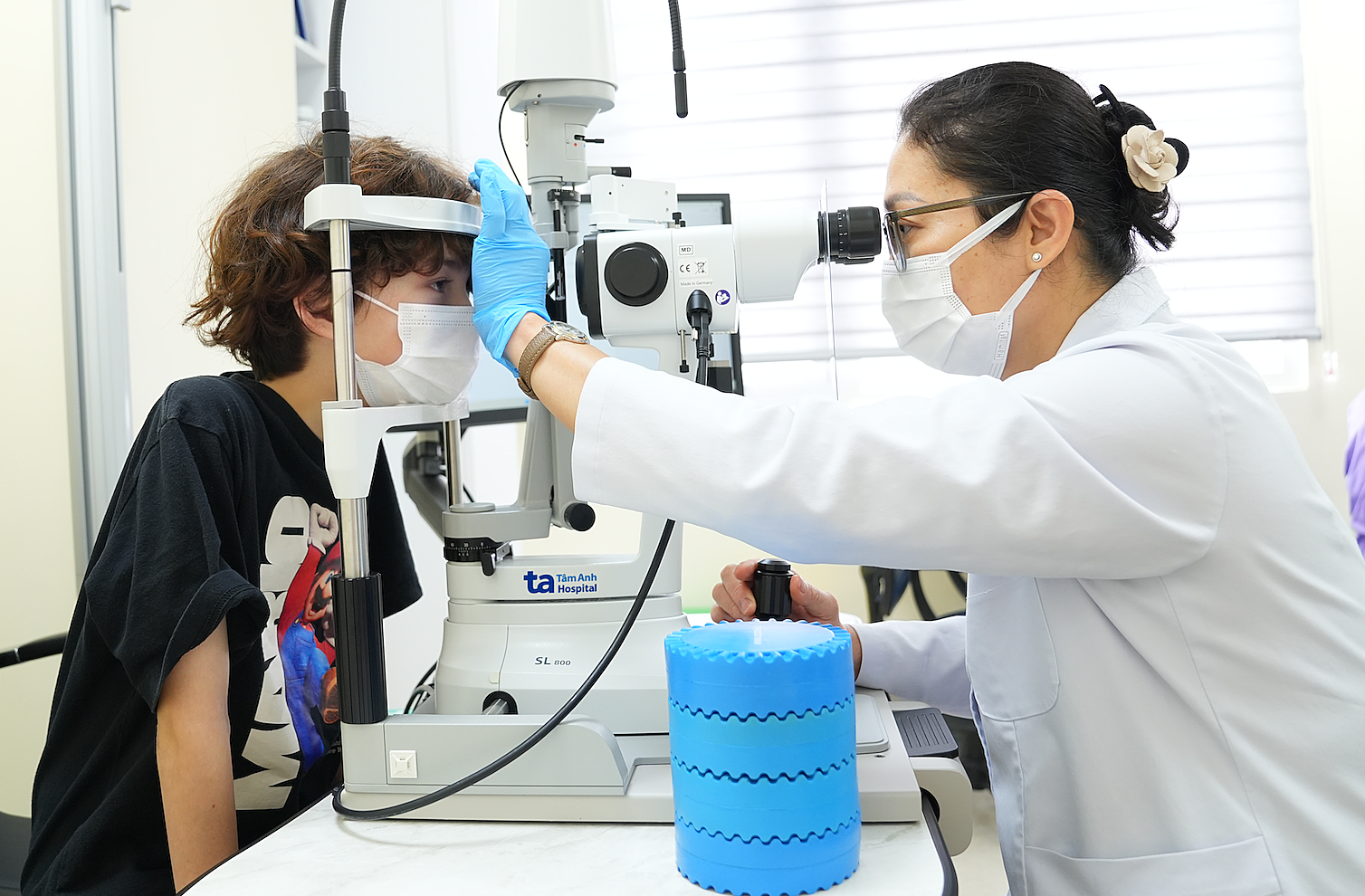 |
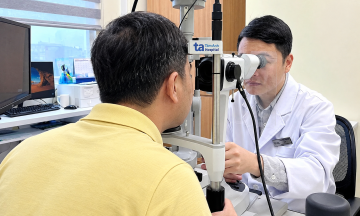
Doctor Giang checks a child's eyes. Photo: Tam Anh General Hospital |
Looking too close
If a child frequently leans in close when reading, or holds objects or screens near their face to see, parents should pay attention as this may relate to a refractive error. It is important not to assume that sitting close is the cause of myopia. The key is to determine why the child needs to bring objects closer to see clearly. An eye exam accurately assesses vision and refractive status, guiding doctors toward appropriate treatment.
Head tilting
Some children habitually tilt their head, lift their chin when looking, or squint one eye, maintaining this posture to observe. These behaviors may indicate astigmatism, a refractive difference between the two eyes, strabismus, or issues with binocular vision.
When there is a refractive difference between two eyes, one eye might see blurrier, but the child uses the good eye for daily activities, making it difficult for parents to notice. If this condition persists during visual development, the weaker eye risks developing amblyopia. Children with amblyopia in one eye often struggle to self-identify because they can still see relatively well with the other eye.
Eye strain, headaches
Parents should not ignore signs like eye rubbing, excessive blinking, complaining of eye strain, or headaches after their child reads, does homework, or uses electronic devices. Some children may experience difficulty focusing on near objects or blurry vision during learning activities.
Doctor Giang advises that these signs are not specific to eye diseases and can stem from various causes. However, if they appear frequently, especially after academic activities, parents should have their child's eyes examined to assess vision, refraction, and binocular coordination. Parents should not self-prescribe glasses based on observations made at home.
Thu Giang
| Readers can submit ophthalmology questions here for doctors to answer. |