Nephrologist Hung Yung-hsiang states that coffee itself is not detrimental to kidney health. The true threats to kidney function are pathogenic bacteria and mold toxins, which thrive in humid conditions. Nephrologist Chiang Shou-shan from Taiwan, China, adds that if pure black coffee, without added milk or sugar, is consumed the next day, it will likely have no major impact. There is currently no research proving that this beverage produces harmful substances when left overnight, as black coffee is resistant to fermentation, meaning its quality remains largely unchanged.
However, Dr. Chiang Shou-shan advises against sipping a cup of coffee if one intends to save it for the next day. Bacteria from the mouth can contaminate the beverage, causing it to spoil and allowing microbes to proliferate.
In an interview with SET News, Dr. Chiang Shou-shan further explained that milk contains abundant protein, and sugar provides carbohydrates – both are favored nutrients for bacteria. Therefore, coffee mixed with milk or sugar should not be left for long periods and is entirely unsuitable for overnight storage.
According to a study published in the reputable journal Kidney International Reports, Dr. Hung Yung-hsiang notes that consuming fresh coffee in moderation may reduce the risk of acute kidney injury (AKI) by 15-23%.
Despite the potential benefits of fresh coffee, a cup left overnight can pose three "hidden traps" that endanger kidney health:
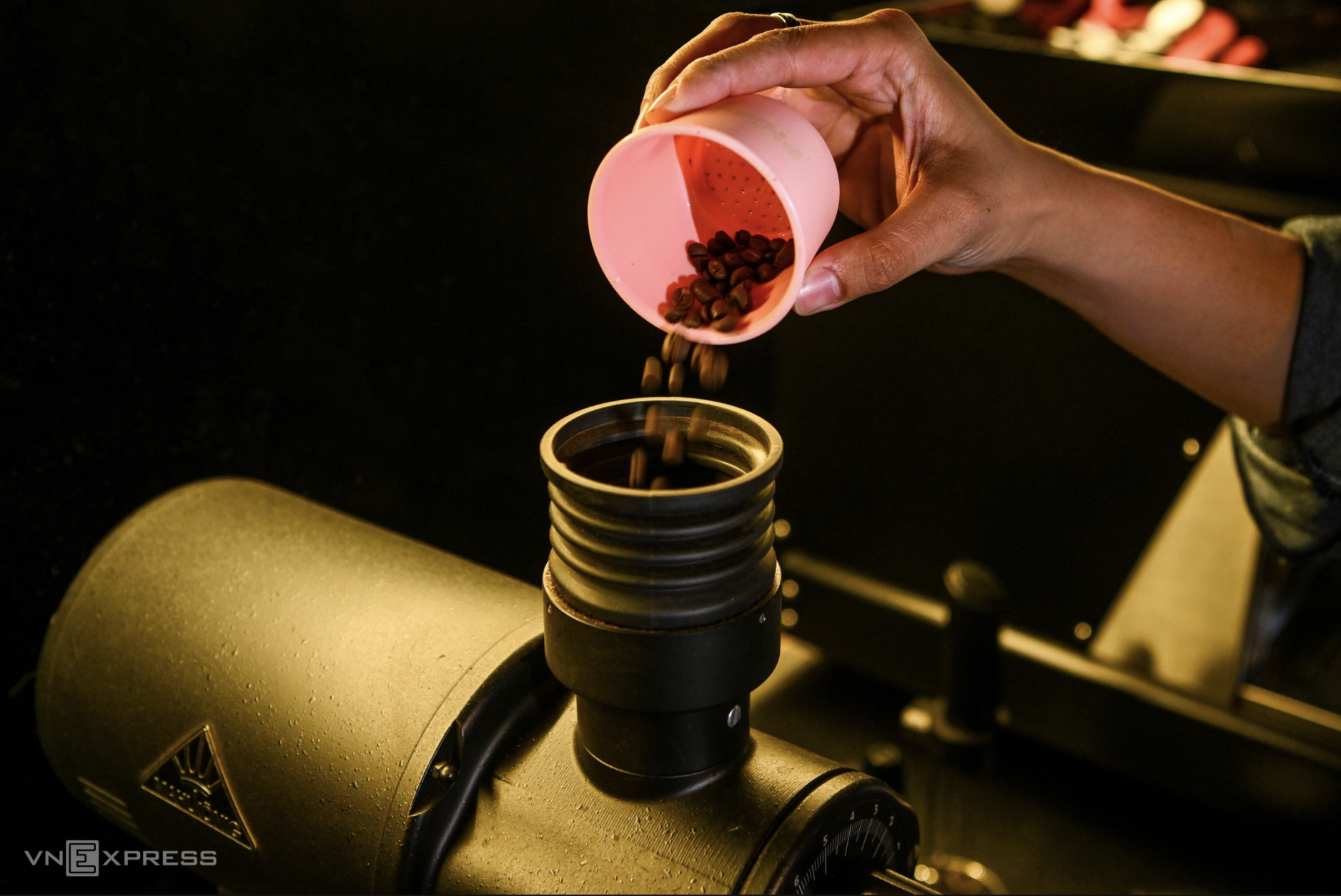 |
Coffee is roasted and ground before brewing. Photo: Giang Huy |
Bacterial proliferation at room temperature risks acute kidney failure due to dehydration
The moment lips touch a cup, oral bacteria enter the coffee. If left at room temperature for over two hours, even trace amounts of protein and sugar can cause bacteria, such as E. coli, to multiply exponentially. Consuming spoiled overnight coffee can lead to acute gastroenteritis. Severe vomiting and diarrhea cause rapid dehydration, leading to a sudden decrease in blood flow to the kidneys and potentially acute kidney failure. The consequences are particularly severe for individuals with pre-existing compromised kidney function.
Latte with milk spoils faster
Latte, which contains fresh milk, spoils much faster at room temperature. Even when refrigerated, some cold-loving bacteria continue to grow, increasing the risk of infection and acute kidney injury.
Moldy coffee beans produce Ochratoxin
The practice of leaving ground coffee or coffee beans overnight, or storing them in damp conditions for a long time, easily leads to the production of "Ochratoxin A." Clinical medicine has demonstrated that Ochratoxin is highly toxic to the kidneys and remains undestroyed even at high temperatures. When this toxin accumulates in the body over time, it damages the kidney glomeruli, causing permanent kidney damage.
My Y (Source: Yahoo TW)