Eng English
China 中国人

Eng English
China 中国人
  • News
  • World
  • Business
  • Entertainment
  • Sports
  • Law
  • Education
  • Health
  • Lifestyle
  • Travel
  • Science
  • Digital
  • Automobiles
  • Trở lại Thể thao
  • Health
Saturday, 3/10/2026 | 08:07 GMT+7

Why arm swelling occurs after breast cancer surgery

"My arm is swollen after breast cancer surgery. Why does this happen and how can I improve it?" asks Ngoc Ha, 34.

The lymphatic system consists of thin vessels that transport lymph fluid. This system originates from small capillaries in the body's periphery, collecting fluid from tissues, guiding it through lymph nodes, and ultimately draining into the thoracic duct before it returns to the circulatory system.

Lymphedema is a condition where a limb becomes swollen and heavy, typically on the side that underwent surgery or injury. This condition may appear a few months after an operation or even many years later, long after recovery seems complete.

During breast cancer surgery, doctors often intervene with the axillary lymph nodes through procedures such as complete axillary lymph node dissection when cancer has spread, or sentinel lymph node biopsy. Many patients with axillary lymph node metastasis also receive adjuvant radiation therapy to this area. Both these approaches can damage the lymph nodes and lymphatic vessels, causing fluid to accumulate in the arm.

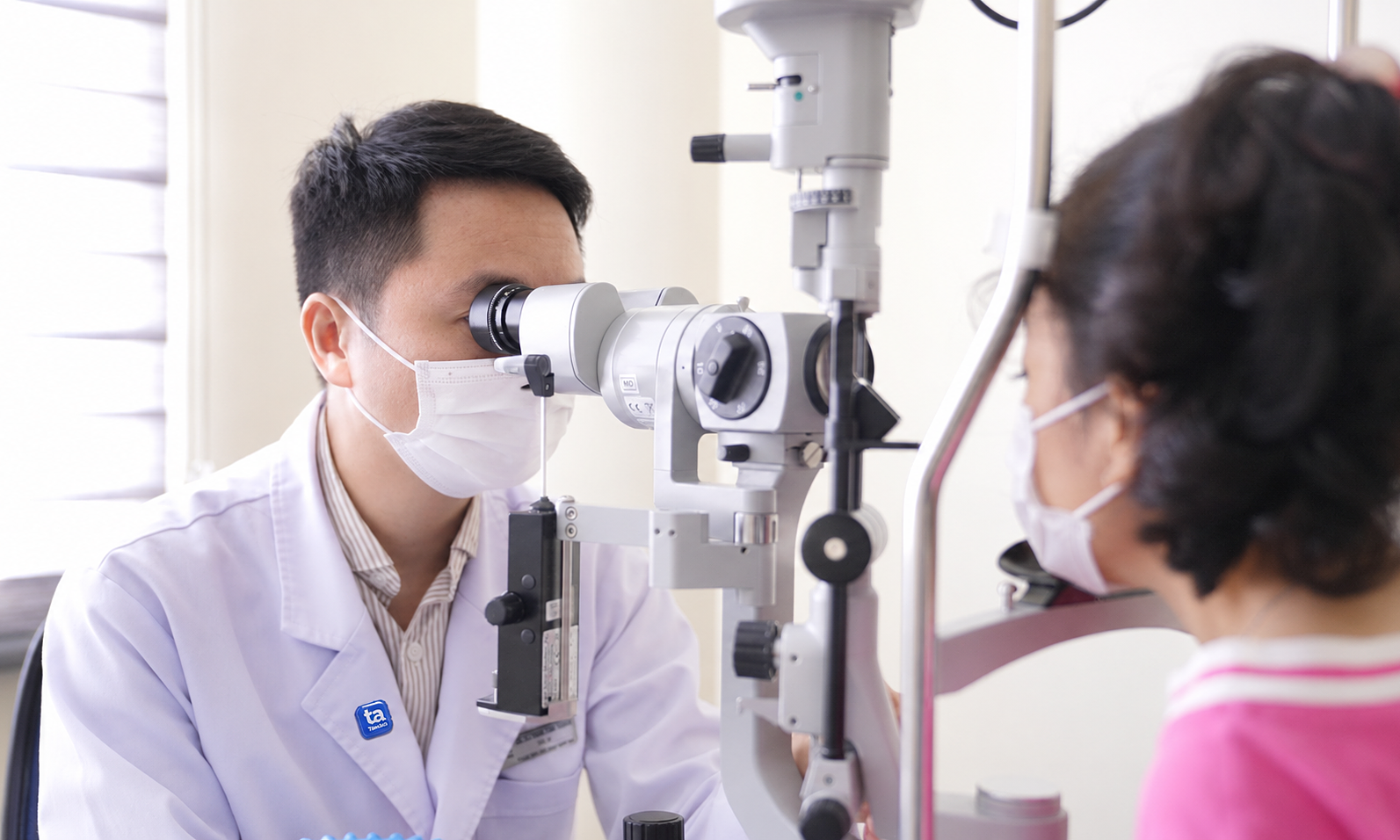
Doctor Khanh advises a patient. *Illustration: Tam Anh General Hospital*

The more extensive the axillary lymph node intervention, the higher the risk of arm lymphedema. The incidence of arm lymphedema is nearly 30% in patients who undergo complete axillary lymph node dissection, compared to about 5-6% in those who only have a sentinel lymph node biopsy.

In its early stage, the fluid in the tissues is still soft, so pressing on the skin leaves a noticeable indentation. If left unchecked, prolonged fluid retention stimulates the growth of fibrous and fatty tissues under the skin, leading to thickening and hardening of the limb.

Long-term accumulation of fluid and protein also impairs local immunity, creating a favorable environment for bacteria to thrive. Consequently, individuals with arm lymphedema are more prone to recurrent soft tissue infections than healthy individuals.

Patients should consult a plastic microsurgery specialist for early diagnosis and a treatment plan for lymphedema. The doctor may recommend advanced imaging techniques such as magnetic resonance imaging (MRI) or indocyanine green (ICG) lymphography.

Previously, the main treatments for lymphedema involved wearing compression stockings or three-layer bandages, combined with physical therapy exercises to aid lymphatic drainage, which patients often had to maintain almost lifelong. Today, thanks to advancements in reconstructive microsurgery, patients can undergo surgery to reduce swelling volume and restore physiological lymphatic drainage function.

Breast cancer patients who have undergone axillary lymph node dissection should regularly monitor the operated arm to promptly detect any abnormalities. Some hospitals offer integrated care involving breast cancer specialists, microsurgeons, rehabilitation therapists, high-resolution microsurgical microscopes, and ICG fluorescence imaging devices to effectively detect and treat lymphedema long-term.

Master, Doctor Tran Nguyen Nhat Khanh

Department of Surgical Oncology, Oncology Center

Tam Anh General Hospital, TP HCM

Readers can submit questions about cancer here for doctors to answer
By VnExpress: https://vnexpress.net/vi-sao-sung-canh-tay-sau-phau-thuat-ung-thu-vu-5127804.html
Tags: breast cancer cancer surgery

News in the same category

Why WHO recommends front-of-pack nutrition warnings on product packaging?

Why WHO recommends front-of-pack nutrition warnings on product packaging?

The World Health Organization (WHO) states that placing information about sugar, salt, and fat content on the front of packaging helps consumers quickly identify foods to limit.

Can cupping and bloodletting cure stroke?

Can cupping and bloodletting cure stroke?

Recent reports and shared experiences promoting finger-pricking bloodletting and cupping techniques on the neck to 'remove blood clots' for stroke treatment or prevention have raised questions. Is there any truth to these claims? (Lien, 30, Hanoi)

Forgetting the way home, mistaken payments: easily overlooked signs of dementia

Forgetting the way home, mistaken payments: easily overlooked signs of dementia

Forgetting the way home, taking the wrong medication, or confused payments can be early signs of dementia, but are often dismissed as normal manifestations of aging.

Recognizing eye diseases through blurry vision symptoms

Recognizing eye diseases through blurry vision symptoms

Blurry vision is a common symptom that can be caused by various eye conditions such as nearsightedness, cataracts, or retinal detachment.

Should disc herniation be treated with radiofrequency ablation?

Should disc herniation be treated with radiofrequency ablation?

I have an L5/S1 disc herniation, which is compressing a nerve root, and medication has not helped. Can I be treated with radiofrequency ablation? (Ngoc An, Ha Noi)

Why eating three meals supports weight loss

Why eating three meals supports weight loss

I want to diet for weight loss by eating two meals a day and skipping dinner, but you advise that eating three full meals is better for weight loss. Why? (Ngoc Anh, Ho Chi Minh City)

Is it better to exercise during the day or at night?

Is it better to exercise during the day or at night?

The time of day you exercise does not determine muscle gain effectiveness; the crucial factor is choosing a suitable time to maintain regular, long-term physical activity.

The coffee drinking mistake that raises cancer risk

The coffee drinking mistake that raises cancer risk

Many people enjoy sipping steaming hot coffee, but experts warn that drinking it too hot can increase the risk of esophageal cancer.

First laparoscopic surgeries performed on Phu Quy island

First laparoscopic surgeries performed on Phu Quy island

The Phu Quy military-civilian medical center performed its first laparoscopic surgeries on four patients, enabling residents to receive treatment directly on the island instead of traveling to the mainland.

Should people over 60 undergo cosmetic surgery?

Should people over 60 undergo cosmetic surgery?

Age is not an absolute barrier to cosmetic surgery, but combining many procedures at once or neglecting underlying health conditions can increase risks.

Eng English
China 中国人
  • News
  • World
  • Business
  • Entertainment
  • Sports
  • Law
  • Education
  • Health
  • Lifestyle
  • Travel
  • Science
  • Digital
  • Automobiles
FPT Tower, 10 Pham Van Bach Street, Dich Vong Ward,
Cau Giay District, Hanoi, Vietnam
Email: contacts@vnportal.net
Tel: 028 7300 9999 - Ext 8556
Advertise with us: 090 293 9644
Register
© Copyright 2026 vnnow.net. All rights reserved.
Terms of use Privacy policy Cookies