Eng English
China 中国人

Eng English
China 中国人
  • News
  • World
  • Business
  • Entertainment
  • Sports
  • Law
  • Education
  • Health
  • Lifestyle
  • Travel
  • Science
  • Digital
  • Automobiles
  • Trở lại Thể thao
  • Health
Saturday, 3/10/2026 | 08:04 GMT+7

Should disc herniation be treated with radiofrequency ablation?

I have an L5/S1 disc herniation, which is compressing a nerve root, and medication has not helped. Can I be treated with radiofrequency ablation? (Ngoc An, Ha Noi)

Disc herniation is a common spinal condition that can cause back pain, radiating leg pain, numbness, limited mobility, and impact daily life. While conservative treatments like medication and physical therapy are often the first line of defense, some cases may benefit from radiofrequency ablation (RFA) to alleviate pain and improve symptoms without requiring surgery.

Radiofrequency ablation is a technique that uses high-frequency electromagnetic wave energy to generate controlled heat at the treatment site. Guided by fluoroscopy or other diagnostic imaging, a doctor inserts a specialized needle into the affected area to target damaged tissue. The primary goal of this method is to reduce irritation of pain-causing nerve fibers in the center of the disc, decrease pressure within the disc, limit damage to surrounding tissues, and promote quick recovery.

It is important to note that not all pain caused by disc herniation can be alleviated by radiofrequency ablation. Doctors precisely identify the source of pain through clinical examination and diagnostic imaging before recommending the procedure. This ensures that the treatment is appropriate for the patient's specific condition.

Radiofrequency ablation is often considered for patients with mild to moderate disc herniation, where MRI images show disc protrusion but no severe nerve compression. It is also an option for patients whose pain persists or significantly impacts daily life despite using pain relievers, anti-inflammatory drugs, and physical therapy. This method can be applied in suitable cases when conservative treatments have not been effective, helping to reduce pain and improve symptoms.
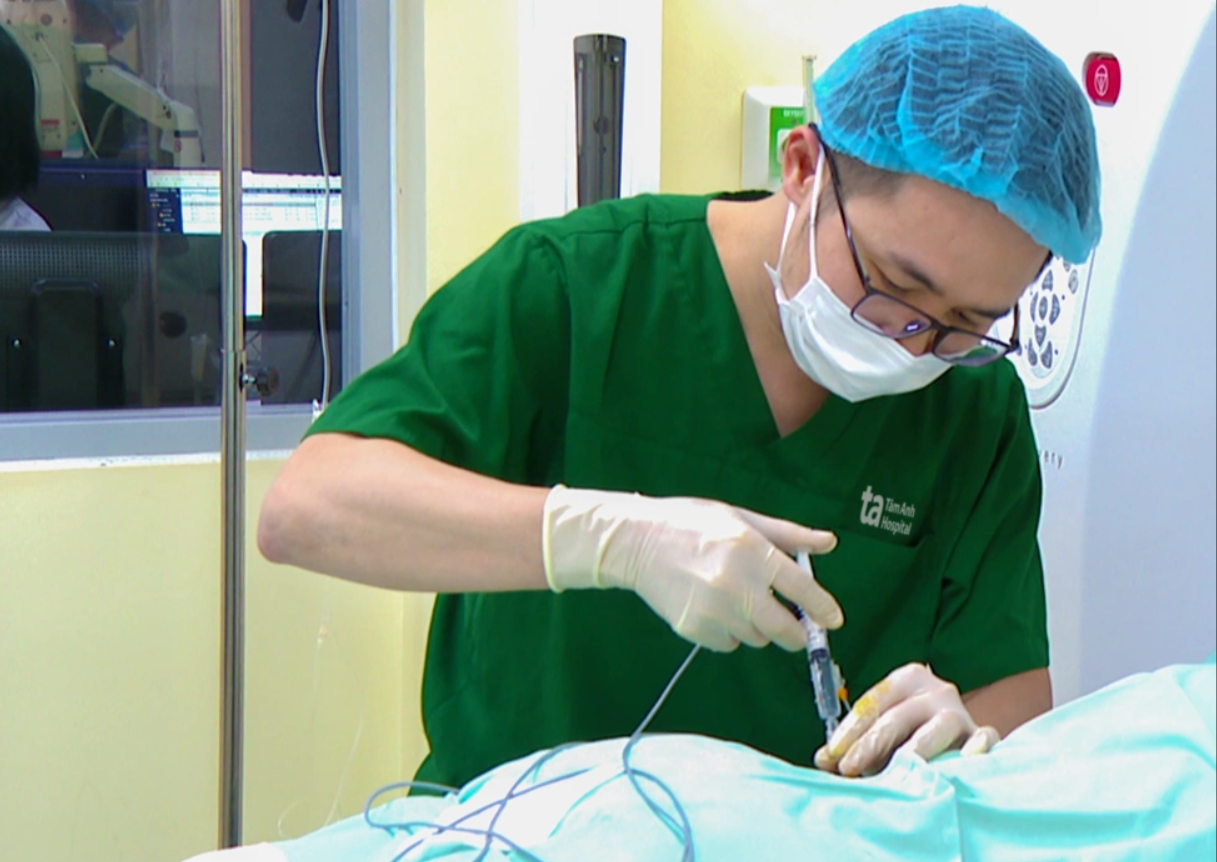
Doctor Khanh performs radiofrequency ablation to treat disc herniation. Illustration photo: Tam Anh General Hospital

Radiofrequency ablation and surgery have different treatment goals. RFA primarily aims to reduce pain and improve motor function, offering a less invasive option. In contrast, surgery is typically indicated for severe nerve compression, progressive damage, or when non-invasive treatments, including RFA, have failed to provide relief.

Therefore, you should consult a Neurology - Spine specialist for a thorough evaluation. The doctor will assess the extent and location of the herniation, your mobility, muscle strength, nerve reflexes, and MRI results of the spine to determine the most appropriate treatment plan for your specific condition.

Doctor Le Van Khanh

Head of Interventional Radiology Department

Center for Diagnostic Imaging and Interventional Radiology

Tam Anh General Hospital Ha Noi

Readers can ask questions about neurological conditions here for doctors to answer.
By VnExpress: https://vnexpress.net/co-nen-dieu-tri-thoat-vi-dia-dem-bang-dot-song-cao-tan-5127812.html
Tags: disc herniation radiofrequency ablation

News in the same category

Why WHO recommends front-of-pack nutrition warnings on product packaging?

Why WHO recommends front-of-pack nutrition warnings on product packaging?

The World Health Organization (WHO) states that placing information about sugar, salt, and fat content on the front of packaging helps consumers quickly identify foods to limit.

Can cupping and bloodletting cure stroke?

Can cupping and bloodletting cure stroke?

Recent reports and shared experiences promoting finger-pricking bloodletting and cupping techniques on the neck to 'remove blood clots' for stroke treatment or prevention have raised questions. Is there any truth to these claims? (Lien, 30, Hanoi)

Forgetting the way home, mistaken payments: easily overlooked signs of dementia

Forgetting the way home, mistaken payments: easily overlooked signs of dementia

Forgetting the way home, taking the wrong medication, or confused payments can be early signs of dementia, but are often dismissed as normal manifestations of aging.

Recognizing eye diseases through blurry vision symptoms

Recognizing eye diseases through blurry vision symptoms

Blurry vision is a common symptom that can be caused by various eye conditions such as nearsightedness, cataracts, or retinal detachment.

Why arm swelling occurs after breast cancer surgery

Why arm swelling occurs after breast cancer surgery

"My arm is swollen after breast cancer surgery. Why does this happen and how can I improve it?" asks Ngoc Ha, 34.

Why eating three meals supports weight loss

Why eating three meals supports weight loss

I want to diet for weight loss by eating two meals a day and skipping dinner, but you advise that eating three full meals is better for weight loss. Why? (Ngoc Anh, Ho Chi Minh City)

Is it better to exercise during the day or at night?

Is it better to exercise during the day or at night?

The time of day you exercise does not determine muscle gain effectiveness; the crucial factor is choosing a suitable time to maintain regular, long-term physical activity.

The coffee drinking mistake that raises cancer risk

The coffee drinking mistake that raises cancer risk

Many people enjoy sipping steaming hot coffee, but experts warn that drinking it too hot can increase the risk of esophageal cancer.

First laparoscopic surgeries performed on Phu Quy island

First laparoscopic surgeries performed on Phu Quy island

The Phu Quy military-civilian medical center performed its first laparoscopic surgeries on four patients, enabling residents to receive treatment directly on the island instead of traveling to the mainland.

Should people over 60 undergo cosmetic surgery?

Should people over 60 undergo cosmetic surgery?

Age is not an absolute barrier to cosmetic surgery, but combining many procedures at once or neglecting underlying health conditions can increase risks.

Eng English
China 中国人
  • News
  • World
  • Business
  • Entertainment
  • Sports
  • Law
  • Education
  • Health
  • Lifestyle
  • Travel
  • Science
  • Digital
  • Automobiles
FPT Tower, 10 Pham Van Bach Street, Dich Vong Ward,
Cau Giay District, Hanoi, Vietnam
Email: contacts@vnportal.net
Tel: 028 7300 9999 - Ext 8556
Advertise with us: 090 293 9644
Register
© Copyright 2026 vnnow.net. All rights reserved.
Terms of use Privacy policy Cookies