Not all instances of forgetfulness are indicative of illness, according to Doctor Nguyen Tran To Tran, Deputy Head of the Geriatrics Department at Nhan dan Gia Dinh Hospital. Speaking at the "Cung Vung Buoc No. 7 - Golden Age, Happy and Healthy" program on the International Day of Older Persons, 1/10, Doctor Tran explained that older adults might forget a familiar name only to recall it later, misplace keys and then find them, or take a moment to remember what they ate for breakfast. However, when forgetfulness becomes repetitive, progressively worsens over time, and impacts daily life, Doctor Tran warns that "there is a problem".
For example, an individual might ask family members why they haven't eaten shortly after finishing breakfast, having no recollection of the meal. Someone who previously managed grocery shopping independently might now forget the way home, forcing them to stop this activity. Or, a person who regularly cooked might no longer remember the steps to prepare a familiar dish. Such changes require prompt evaluation by a specialist doctor.
Beyond memory issues, family members might observe an older adult repeatedly asking the same question despite having just received an answer, taking medication twice or confusing different drugs, or struggling with financial management, making confused payments, or losing control over their money. Some individuals may experience personality changes, becoming easily irritable, sad, or less willing to go out. Others might visit familiar places but cannot find their way back home.
"The crucial aspect is to assess if the person has changed compared to their previous self", Doctor Tran advises.
Dementia is a progressive decline in cognitive function that affects a person's ability to perform daily activities and self-care. In severe stages, patients may lose the ability to care for themselves, from forgetting how to brush their teeth, get dressed, or bathe, to becoming bedridden and incontinent. Some patients also exhibit behavioral disturbances such as delusions, hallucinations, or aggression towards caregivers.
At this point, the burden shifts heavily onto family members. According to Doctor Tran, caregivers of dementia patients are often referred to as "the second invisible patient". They endure physical pressure, potentially staying awake through the night when the patient experiences insomnia. They also face psychological strain. Many caregivers blame themselves, believing their care is inadequate, leading to their parents' worsening condition, despite it being a natural degenerative process of the disease.
Vascular dementia can onset around 60-65 years of age after a stroke, while Alzheimer's disease is more common at older ages, typically around 70-80 years old. As the population ages, the number of people with various forms of dementia tends to increase. At the Geriatrics Department of Nhan dan Gia Dinh Hospital, approximately 40-50 patients are treated daily, with 10-20% having co-occurring dementia, mostly in moderate and severe stages.
In reality, 70-80% of the public holds misconceptions about dementia, believing that memory loss is a normal part of aging. This belief that "everyone forgets when they get old" often leads patients to miss the "golden window" for medical intervention. Early treatment cannot fully reverse the disease process but can improve symptoms, manage risk factors, preserve remaining abilities, and extend the period during which patients can care for themselves.
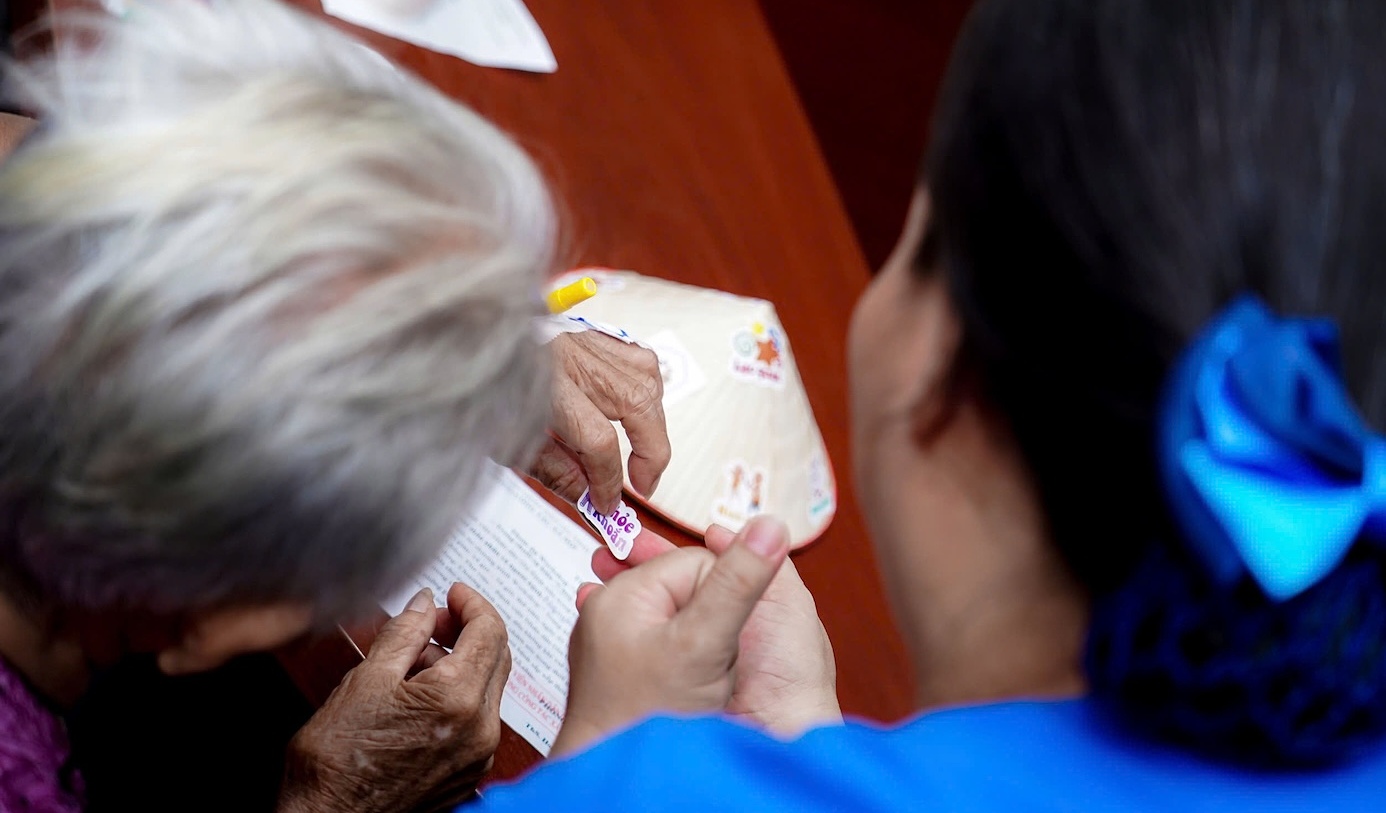 |
Older patients participate in decorating conical hats with stickers during the "Cung Vung Buoc No. 7 - Golden Age, Happy and Healthy" program organized by the Social Work Department, Nhan dan Gia Dinh Hospital, on the afternoon of 1/10. Photo: Hospital provided |
However, poor memory in older adults is not always due to dementia; it can be linked to other medical conditions. Doctor Bach Thanh Thuy, from the Outpatient Department at An Sinh General Hospital, cited the case of a 72-year-old man who experienced minor forgetfulness and walked slowly, which his family attributed to age. However, a CT scan revealed a large meningioma causing compression. Other potential causes of memory impairment include chronic cerebral ischemia, cerebral infarction, insomnia, stress, or medication side effects.
Dementia prevention focuses on controlling risk factors and maintaining a healthy lifestyle. Older adults should consume adequate nutrition, increase green vegetables, limit salt, get sufficient sleep, and manage chronic conditions such as hypertension, diabetes, and dyslipidemia. Appropriate physical activity, like walking or duong sinh (Vietnamese traditional exercise), should be combined with maintaining social interaction with children, grandchildren, and friends, and engaging in mentally stimulating activities such as reading, playing chess, or gardening.
Second-degree Specialist Doctor Huynh Thi Yen Vi, Head of the General Internal Medicine Department at An Sinh General Hospital, emphasized that mental health is a vital component of care for older adults. Loneliness and social isolation are associated with an increased risk of depression, sleep disorders, cognitive decline, and dementia.
Many older adults live with their children and grandchildren but still experience loneliness because they are not listened to or lose their role in the family when their children and grandchildren "do everything for them". Old age also brings many losses, such as retirement, declining health, limited mobility, the passing of friends, and children starting families or moving away. Losing a life partner is particularly impactful, as it means losing not only a cohabitant but also a confidant, a shared memory keeper, and an everyday companion.
Experts recommend that caring for older adults extends beyond medication or meals. Family members should dedicate time to conversation, maintain shared meals, encourage older adults to meet friends, play chess, garden, and participate in community activities. It is important to respect and allow older adults to make decisions appropriate to their abilities, helping them feel that they are still useful.
Le Phuong