


Patients undergoing joint replacement often express concern about a "foreign body sensation" or an unnatural gait after surgery. This is a common worry, and medical advancements, particularly robotic-assisted surgery, offer solutions to mitigate such discomfort.
Joint replacement surgery involves replacing a damaged joint with an artificial one made from biomaterials or metal. This procedure aims to alleviate pain and restore mobility, with modern techniques being minimally invasive, reducing pain and blood loss, allowing patients to walk 1-2 days after surgery and quickly resume normal activities.
However, like any surgical procedure, joint replacement carries certain risks. A common concern is a "foreign body sensation" in the artificial joint, which often stems from an unsuitable size or placement of the artificial joint relative to the patient's unique bone structure.
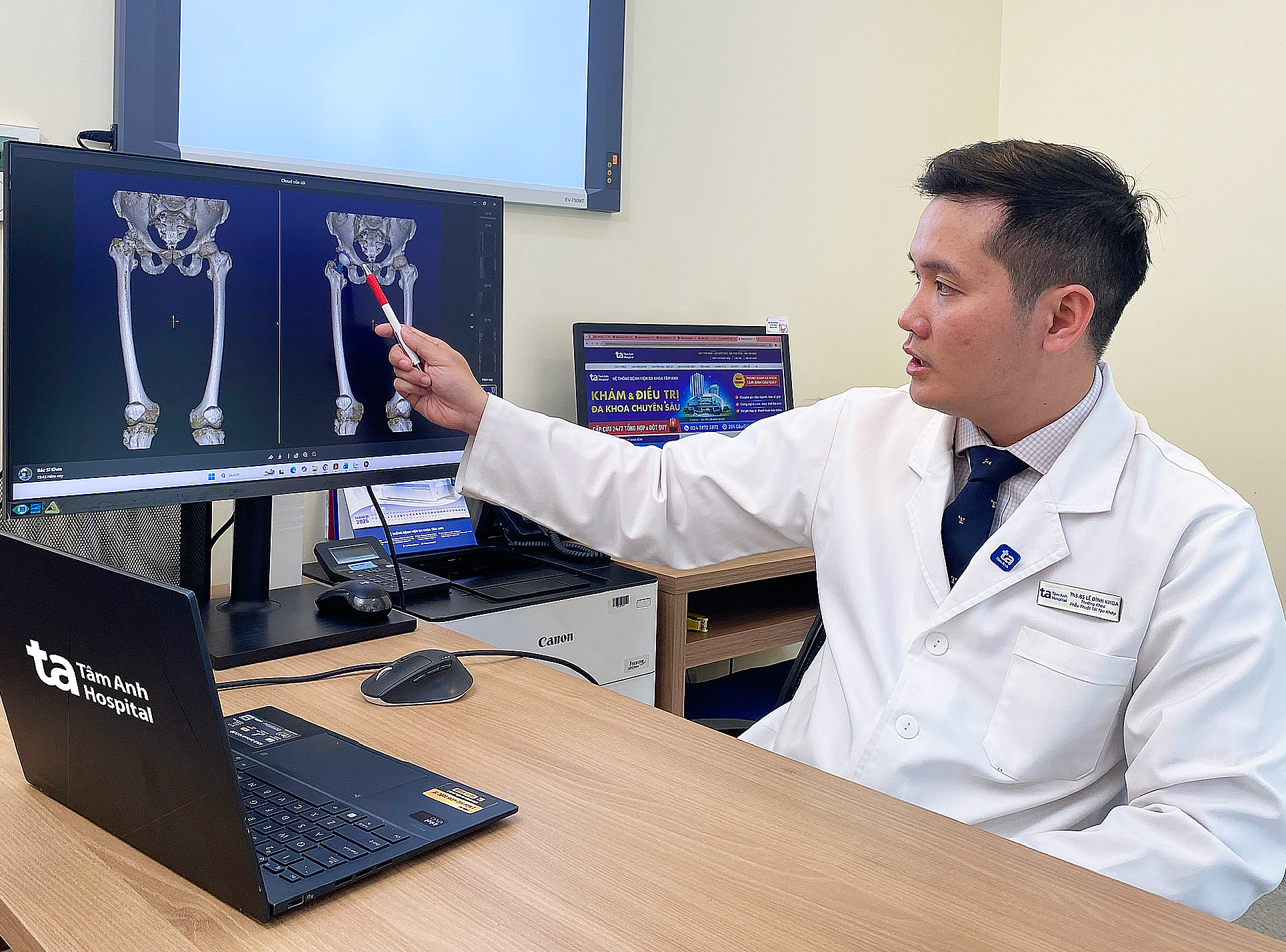 |
Doctor Khoa explains the patient's joint function. Photo: Tam Anh General Hospital |
To address these complications and enhance treatment effectiveness, Tam Anh General Hospital has implemented the Cuvis-Joint robot-assisted joint replacement system. This system integrates with advanced surgical techniques such as kinematic alignment joint replacement, the ABMS surgical approach, and SuperPATH, aiming for optimal outcomes.
The J-Planner software, a key component of the Cuvis-Joint robot, enables surgeons to fully visualize the joint and create individualized surgical plans. This includes precise details like incision direction, joint placement, and bone cuts. Based on these parameters, the robot calculates and selects an artificial joint with a near-perfectly precise size, closely mirroring the natural joint prior to the illness.
During the operation, surgeons meticulously re-verify the surgical plan, ensuring that all anatomical landmarks align with the patient's actual bone structure via a "GPS navigation map." Following this verification, surgeons instruct the robot to perform bone cuts according to the precise plan, minimizing human error.
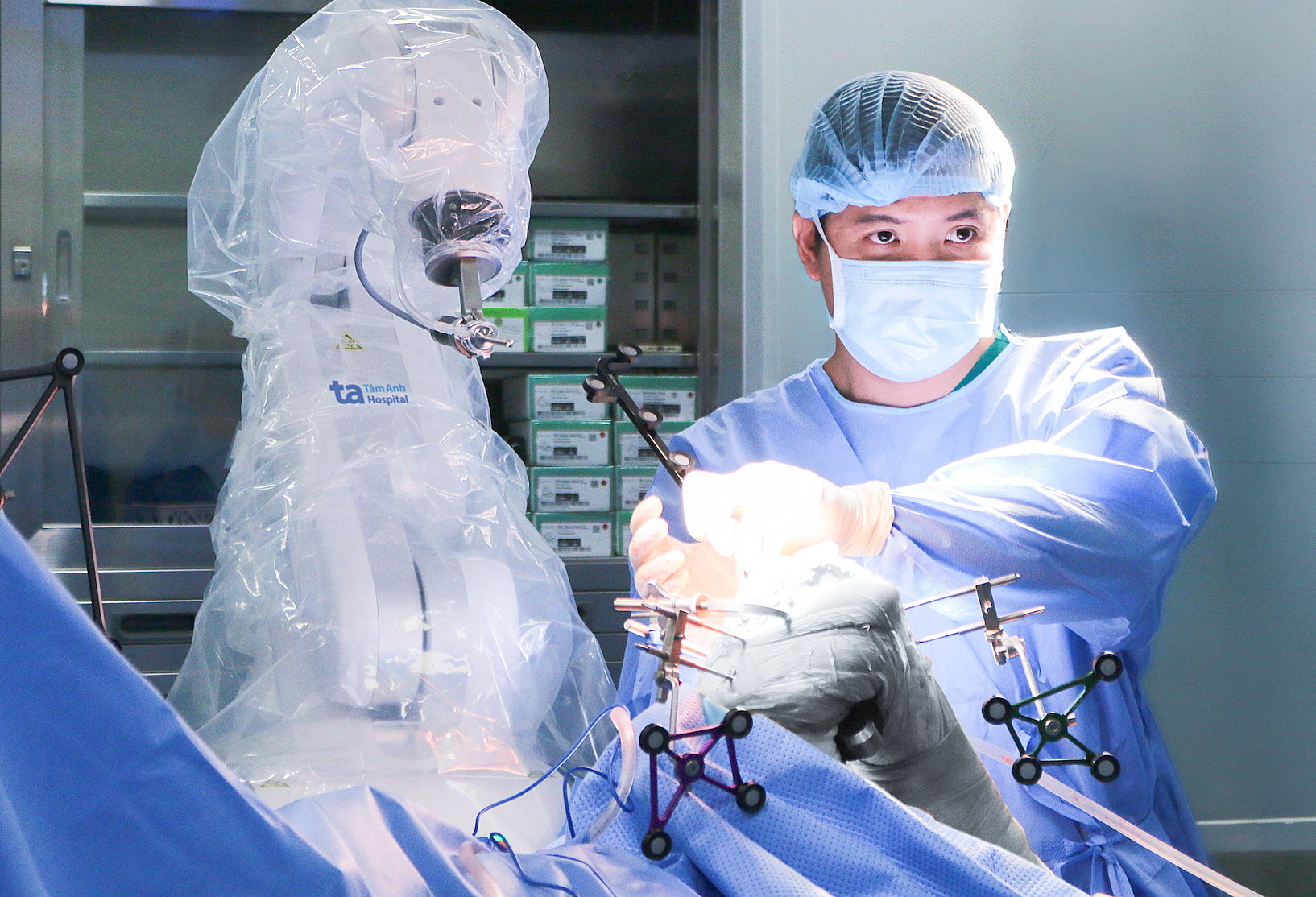 |
Doctor Khoa positions on the bone, ensuring the surgical plan matches the patient's actual knee joint. Photo: Tam Anh General Hospital |
With the precision offered by the Cuvis-Joint robot, the artificial joint is virtually "custom-fitted" for each patient, ensuring optimal size and placement. This significantly enhances natural movement and flexibility, eliminating the "foreign body sensation." Moreover, accurate joint placement through individualized planning reduces numerous risks, including: joint loosening, dislocation, limb length discrepancy, pulmonary embolism, fractures, and infection. This approach is highly effective even for complex cases, such as patients with severe obesity, challenging surgical site visualization, or intricate limb axis deformities.
Patients with an indication for joint replacement should seek early treatment. Delaying care can lead to increased pain, reduced mobility, and potential impact on other organs. Consulting and undergoing surgery at hospitals with specialized orthopedic trauma departments is recommended to ensure the selection of an appropriate surgical method, patient safety, and complication avoidance.
Master of Science, Doctor, Level I Specialist Le Dinh Khoa
Head of Joint Reconstruction Department
Tam Anh General Hospital, TP HCM
| Tam Anh General Hospital is currently hosting a "Consultation Week" program titled "Vietnam's first new generation AI joint replacement robot: correct indications, safe surgery, superior effectiveness" on its official website. Readers' questions will be addressed by doctors. Interested readers can submit questions here. |


