Your condition may be related to a refractive error, specifically astigmatism in one eye. Astigmatism occurs when the cornea or lens has an uneven curvature. This prevents light entering the eye from focusing precisely on the retina, causing images to appear blurry, distorted, or hazy.
Astigmatism can affect one or both eyes. In cases of unilateral astigmatism, where the two eyes have different refractive errors or visual acuities, the brain constantly adjusts to reconcile images from both sides. This disparity can lead to eye strain, headaches, and difficulty concentrating during prolonged reading or work, even if one eye sees relatively clearly. Some individuals also report poorer night vision than usual.
This refractive error can develop early in life due to congenital corneal characteristics or familial genetic factors. Unilateral astigmatism can also form if one eye's cornea undergoes structural changes, such as after an eye injury, inflammation leaving corneal scarring, or due to certain corneal conditions like Keratoconus, which causes an irregular corneal surface. Astigmatism in one eye can also coexist with other refractive errors like myopia (nearsightedness) or hyperopia (farsightedness), leading to a noticeable difference in blurriness between the two eyes.
In most cases, astigmatism is not dangerous but can cause significant discomfort in daily life if not properly corrected. If the astigmatism is mild and has minimal impact on vision, a doctor may recommend periodic monitoring. When astigmatism is moderate or causes noticeable blurred vision, the common approach involves wearing prescription glasses or contact lenses to help light focus correctly on the retina, thereby improving vision.
For astigmatism affecting only one eye, lenses are measured and adjusted individually for each eye to balance vision between the two sides, helping to reduce eye strain or difficulty concentrating. Additionally, rigid gas permeable contact lenses for nocturnal corneal reshaping, known as orthokeratology (Ortho-K), can be used to improve vision during the day.
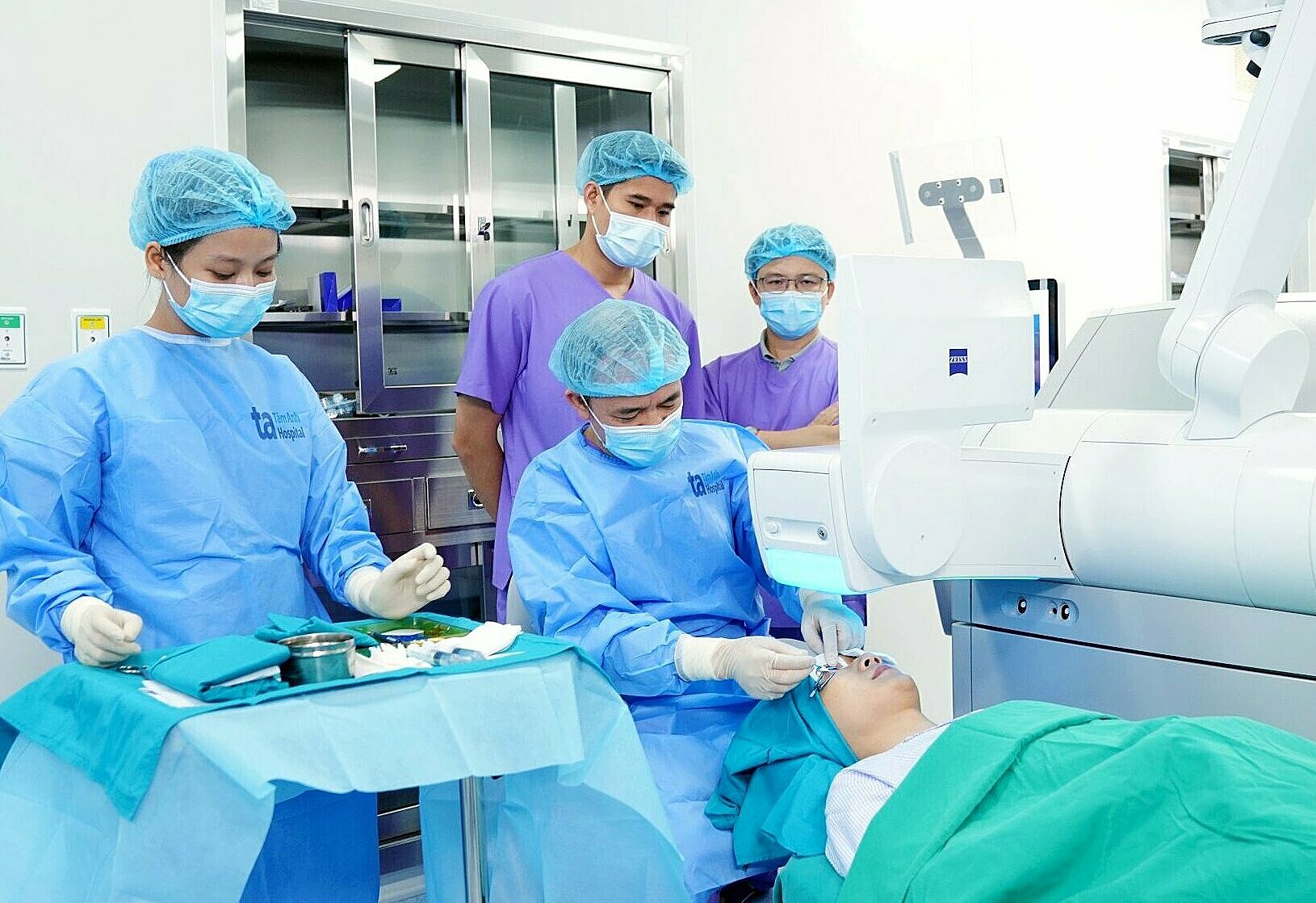 |
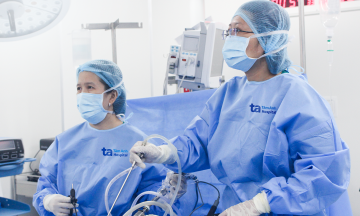
An eye surgery team for people with refractive errors. Illustration: Tam Anh General Hospital |
For individuals with high astigmatism or those who prefer not to rely on glasses, doctors may consider laser refractive surgeries such as femto lasik, prk, smile pro, or the implantation of phakic intraocular lenses (icl) to improve vision.
You should consult an ophthalmologist for a thorough examination and accurate diagnosis of your current vision. Individuals with astigmatism should also have regular eye check-ups, use the correct prescription as advised by their doctor, and allow their eyes adequate rest when working for extended periods with electronic devices.
Dr. Phung Van Thanh, MSc
High-Tech Eye Center
Tam Anh General Hospital Hanoi
| Readers can submit ophthalmology questions here for a doctor's response. |