Answer:
Melasma and freckles are forms of hyperpigmentation disorders. They occur when melanin, a natural pigment produced by melanocytes, is overproduced or overactive. Excess melanin accumulates, creating dark patches or spots that result in uneven skin tone and affect aesthetics. This condition stems from many factors, including genetics, hormonal changes, sun exposure, skin aging, and misuse of cosmetics or chemicals.
The method for reducing melasma and freckles depends on several factors: the severity, underlying cause, lifestyle habits, skin quality, and chosen treatment approach. A dermatologist or aesthetic specialist will advise on a suitable treatment regimen for each individual, based on the type of hyperpigmentation, its severity, quantity, size, and location.
Currently, laser treatment for melasma and freckles is gaining popularity due to its ability to selectively target melanin, helping to improve pigmented patches and brown spots on the skin. New-generation laser devices, such as Q-switched Nd:YAG, Pico laser, or ultra-short pulse lasers, operate based on the principle of selective photothermolysis.
Laser beams with specific wavelengths penetrate the skin's surface without damaging the epidermis. They target melanin in the designated skin layer and break it into tiny fragments for the body to eliminate, while minimizing heat diffusion to surrounding healthy skin. This allows lasers to lighten dark spots, even skin tone, and brighten the complexion without skin abrasion or stripping the natural protective layer. The treatment is safe for surrounding skin when performed with correct technique by an experienced doctor.
Many studies indicate that short-pulse lasers like Pico can also stimulate the proliferation of collagen and elastin beneath the skin, promoting skin rejuvenation and improving dermal structure for firmer skin. However, to achieve these results, the laser must be performed with standard equipment, at appropriate energy levels, and under the supervision of an experienced doctor. If the laser energy used is too strong or the technique is incorrect, or if the laser targets the wrong skin layer, it can lead to prolonged skin irritation, and even risks of burns, post-inflammatory hyperpigmentation, or damage to skin structure.
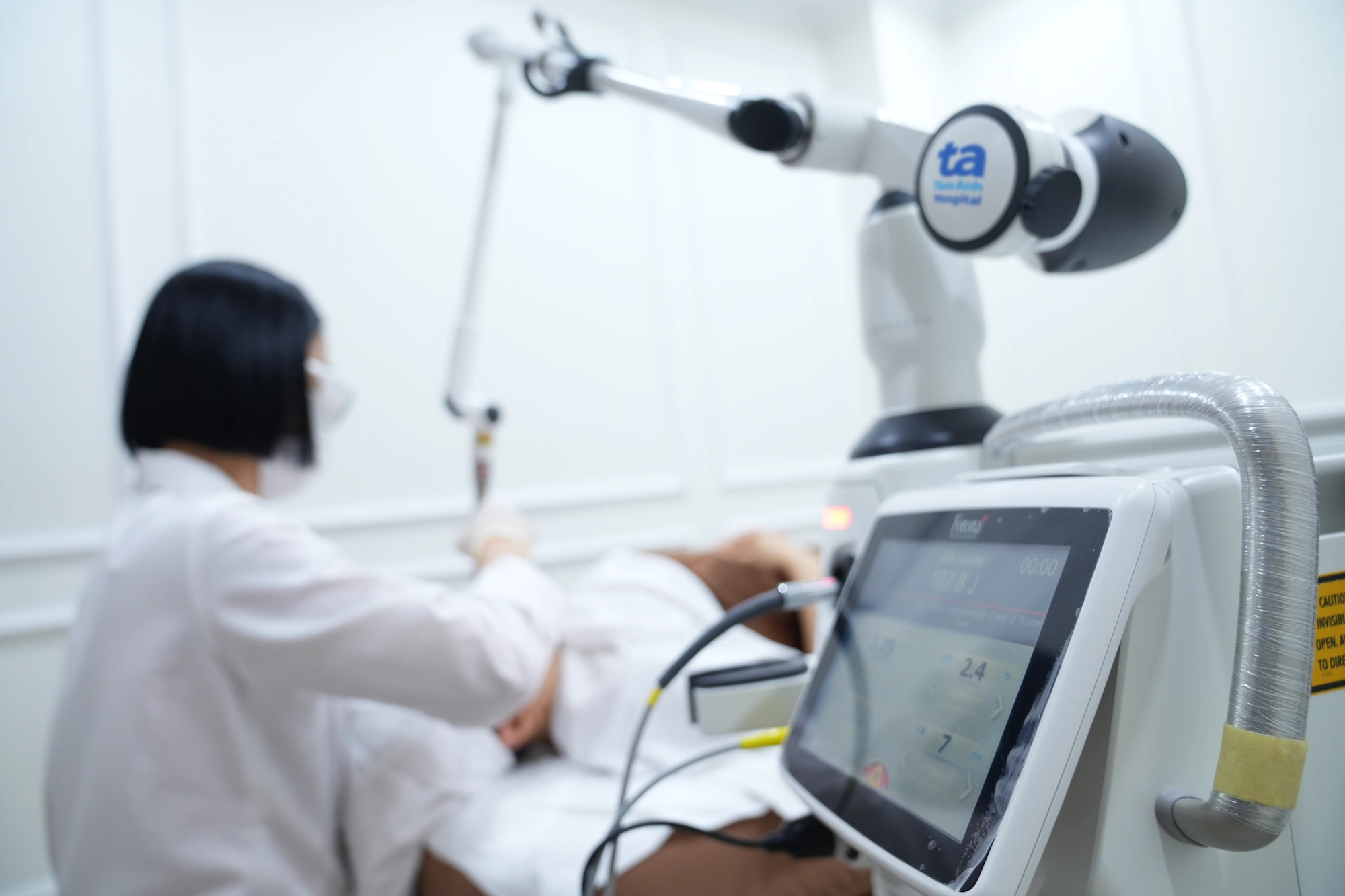 |
A woman receives laser treatment for melasma and freckles at Tam Anh General Hospital Hanoi. Illustration: Trang Le |
After each laser session, skin may temporarily become more sensitive. Some individuals experience mild redness, slight tightness, slight darkening, or dryness for the first 24-72 hours. This is a normal reaction as the skin has just been exposed to energy and requires time to recover. For effective treatment, post-laser skin needs adequate moisturizing with restorative products containing ceramide, panthenol, or hyaluronic acid. Additionally, you must consistently apply SPF 50+ sunscreen every day. For the first 5-7 days, avoid exfoliating, using retinol, or aggressively rubbing the treated area. These steps help maintain the skin's protective barrier, reduce irritation, and prevent hyperpigmentation from recurring.
To determine if laser treatment for melasma and freckles is suitable for your skin condition, you should visit a dermatology and aesthetic clinic for a doctor's examination and a personalized treatment plan. Typically, for effective melasma treatment, doctors combine multiple methods, from topical medications to high-tech treatments such as laser therapy, electrophoresis, and mesotherapy injections. Each method has different advantages, disadvantages, and costs, depending on the location, area, severity of the treated skin, and individual needs.
Doctor CKI Be Thu Thuy
Dermatology and Aesthetic Unit
Tam Anh Cau Giay General Clinic
| Readers can submit questions about dermatological and aesthetic skin conditions here for doctor consultation. |