It is a common morning scenario: you wake up to a tingling or prickling sensation in your fingers and stiff shoulders. You stretch your arms and rotate your shoulder joints until the normal feeling returns. You get out of bed, shake your hands vigorously, and reassure yourself that it was just an awkward sleeping position last night, nothing to worry about. However, the reality may not be so simple. Your nightly sleeping posture is often the root cause of this issue.
Many people are unaware of this habit. They fall asleep with relaxed arms, but around 3 am, their bodies automatically curl up. This posture, where both arms are tucked tightly against the chest, is colloquially known online as the "T. rex posture" because it resembles the short forelimbs of a Tyrannosaurus rex. Although not an official medical term, doctors warn that maintaining this posture night after night can turn temporary numbness into permanent nerve damage.
"When you sleep with your arms bent and pressed tightly against your body, you are directly compressing the nerves running through your elbows or wrists," said Doctor Raj Dasgupta, a sleep medicine specialist and Chief Medical Advisor at Sleepopolis, in an interview with HuffPost. This condition causes ischemia to the nerves, leading to numbness or tingling in the arms. In the long term, it also puts pressure on the shoulder area, resulting in aches and stiffness.
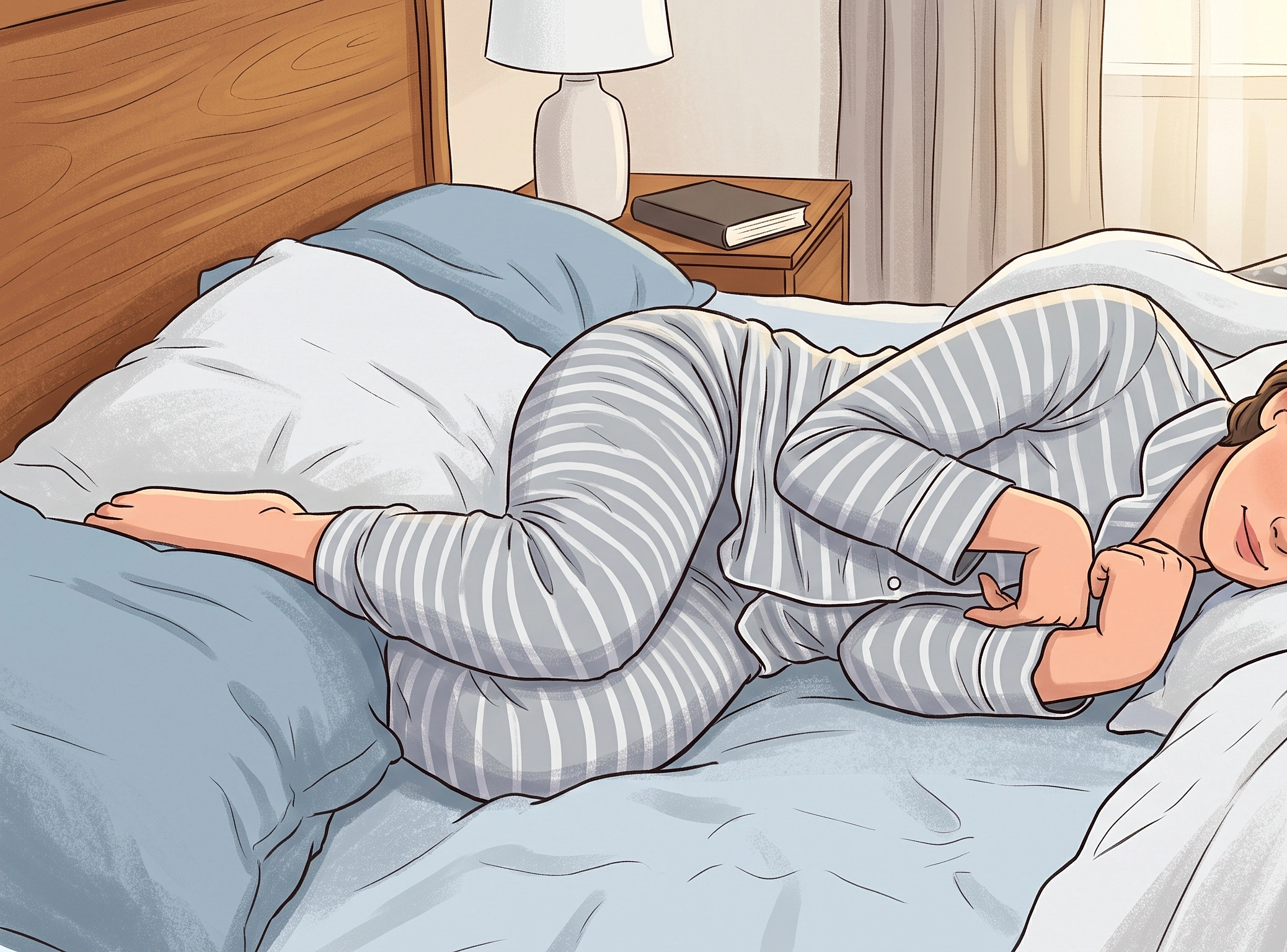 |
The posture of tucking both arms tightly against the chest can cause nerve damage. AI-generated illustration. |
Doctor Matthew Bennett, an orthopedic surgeon in the US, stated that bending the elbows throughout the night increases pressure at the narrow points where nerves pass. Some individuals even experience nerve compression in the wrist, similar to carpal tunnel syndrome, causing numbness and hand weakness. Notably, this is a common habit that tends to worsen silently over time.
Kieran Sheridan, a physical therapist and founder of GulfPhysio, frequently treats patients with this condition. Patients often describe their arms as "numb" or feel the need to shake their hands vigorously upon waking. Sheridan noted: "This is a signal that your nervous system is experiencing instability."
Doctor Dasgupta offered similar advice: "If your hands go numb every night, if the numbness persists for a while after waking, or if your hands start to show signs of weakness during the day, it is time to see a doctor." Warning symptoms include sharp pain radiating down the arm, difficulty gripping objects, or frequently dropping your phone accidentally. Do not dismiss these as sudden clumsiness or minor annoyances. They are clear warnings that nerve damage is progressing.
Doctor Bennett recommends that anyone experiencing these signs more frequently should seek medical attention early. "Most cases respond well to conservative treatments if detected early," he said. If warning signs are ignored, serious problems can arise. Doctor Dasgupta cautioned: "Numbness is often temporary and will resolve on its own when you change your sleeping position. However, if the compression persists for many weeks or months, it can lead to permanent nerve damage."
The act of curling up while sleeping provides a sense of safety, an instinctive reflex similar to pulling a blanket tighter when it is cold. However, behind this reaction are often deeper psychological and physiological factors. The body tends to automatically enter a defensive mode even when there is no real danger. Doctor Bennett explained that when the nervous system enters a heightened state of alert due to chronic pain, stress, insomnia, or psychological trauma, we unconsciously choose postures that offer a sense of security and less exposure.
The need for security during sleep is natural. But for some, this process is more complex. Judit Merayo Barredo, a clinical psychologist, recounted a patient who sought treatment for chronic insomnia and prolonged exhaustion. Every night, this patient would wake up curled in a "T. rex" posture, with arms pressed tightly against her chest and shoulders hunched.
Barredo shared: "Even after many hours of sleep, she always woke up with a stiff body, clenched jaw, and a heavy mood." After investigation, the psychologist realized the patient was suffering from severe anxiety, and this condition manifested even during sleep.
The primary goal was to soothe the patient's nervous system before bedtime. Barredo guided her through full-body scan exercises, journaling to release stress before sleep, and modifying her bedroom environment: adding supportive pillows, adjusting to soft lighting, and maintaining a regular routine.
According to Barredo, the patient beginning to change her sleeping posture was "one of the first signs that her body was relearning how to feel safe." Of course, not everyone who sleeps in the "T. rex posture" suffers from chronic anxiety. Everyday stress, poor sleep quality, or general muscle tension can also trigger this curled-up reaction.
The biggest challenge is that willpower is completely inactive once you are asleep. You cannot simply tell yourself to stop tucking your arms in the middle of the night. Therefore, the most effective solution is to create physical barriers that make it harder to curl up your arms.
How to "retrain" your body while sleeping
Doctor Bennett suggested a simple trick: wrap a washcloth around your elbow and secure it lightly with an elastic bandage. The washcloth acts as a soft barrier, making deep arm bending uncomfortable without waking you up. If you experience wrist pain, wearing a wrist brace at night is also effective. For side sleepers, physical therapist Sheridan proposes two methods: placing a small pillow or folded towel between your arms and chest to prevent full arm tucking; or hugging a long body pillow to keep your arms in a naturally relaxed position while still providing support.
If you sleep on your back, keep your arms relaxed along your sides or resting on a pillow near your hips. Your arms should remain straight or only slightly bent; absolutely avoid tucking them under your body or under your pillow. Sheridan explained: "Keeping your arms open allows for better blood circulation, reduces pressure on the nerves, and promotes faster muscle recovery."
Because this posture often stems from a stressed nervous system, Doctor Bennett advises practicing relaxation exercises before bedtime, such as deep breathing or gentle stretching. "The goal is not to rigidly force a posture correction," he said. "The important thing is to create the best conditions for your body to truly rest and recover."
If you frequently wake up with numb hands, stiff shoulders, or a tingling sensation in your arms, you do not need to overhaul your entire routine. Start with small changes tonight. Each good night's sleep, each correct posture, is a small step towards protecting your nerve health from silent damage.
My Y (According to HuffPost)