Response:
Concerns regarding repeatedly boiling water often stem from the belief that nitrates in water concentrate as water evaporates, potentially transforming into nitrosamine, a known carcinogen. However, the nitrate concentration in standard tap water is very low. Normal boiling does not produce a significant amount of nitrosamine. The risk becomes a concern only if the original water source is already heavily contaminated.
The World Health Organization (WHO) strictly regulates nitrate limits in drinking water. Currently, there is no reliable scientific evidence indicating that repeatedly boiling water itself causes cancer.
If water initially meets safety standards, it poses no danger, and re-boiling it one or two times for consumption remains safe. It is advisable not to leave water in a kettle for an extended period, such as overnight, as it may become contaminated with environmental bacteria. Water with an unusual smell or abnormal sediment should be discarded. Water already contaminated with heavy metals is harmful regardless of whether it is boiled once or five times.
It is important to note that uninspected well water and water from areas contaminated with arsenic should not be used. Kettles should be cleaned regularly to prevent the accumulation of white calcium deposits.
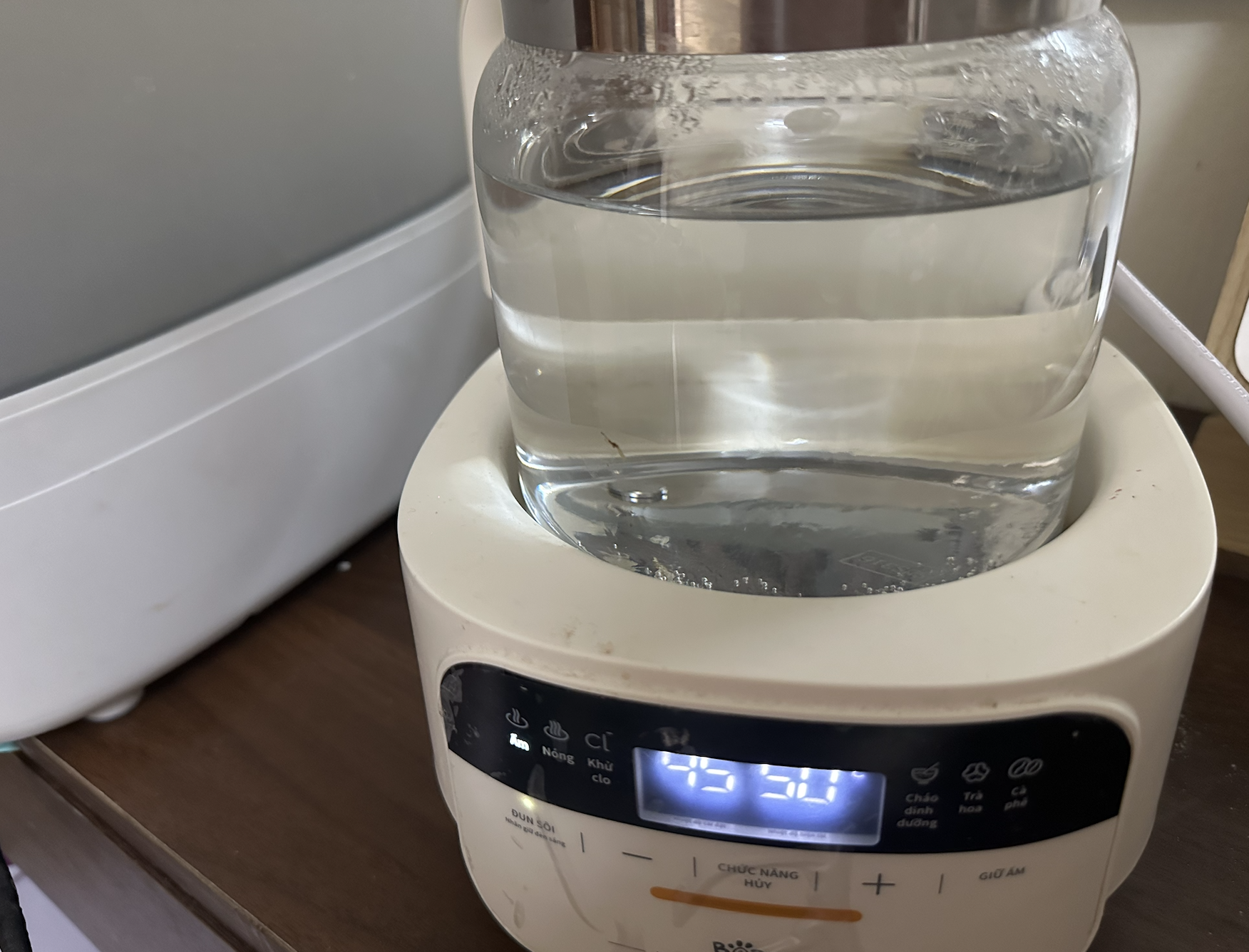 |
Water meeting standards, when boiled multiple times, is not harmful. *Photo: Thuy Linh*
Doctor Ngo Van Ty
Department of Oncology, Hanoi Medical University Hospital