Many people instinctively step back or avoid looking directly into a microwave oven while it operates, fearing radiation exposure.
Doctor Lai Yixuan, a radiation oncology specialist in Taiwan, China, confirms that microwaves are a form of electromagnetic wave categorized as "non-ionizing radiation". This energy level is insufficient to damage cellular DNA structures. Therefore, under normal operating conditions, microwave ovens do not increase cancer risk. Unless the oven's structure is severely damaged, standing close, looking directly, or even pressing one's face against the oven door will not harm DNA.
On his personal YouTube channel, Doctor Lai Yixuan explained that public concern about "radiation harming the body" often arises from conceptual misunderstandings. Microwave radiation is similar to that emitted by cell phones or Wi-Fi, both falling under the non-ionizing category.
Lai Yixuan clarified that the microwave energy used in ovens differs significantly from dangerous ionizing radiation, such as X-rays or those from computed tomography (CT) scans. Microwave heating does not expose nearby individuals to radiation, nor does it leave any radiation residue in food. Once the device is switched off, wave emission ceases immediately, and the radiation dissipates entirely.
Addressing the apprehension some users feel about approaching or looking directly into a running oven, Doctor Lai Yixuan offered two reassuring points:
Microwave ovens feature a sealed design with a metal mesh shield on the door and a safety lock. Furthermore, maximum wave leakage is strictly controlled by technical standards.
Wave intensity diminishes rapidly with distance, adhering to the inverse square law. Even a short distance away significantly reduces radiation levels.
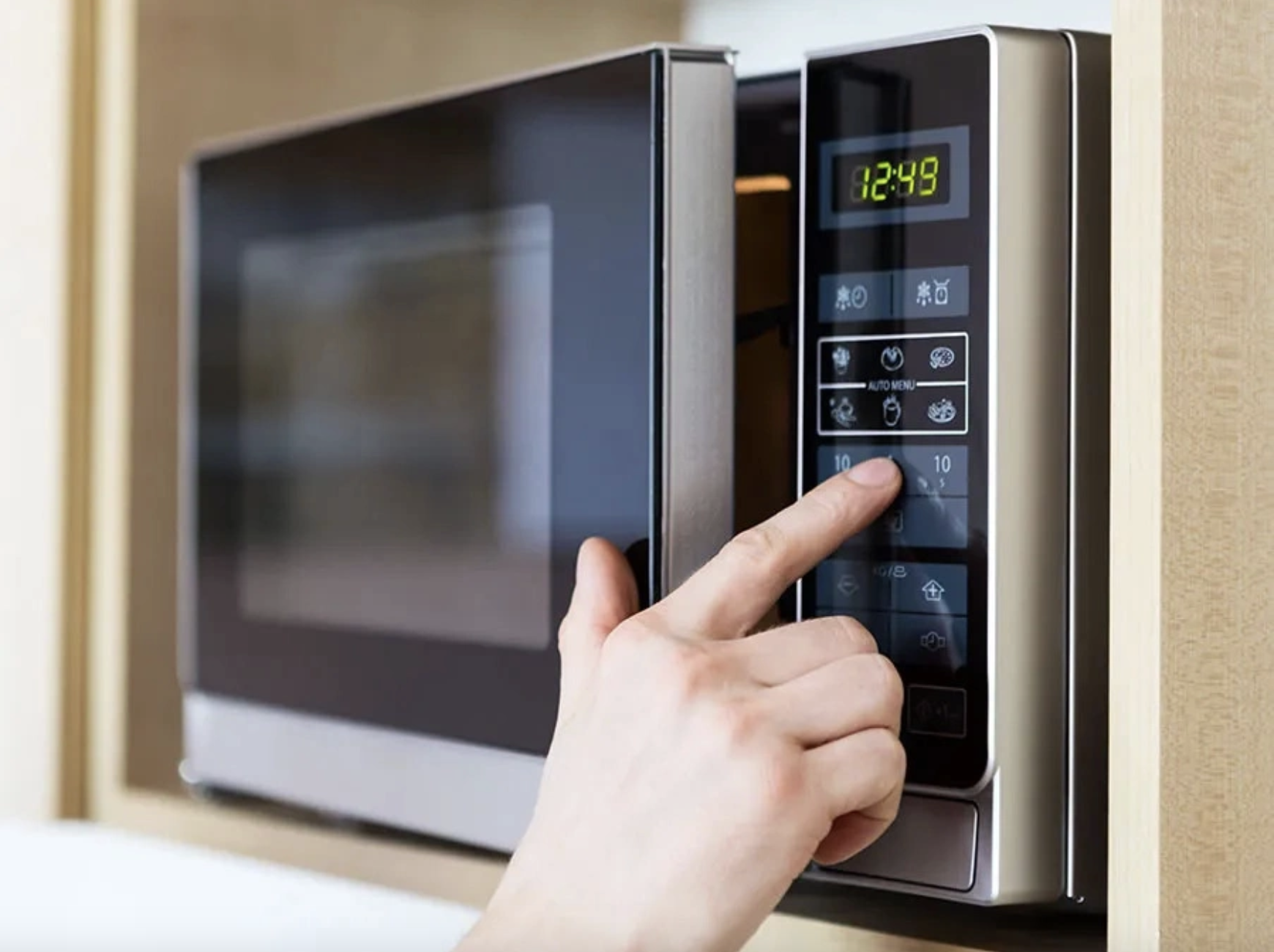 |
Normal use of the oven does not cause cancer. Photo: Rostislav Sedlacek/Fotolia |
Normal use of the oven does not cause cancer. Photo: Rostislav Sedlacek/Fotolia
The US Food and Drug Administration (FDA) advises users to avoid two common mistakes to ensure safety:
Covering or sealing food: Internal pressure differences can lead to explosions or splattering. A small vent should be left when heating to prevent this risk.
Using incorrect container materials: Metal items with sharp edges or thin foils can cause arcing, emitting sparks that risk damaging the microwave generator. Additionally, the wax lining in plastic containers and paper cups has a specific heat tolerance limit. Users should avoid low heat-resistant materials to prevent chemicals from leaching into food, which could harm health.
My Y (According to SETN)