Eng English
China 中国人

Eng English
China 中国人
  • News
  • World
  • Business
  • Entertainment
  • Sports
  • Law
  • Education
  • Health
  • Lifestyle
  • Travel
  • Science
  • Digital
  • Automobiles
  • Trở lại Thể thao
  • Health
Sunday, 30/8/2026 | 10:04 GMT+7

When are polysomnography and spirometry needed?

Individuals with loud snoring or sleep apnea require polysomnography, while persistent coughing, wheezing, shortness of breath, or suspected asthma and chronic obstructive pulmonary disease often necessitate evaluation with spirometry.

According to Dr. Dang Thi Mai Khue, Deputy Head of the General Internal Medicine Department at Tam Anh General Hospital, Ho Chi Minh City, polysomnography and spirometry are distinct techniques. Depending on the patient's respiratory condition, doctors may recommend one or both methods.

**Polysomnography (Sleep Respiratory Polygraphy)**

This method records multiple parameters during a patient's sleep, helping to assess respiratory status and sleep-related disorders. Polysomnography parameters can include brain electrical activity, eye movements, muscle activity, airflow through the nose and mouth, respiratory effort, blood oxygen levels, heart rate, and sleep position. It is the standard method for diagnosing sleep apnea syndrome.

Doctors typically consider this test for patients exhibiting symptoms suggestive of obstructive sleep apnea. These include frequent loud snoring, observed breathing pauses during sleep by family members, or frequent awakenings due to choking, gasping, and restless sleep. Uncontrolled hypertension is also a factor prompting doctors to assess the risk of sleep apnea. During the day, patients may experience fatigue, unrefreshing sleep, excessive daytime sleepiness, irritability, or even accidents at home or in traffic due to drowsiness.

Not everyone who snores requires polysomnography. According to guidelines from the American Academy of Sleep Medicine, adults at risk for obstructive sleep apnea may undergo sleep respiratory polygraphy, as it can help patients fall asleep more easily.
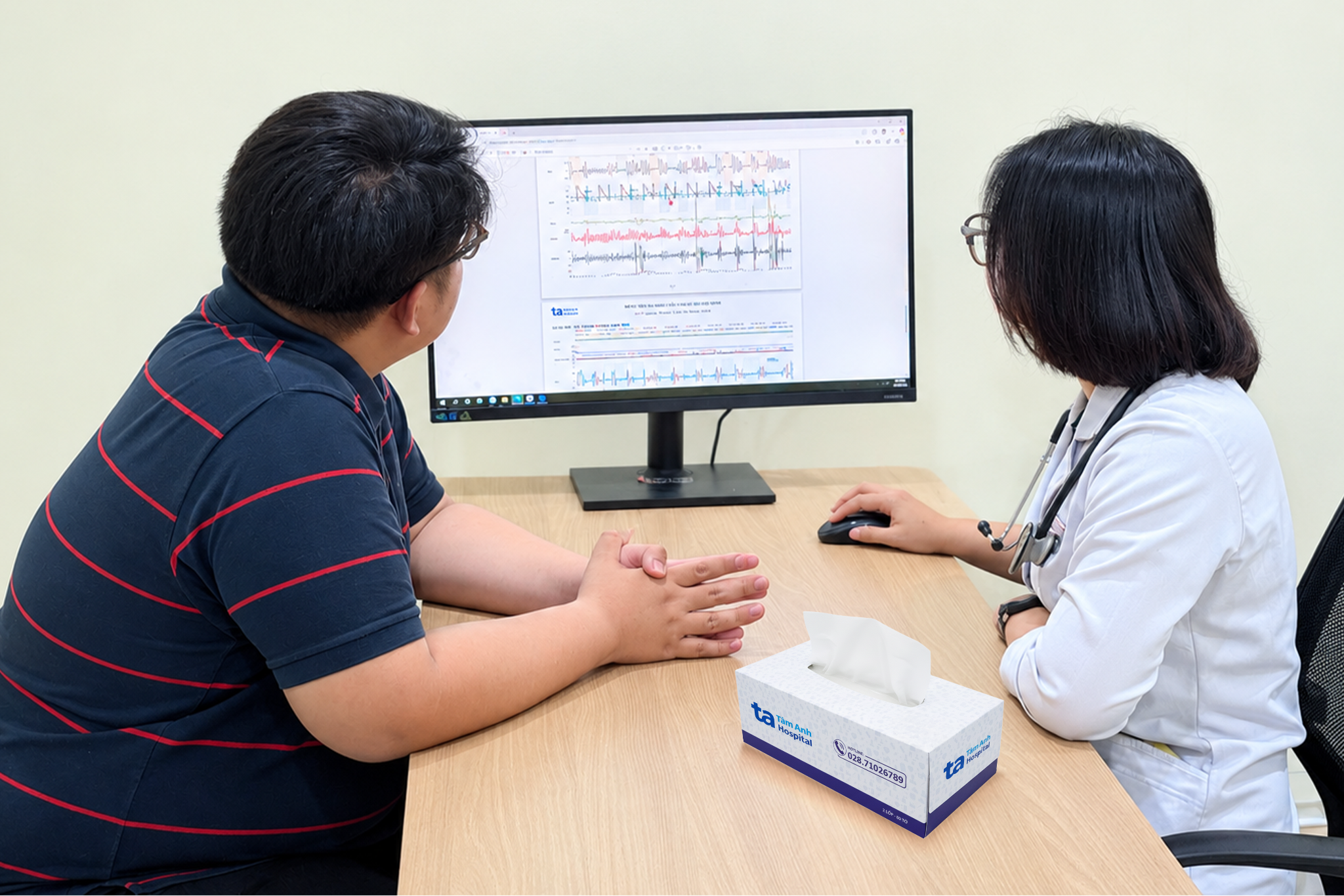
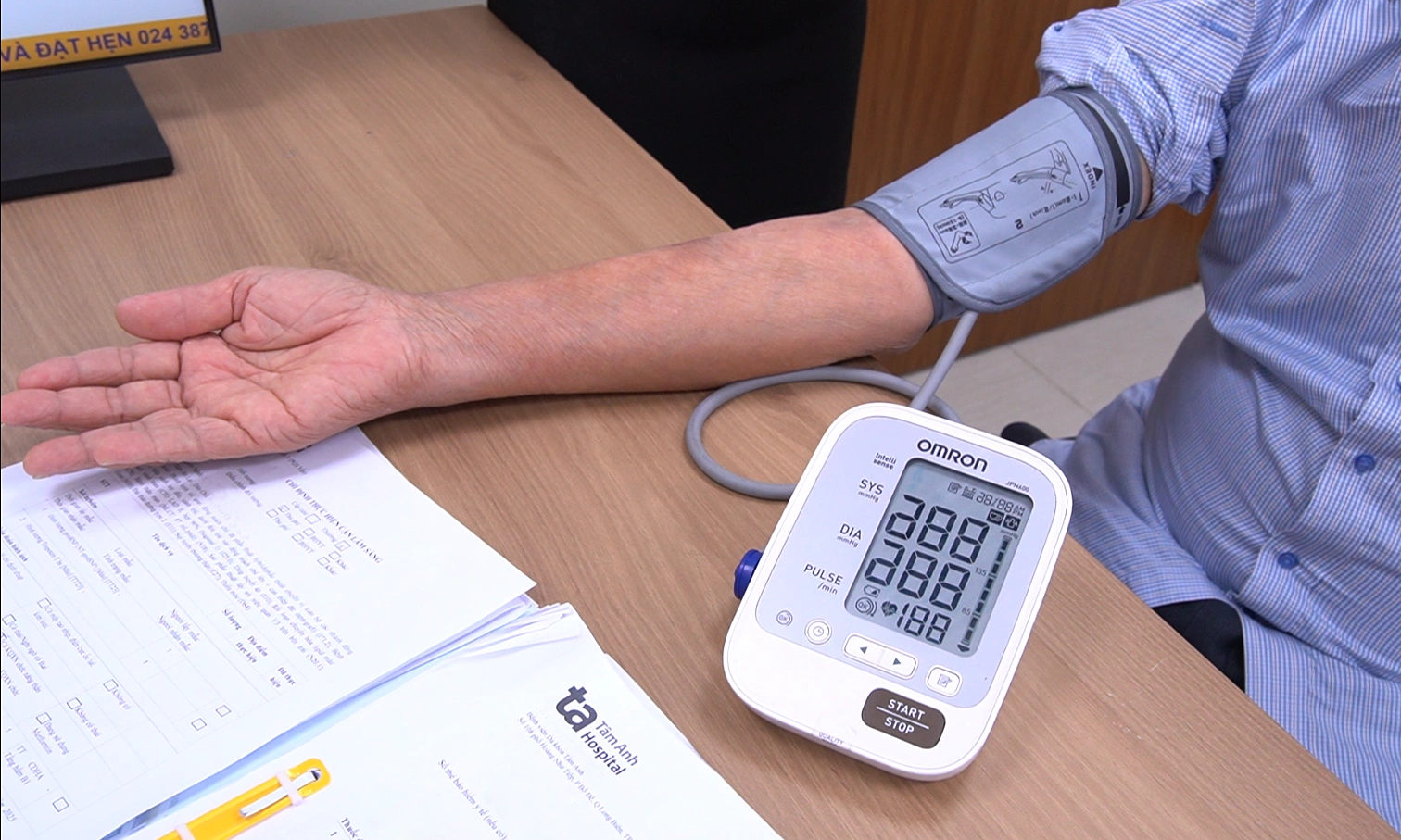
A doctor explains sleep respiratory polygraphy results to a patient during a health check-up. Illustration: Tam Anh General Hospital

In-facility polysomnography is prioritized for patients with severe cardiopulmonary disease, neurological conditions causing hypoventilation while awake, suspected sleep-related hypoventilation, chronic opioid use, a history of stroke, or severe insomnia. These cases require a comprehensive evaluation of sleep stages, periodic limb movements, or associated neurological disorders.

**Spirometry**

This technique measures the volume and flow rate of air during inhalation and exhalation, helping to assess small airway obstruction. Spirometry is widely used in diagnosing bronchial asthma and chronic obstructive pulmonary disease (COPD).

Dr. Khue states that spirometry is indicated for patients with persistent cough, wheezing, shortness of breath, chest tightness, or recurrent respiratory symptoms of unknown cause. Long-term smokers, individuals regularly exposed to dust and chemicals, or those with a history of respiratory illness may also undergo spirometry to assess lung function.

For bronchial asthma, spirometry helps identify airflow obstruction and can be performed before and after bronchodilator administration. However, a normal spirometry result does not completely rule out asthma if clinical suspicion remains. Doctors may order additional tests, such as measuring exhaled nitric oxide, to assess allergic airway inflammation, a key mechanism in bronchial asthma.

For COPD, spirometry helps confirm small airway obstruction and its severity in patients with symptoms and risk factors. Concurrently, doctors also rely on patient presentation, medical history, and exposure levels for diagnosis.

Spirometry can also monitor disease progression and evaluate treatment response in respiratory patients. Individuals should not self-purchase or perform these tests based on a single symptom. Specifically, snoring does not equate to sleep apnea, and coughing does not necessarily mean COPD or asthma. If abnormal airway symptoms occur, consult a respiratory specialist. The doctor will take a medical history, perform an examination, and assess risk factors before determining the appropriate tests.

Nhat Thanh

Readers can submit questions about respiratory diseases here for doctors to answer.
By VnExpress: https://vnexpress.net/khi-nao-can-do-da-ky-giac-ngu-ho-hap-ky-5114753.html
Tags: polysomnography spirometry sleep respiratory diseases

News in the same category

Toddler dies after twisting electric scooter throttle

Toddler dies after twisting electric scooter throttle

A 21-month-old patient suffered severe head trauma after an incident involving an electric scooter throttle; despite doctors' efforts, the child did not survive.

How long after a tonsillectomy can one eat rice?

How long after a tonsillectomy can one eat rice?

I had my tonsils removed three days ago and am still experiencing pain and difficulty swallowing, so I am only consuming porridge and milk. How long after surgery can I return to eating normal rice? (Thu Thuy, 25 years old)

4 snacks diabetics should bring when traveling

4 snacks diabetics should bring when traveling

Soybeans and plain popcorn, rich in fiber and protein, help slow digestion and prevent sudden blood sugar spikes or drops.

Is a child's red rash an allergy?

Is a child's red rash an allergy?

My 14-month-old child developed a red, itchy rash about an hour after eating. Is this a sign of a food allergy or insect contact? (Hang, Ho Chi Minh City)

Is gallbladder polyp dangerous?

Is gallbladder polyp dangerous?

During a routine health check-up, an ultrasound revealed a gallbladder polyp approximately 5 mm in size. Is a polyp of this size dangerous, and how should it be treated? (Tran Tuan Nghia, 25, Nghe An)

Does excessive energy drink consumption raise blood pressure?

Does excessive energy drink consumption raise blood pressure?

Nguyen Minh Nhat, 36, from Bac Ninh, regularly consumes two to three cans of energy drinks daily to stay alert for work and recently reported higher than normal blood pressure. He asks if this habit could be the cause.

Tips to reduce strain on the urinary system during holidays

Tips to reduce strain on the urinary system during holidays

Avoid excessive salt and alcohol, stay hydrated, and exercise to safeguard urinary health, especially for those with kidney conditions or a history of kidney stones.

Doctor advises on how to reduce eyelid twitching

Doctor advises on how to reduce eyelid twitching

Depending on the cause and severity of eyelid twitching, doctors may recommend adequate sleep or botox injections into the eyelid muscles to alleviate symptoms.

Should teenagers with a lot of acne stop drinking milk?

Should teenagers with a lot of acne stop drinking milk?

My 13-year-old daughter, who began puberty about one year ago, is experiencing significant acne on her forehead, cheeks, and chin. She asks if she should stop drinking milk to alleviate the breakouts. (Ha Thu, TP HCM)

Financial anxiety: young people with money still fear destitution

Financial anxiety: young people with money still fear destitution

Despite earning 22 million dong monthly and having over 100 million dong in savings at 28, Minh Hoang constantly lives with a pervasive sense of insecurity.

Eng English
China 中国人
  • News
  • World
  • Business
  • Entertainment
  • Sports
  • Law
  • Education
  • Health
  • Lifestyle
  • Travel
  • Science
  • Digital
  • Automobiles
FPT Tower, 10 Pham Van Bach Street, Dich Vong Ward,
Cau Giay District, Hanoi, Vietnam
Email: contacts@vnportal.net
Tel: 028 7300 9999 - Ext 8556
Advertise with us: 090 293 9644
Register
© Copyright 2026 vnnow.net. All rights reserved.
Terms of use Privacy policy Cookies