Response:
The rainy season fosters insect proliferation. Young children often play, crawl, or interact with their surroundings, increasing their likelihood of contact with insects or pests that cause skin irritation, commonly known as "sau bung" (insect contact dermatitis). However, skin lesions from insect contact are typically localized to the area of contact, presenting as red, itchy papules, and the child remains alert, eating, and behaving normally.
Conversely, a rapidly spreading rash or hives across multiple body areas, appearing after consuming a new food, accompanied by swelling of the face, lips, or eyelids, vomiting, diarrhea, wheezing, heavy breathing, difficulty breathing, or lethargy, signals an allergic reaction.
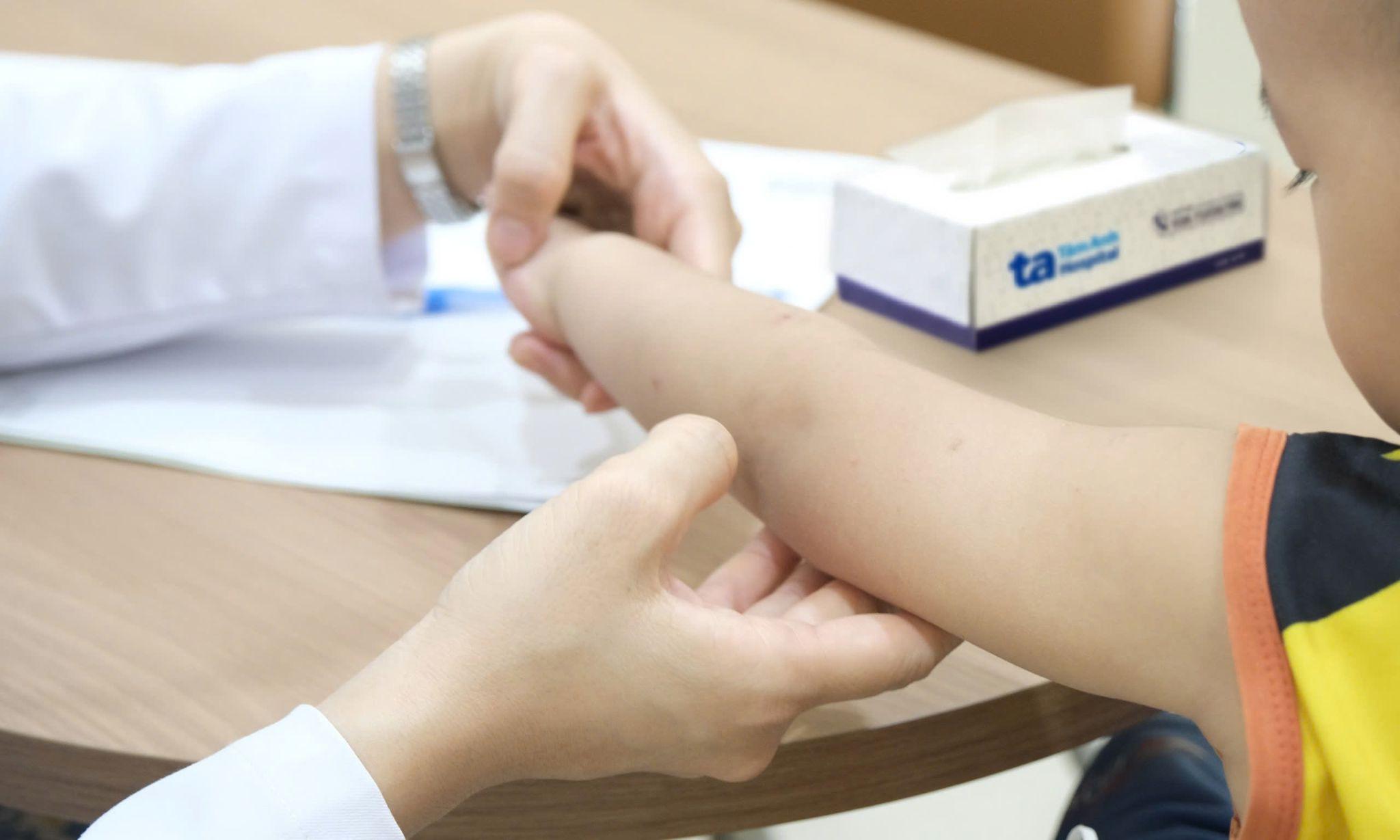 |
A doctor examines a child at the Pediatrics Department, Tam Anh General Hospital Ho Chi Minh City. Photo: Gian Don. |
Children's allergies categorize by triggers such as food, weather and environmental factors, skin, cosmetics, and medications. Food allergy is the most common, occurring when the immune system reacts abnormally to a food component. Common food allergens in children include milk, eggs, peanuts, tree nuts, soy, wheat, fish, and shellfish. Allergic reactions in young children can progress rapidly, causing angioedema, particularly swelling of the lips, tongue, or throat, which can obstruct the airway, lower blood pressure, and lead to anaphylactic shock if not managed promptly.
For a child developing a rash after eating, especially if it spreads rapidly and includes systemic symptoms as you described, it is likely an acute allergic reaction (most commonly a food allergy) rather than insect contact. You should seek medical attention for the child so a doctor can assess the cause and severity of the reaction, ensuring proper management.
The symptom of "heavy breathing" in a child warns of respiratory compromise, potentially due to bronchospasm or mucosal edema. Allergic reactions in young children can quickly escalate to swelling of the lips, tongue, and throat, leading to airway obstruction, low blood pressure, and life-threatening anaphylactic shock if not treated promptly.
While en route to the doctor, parents should observe and record comprehensive information regarding the child's symptoms, foods consumed, and items contacted beforehand. This information aids the doctor in diagnosis. Parents must not self-medicate the child without a doctor's prescription or reintroduce any suspected allergenic foods.
Children with suspected allergies undergo a comprehensive examination and specialized allergen testing. Once stable, the doctor advises on a safe alternative diet and guides parents on allergy prevention strategies for their child.
Master, Doctor, Level One Specialist Vuong Ngoc Thien Thanh
Pediatrics Department
Tam Anh General Hospital Ho Chi Minh City
| Readers can submit questions about children's health here to receive answers from doctors. |