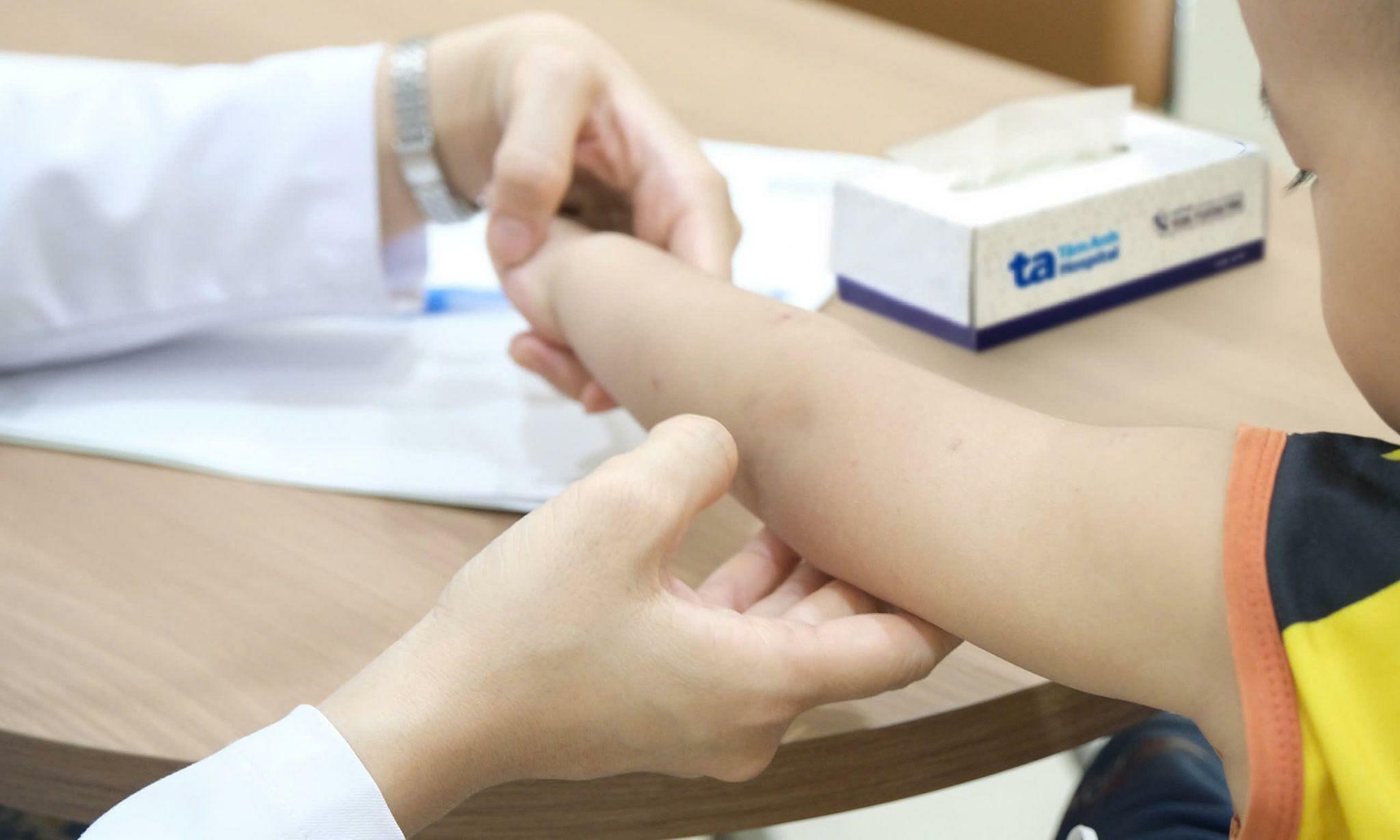
If a child's foot is cut by a seashell, rock, coral, or other sharp object, immediately take them out of the water. Do not use seawater to rinse or disinfect the wound, as seawater is not sterile. Some bacteria naturally living in saltwater, including Vibrio, can enter through abraded or torn skin, potentially leading to infection.
The risk of infection also depends on the wound's depth, the water's contamination level, and the injured person's overall health. Individuals with chronic liver disease, diabetes, compromised immune systems, or those taking immunosuppressants are at a higher risk of severe Vibrio infection and should exercise greater caution when exposed to seawater.
For initial first aid, first wash your hands thoroughly. Then, rinse the child's wound under clean running water, gently cleaning the surrounding skin with soap. If sand or debris is superficial and easily removed, use clean tweezers. Do not dig deep or attempt to remove foreign objects embedded in the wound. Apply direct pressure with clean gauze to stop the bleeding, then cover with a clean bandage or gauze and keep the wound dry.
Avoid pouring alcohol, concentrated hydrogen peroxide, or strong disinfectants directly onto the child's wound, as these can cause irritation and tissue damage. Absolutely do not apply leaves, powders, or mixtures of unknown composition to the wound. The child should not return to the sea until the wound has closed and fully healed.
 |
Seawater contains many bacteria, including Vibrio, which can easily enter the body through wounds, so it should not be used to disinfect wounds. Illustrative photo: Vecteezy
Take the child to a medical facility if the laceration is deep, caused by a puncture, still contains foreign objects, bleeds uncontrollably after direct pressure, is near a joint, or affects movement. Rapidly increasing pain, spreading swelling, warmth, redness, discharge, blistering, fever, or exhaustion after seawater exposure are also signs requiring early examination, as some infections can progress quickly.
Wounds caused by seashells or sharp objects also require a tetanus risk assessment. The tetanus vaccine does not heal wounds or prevent Vibrio infection, but it helps the body build immunity against tetanus toxins. Whether a tetanus vaccine or tetanus immune globulin (TIG) is needed depends on the type of wound and the individual's vaccination history; a general indication cannot apply to all cases.
Vietnam currently has single tetanus vaccines and various combination types available, such as 6-in-1, 4-in-1, 3-in-1, and 2-in-1. Individuals who have completed the primary series and received their most recent dose within 10 years typically do not require additional vaccination, with a booster recommended every 10 years. For high-risk wounds, such as dirty, deep, or puncture wounds, a doctor may recommend a booster dose, with subsequent boosters scheduled every 10 years. Individuals who are not fully vaccinated, do not recall their vaccination history, or have certain immunocompromising conditions may require a vaccine and tetanus antitoxin or tetanus immune globulin (TIG) following a doctor's assessment.
Parents should maintain their child's vaccination records and ensure they receive all scheduled tetanus-containing vaccines. In the event of an injury, it is crucial to provide healthcare staff with the date of the child's most recent vaccination to ensure correct treatment and avoid missing necessary doses or administering inappropriate boosters.
Doctor Bui Cong Su
Medical Manager, VNVC Vaccination System
Readers can submit vaccine-related questions for a doctor to answer here.