After nearly three months, the Ebola outbreak in the Democratic Republic of Congo has spiraled beyond the control of response teams, with new infections doubling in many hotspots. This alarming surge has prompted the World Health Organization (WHO) to issue an urgent call for action.
As of 3/8, Congo's Ministry of Health reported 3,874 confirmed cases, including 1,751 deaths, marking a 45% mortality rate. The Bundibugyo virus, a rare Ebola strain, has spread from the Mongbwalu health zone in Ituri province to 5 other provinces, impacting 49 health areas. This is the largest Ebola outbreak recorded in Congo and the second largest globally, surpassed only by the 2014-2016 West African epidemic, which saw 28,000 cases and 11,000 deaths.
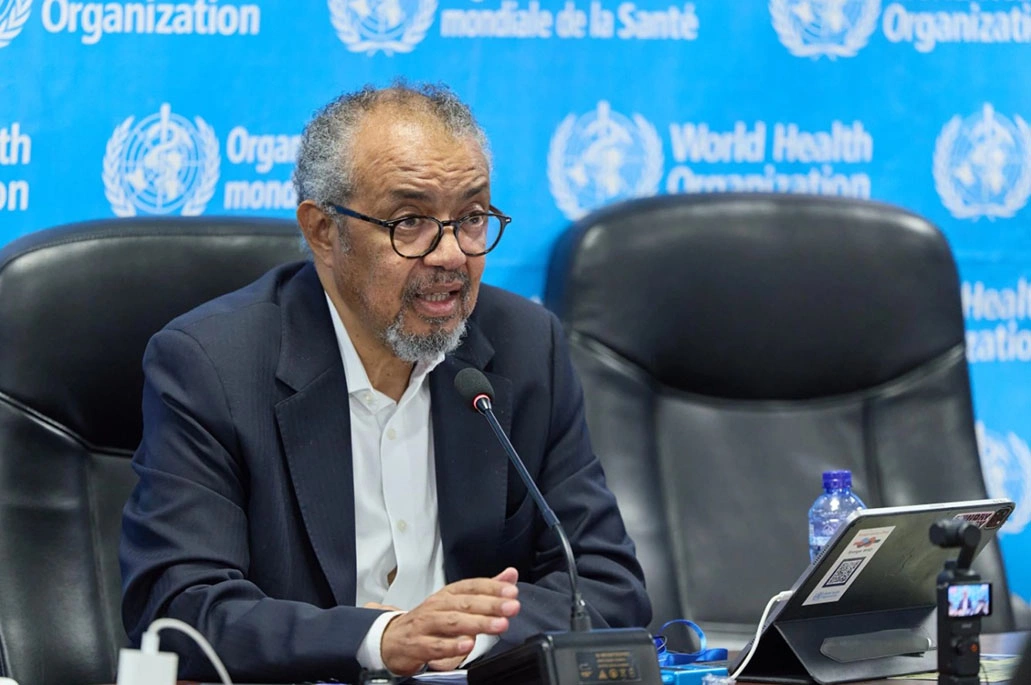 |
WHO Director-General Tedros Adhanom Ghebreyesus speaks at a meeting with partners in Kinshasa, Democratic Republic of Congo, on 5/8. *Photo: WHO/AP* |
Ebola is transmitted from fruit bats to humans, then spreads between people through direct contact with blood and bodily fluids. The incubation period ranges from 2 to 21 days. Initial symptoms, such as fever, fatigue, and muscle pain, are easily mistaken for malaria, leading to delayed diagnosis. The disease then progresses to gastrointestinal issues, multi-organ failure, and hemorrhage. Currently, no vaccine or specific treatment has been approved.
Doctors Without Borders states the disease continues to spread at an alarming rate. Despite expanding response efforts, healthcare teams are struggling to reach communities quickly enough to break transmission chains. Doctor Jean Kaseya, Director of the Africa Centers for Disease Control and Prevention (Africa CDC), noted that contact tracing efforts are stalled, with 60% to 70% of new cases falling outside the monitoring list.
In Ituri province, the national epicenter, many frontline healthcare workers have stopped working to protest delayed wages. This exacerbates access to medical care in a region already vulnerable due to rebel conflicts bordering South Sudan, Uganda, and Rwanda. Anicet Baluku, a resident of Bunia, the capital of Ituri province, shared that the strike led to the deaths of his two younger brothers from Ebola. He urgently called on authorities to find a solution soon.
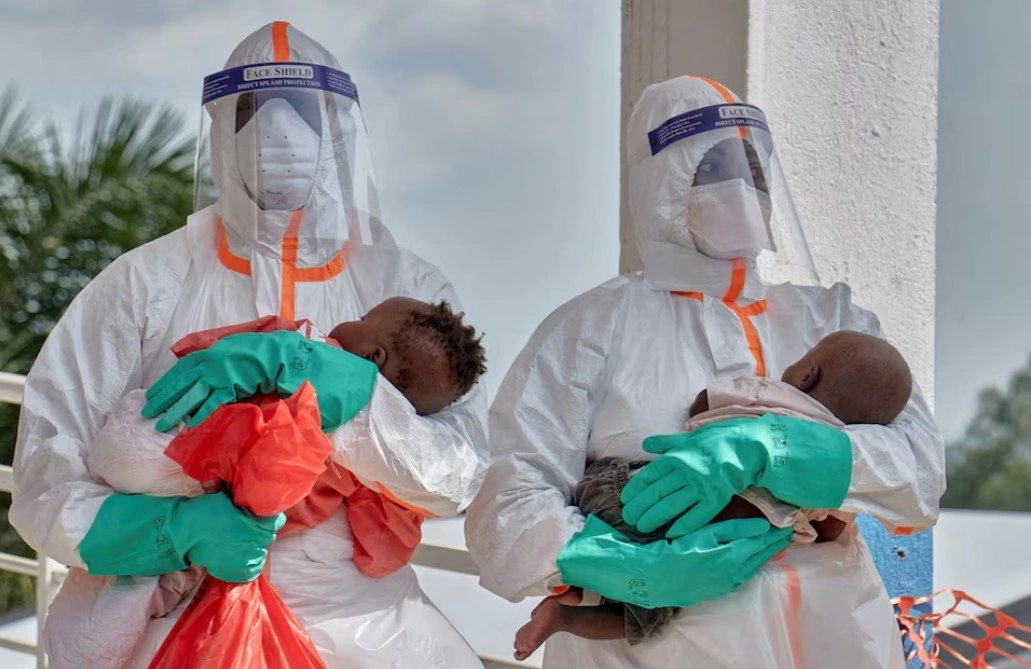 |
Congo healthcare workers in protective gear carry children from Saint Nicholas orphanage, confirmed not to have Ebola, as they leave a health center in Ituri province, Democratic Republic of Congo, on 9/6. *Photo: Reuters* |
Given the urgent situation, Africa CDC affirmed its close coordination with response teams to focus on early detection, enhanced contact tracing, and ensuring quick access to quality care for patients. The WHO head called for decisive action to reach all affected localities, strengthen coordination under government leadership, and ensure the safety of healthcare personnel. He emphasized that the community must be central to the fight against the outbreak, stating that Ebola cannot be extinguished "without the trust and cooperation of the people".
By Binh Minh (According to AP, WHO)