Dr. K’Bus, from the Intensive Care Unit (ICU) at Tam Anh General Hospital Ho Chi Minh City, reported that the elderly woman's blood pressure plummeted to 66/44 mmHg, and her blood oxygen saturation (SpO2) was only 67%, indicating acute respiratory failure. The medical team intubated the patient, placed her on a ventilator, and administered vasopressors to maintain her blood pressure.
Laboratory results revealed her white blood cell count rose to 19,000/µL, with neutrophils at 12,700/µL, and her CRP inflammation marker increased to 14,3 mg/L, confirming septic shock. Based on ultrasound findings, the patient's hip and rib pain, and difficulty urinating, doctors determined the infection originated from her urinary tract.
The team maintained mechanical ventilation to ensure gas exchange and inserted a central venous line. The patient received broad-spectrum antibiotics to control the infection, vasopressors to stabilize blood pressure, blood sugar management, and correction of electrolyte imbalances.
However, her condition continued to worsen. The patient fell into a deep coma, her blood pressure became entirely dependent on high-dose vasopressors, and she required high-pressure mechanical ventilation. Her airway produced thick phlegm, urine output was low, and she developed generalized edema. These signs indicated that the septic shock was impacting multiple organs, compounded by her advanced age and multiple co-morbidities, according to Dr. K’Bus.
Doctors then prescribed continuous hemodiafiltration using an Oxiris adsorptive membrane to support kidney function and remove inflammatory mediators from her blood. The team promptly inserted a catheter and connected the hemodiafiltration system at the bedside. The patient continued to receive mechanical ventilation, antibiotics, and vasopressors.
 |
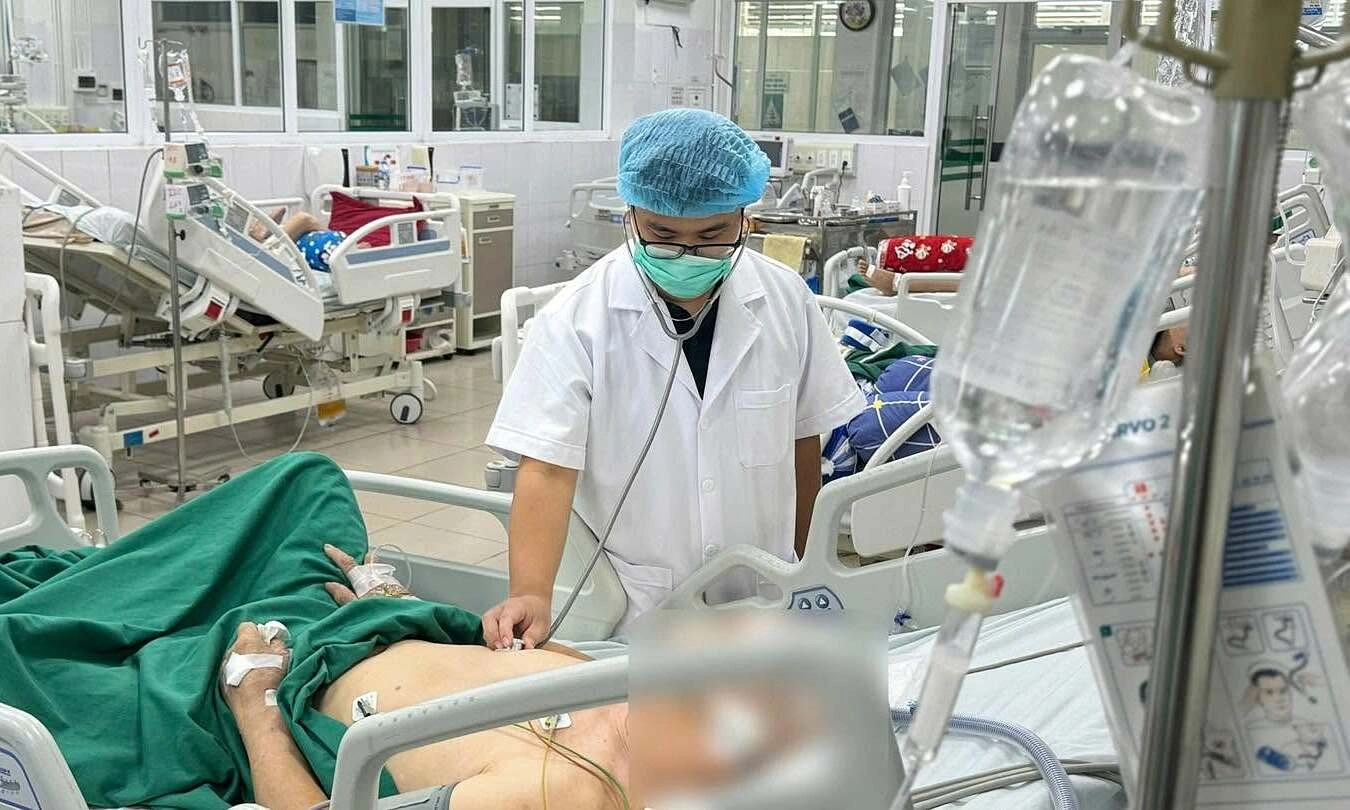
Dr. K'Bus inserted an arterial catheter for continuous invasive blood pressure monitoring. *Photo: Tam Anh General Hospital* |
After nearly three weeks of intensive treatment, the patient's condition gradually improved. Her blood pressure stabilized, she no longer required vasopressors, infection markers were controlled, and kidney function recovered.
Septic shock often originates from infection foci such as pneumonia, urinary tract infections, abdominal infections, or skin and soft tissue infections. Elderly individuals, those with cardiovascular disease, chronic kidney disease, diabetes, or neurological sequelae are at high risk due to a reduced immune response.
Doctors advise against underestimating changes in the elderly, such as prolonged poor appetite, fatigue, lethargy, increased sleep, or reduced social interaction. These can be early signs of acute illness. When an infection progresses, patients may suddenly become extremely weak, break into a cold sweat, and experience disorientation due to circulatory failure and hypotension.
Nhat Thanh
*Patient's name has been changed
| Readers can submit questions about respiratory illnesses here for doctors to answer. |