Eng English
China 中国人

Eng English
China 中国人
  • News
  • World
  • Business
  • Entertainment
  • Sports
  • Law
  • Education
  • Health
  • Lifestyle
  • Travel
  • Science
  • Digital
  • Automobiles
  • Trở lại Thể thao
  • Health
Monday, 31/8/2026 | 08:04 GMT+7

End-stage kidney failure: medical treatment avoids dialysis

After three years of stable treatment for stage 3-4 kidney failure, Ms. Binh, 74, experienced a sudden drop in glomerular filtration rate to end-stage, but doctors successfully managed her condition medically, avoiding dialysis.

Ms. Binh had been under the care of Doctor of Grade II Ta Phuong Dung, deputy director of the Urology - Nephrology - Andrology Center and head of the Nephrology - Dialysis Department, for three years. Her glomerular filtration rate (GFR) remained above 28 mL/min/1,73m² (stage 4), occasionally reaching 31 mL/min/1,73m² (stage 3b). Last week, she experienced fatigue and loss of appetite. Tests at Tam Anh General Hospital Ho Chi Minh City revealed her estimated glomerular filtration rate (eGFR) had plummeted to 6,7 mL/min/1,73 m², indicative of stage 5 kidney failure.

"This was the first time the patient's glomerular filtration rate dropped to such a dangerous low", said Doctor Dung. She diagnosed Ms. Binh with acute kidney injury superimposed on chronic kidney disease. This condition could lead to hyperkalemia, metabolic acidosis, fluid overload, uremic syndrome, and the risk of needing dialysis.

Typically, patients with a glomerular filtration rate below 10 mL/min/1,73 m² are immediately indicated for emergency dialysis. However, emergency dialysis, which requires a central venous catheter, carries a higher risk of serious complications compared to scheduled dialysis, which allows for an arteriovenous fistula. The doctor decided to treat Ms. Binh using a non-dialysis acute kidney failure protocol, opting for close monitoring.

The patient received fluid resuscitation tailored to her cardiovascular status and urine output. Doctors treated her electrolyte imbalances, controlled her blood pressure and blood glucose levels, and addressed a gastrointestinal infection. They closely monitored her potassium levels, metabolic acidosis, urine output, and fluid balance.

In the initial days, kidney function indicators remained at dangerous levels. The medical team faced multiple decisions regarding whether to insert an emergency dialysis catheter for the patient. However, Doctor Dung assessed that while kidney function had reached stage 5, the patient's ability to still urinate indicated a chance for recovery. Therefore, doctors continued to manage the acute kidney failure, prioritizing renal perfusion restoration, thorough toxin removal, and electrolyte imbalance control to prevent permanent kidney damage.
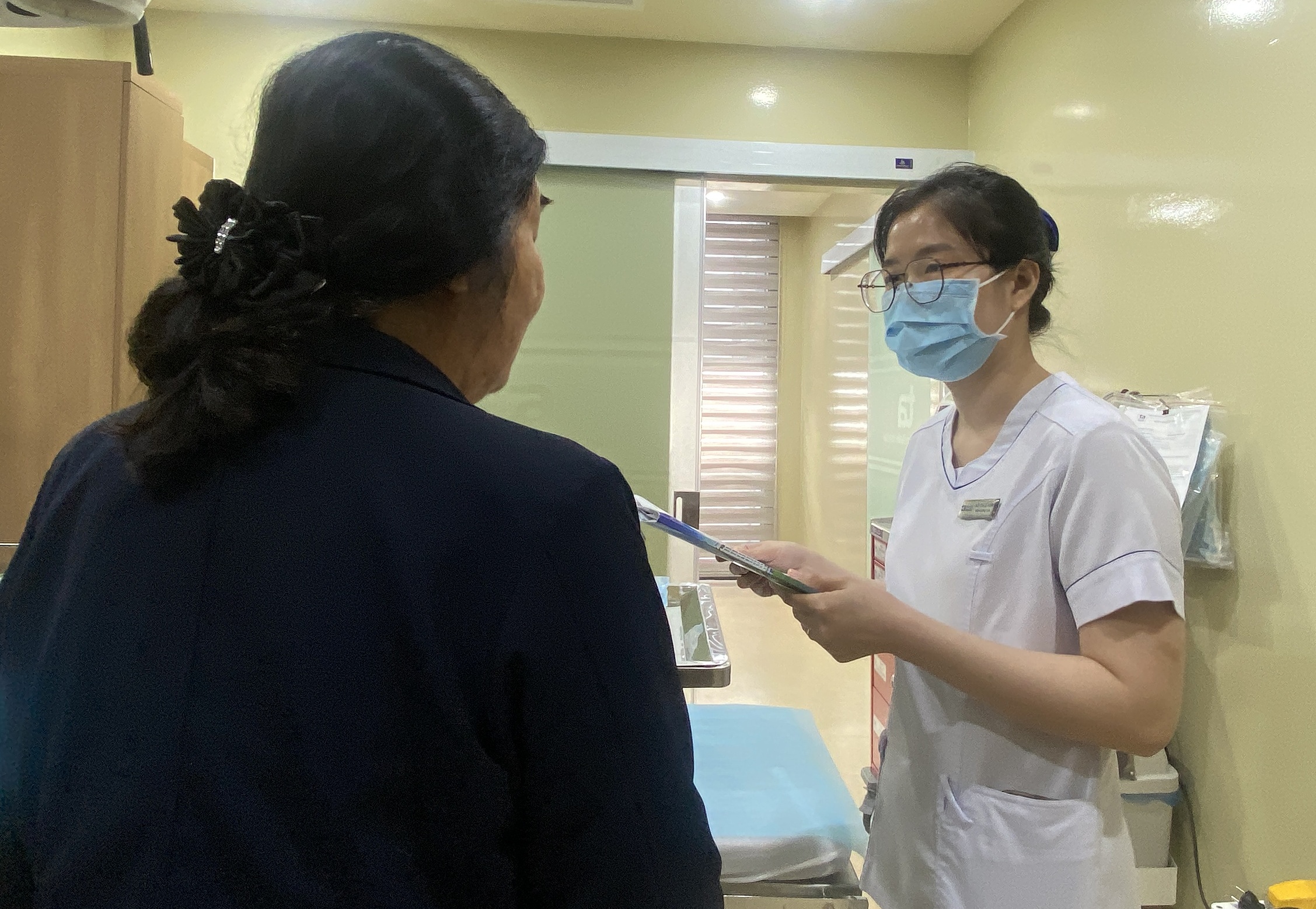
Ms. Binh receives results showing her kidney function has recovered to stage 4, avoiding dialysis. *Photo: Tam Anh General Hospital*

Ms. Binh responded well to the treatment protocol. Her glomerular filtration rate improved daily, and she gradually recovered, being discharged after one week of treatment. Her GFR had increased to 17,48 mL/min/1,73 m². During a follow-up three days later, her GFR reached 21,97 mL/min/1,73m², indicating her kidney function had returned to its previous stable level, with no need for dialysis.

Doctor Dung advised chronic kidney disease patients to consume thoroughly cooked food and boiled water. Daily protein intake should be between 0,6-0,8 g/kg/day, and salt intake reduced to below 2 g/day. Patients should also limit processed foods, those rich in potassium and phosphorus, and red meat. Additionally, patients must avoid non-steroidal anti-inflammatory drugs (NSAIDs) like Ibuprofen and Diclofenac. They should drink water according to their fluid status and attend regular follow-up appointments to monitor kidney function and electrolytes.

Patients experiencing symptoms such as vomiting, diarrhea, fever, poor appetite, reduced urination, edema, shortness of breath, extreme fatigue, or altered consciousness should seek hospital care for kidney function and electrolyte checks. Early detection and treatment of acute kidney injury helps preserve remaining kidney function and prevents serious complications.

Ha Thanh

* Patient's name has been changed

Readers can submit questions about kidney disease here for doctors to answer.
By VnExpress: https://vnexpress.net/suy-than-giai-doan-cuoi-dieu-tri-noi-khoa-thoat-loc-mau-5114917.html
Tags: kidney disease dialysis kidney failure

News in the same category

Three holiday habits increase stroke risk

Three holiday habits increase stroke risk

Excessive alcohol consumption, late nights, and forgetting to take medication for underlying conditions during holidays can cause blood pressure fluctuations and heart rhythm disturbances, potentially increasing stroke risk.

Why does shingles cause electric shock-like pain?

Why does shingles cause electric shock-like pain?

My 67-year-old mother is suffering from shingles on her right back, experiencing needle-prick and electric shock-like pain. Why does this condition cause such symptoms, and what medication should be applied? (Hoang Kim, 45, Hai Phong)

Eating tips for stable blood sugar and weight loss

Eating tips for stable blood sugar and weight loss

Prioritizing vegetables, then protein and carbohydrates, and selecting low-sugar, high-fiber foods helps maintain stable blood sugar and reduces fat accumulation.

Should obese pregnant women diet?

Should obese pregnant women diet?

An expectant mother, 33, 8 weeks pregnant and with grade two obesity, asks if her condition will affect her baby's development and if she needs to diet.

How to care for children after tongue-tie release for quick recovery

How to care for children after tongue-tie release for quick recovery

Proper wound care, adjusting nutrition, and gentle tongue exercises help children recover quickly after tongue-tie surgery.

Proposal to increase benefits for long-term health insurance participants

Proposal to increase benefits for long-term health insurance participants

An Giang voters propose additional preferential policies to encourage continuous participation in health insurance for over 5, 10 years, or longer.

How long after sinus surgery can one fly?

How long after sinus surgery can one fly?

I just had sinus surgery 7 days ago, can I travel by plane soon? (Duy Manh, 55, TP HCM)

How to care for yourself after lung surgery for a quick recovery

How to care for yourself after lung surgery for a quick recovery

Proper breathing exercises, early mobilization, and a scientific diet help patients recover respiratory function and reduce complication risks after lung tumor surgery.

4 morning habits to support cholesterol balance

4 morning habits to support cholesterol balance

Maintaining healthy habits such as exercise, a balanced diet, and taking prescribed medication can help control cholesterol and protect blood vessels.

Does standing close to or looking directly into a running microwave oven cause cancer?

Does standing close to or looking directly into a running microwave oven cause cancer?

Microwaves are a form of non-ionizing radiation, lacking the energy to damage DNA, meaning regular use of a microwave oven does not cause cancer.

Eng English
China 中国人
  • News
  • World
  • Business
  • Entertainment
  • Sports
  • Law
  • Education
  • Health
  • Lifestyle
  • Travel
  • Science
  • Digital
  • Automobiles
FPT Tower, 10 Pham Van Bach Street, Dich Vong Ward,
Cau Giay District, Hanoi, Vietnam
Email: contacts@vnportal.net
Tel: 028 7300 9999 - Ext 8556
Advertise with us: 090 293 9644
Register
© Copyright 2026 vnnow.net. All rights reserved.
Terms of use Privacy policy Cookies