Tongue-tie release surgery is a procedure that frees the band of tissue connecting the underside of the tongue, allowing children to move their tongue more flexibly and improving issues like poor feeding and speech impediments. Master, Doctor, Level I Specialist Nguyen Huu Dung, from the Department of Pediatric Surgery at Tam Anh General Hospital TP HCM, noted that after the procedure, the mucous membrane under the child's tongue is delicate. Therefore, proper home care and health monitoring are crucial for quick wound healing and infection prevention.
Proper oral hygiene
After tongue-tie release, children often experience mild numbness or pain under the tongue, making oral hygiene challenging. However, maintaining a clean mouth is a top priority to prevent bacteria from infecting the surgical site. Parents should instruct older children to rinse gently with warm physiological saline after each meal. For younger children who cannot rinse, parents should use a clean gauze pad soaked in warm saline to gently wipe around the child's mouth and teeth, strictly avoiding vigorous rubbing of the treated area.
When cleaning, parents must be extremely gentle to avoid damaging the physiological white membrane forming on the wound. This natural protective layer helps the mucous membrane heal quickly.
 |
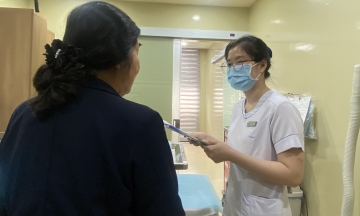
Dr. Dung examines a child after tongue-tie release surgery. *Photo: Tam Anh General Hospital*. |
Adjusting appropriate nutrition
Children's bodies need adequate nutrients to regenerate tissue and recover quickly after tongue-tie release. In the initial days when the wound is fresh, parents should feed children soft, liquid, and cool foods that are easy to swallow, such as thin porridge, pureed soup, yogurt, or fresh fruit juice. Strictly avoid overly hot, spicy, salty, sour, or hard, sharp foods to prevent injury and bleeding under the tongue.
After some time, once the wound begins to heal, children can return to a normal diet, but soft, finely cut foods should still be prioritized. Encourage children to drink plenty of water to keep the oral cavity moist.
Gentle tongue exercises for children
Children often tend to keep their mouths tightly closed or restrict tongue movement due to mild pain after surgery, which can lead to scar tissue adhesion and limit tongue flexibility. Once the wound is stable, following the doctor's instructions, parents should encourage children to perform gentle tongue exercises such as sticking the tongue out and in, moving it left and right, or touching the roof of the mouth.
These exercises help increase blood circulation to the area under the tongue, stimulate smooth tongue muscle activity, and actively support the child's future speech and chewing processes.
Monitoring for abnormal signs
Parents need to actively and closely monitor the child's health throughout the postoperative period. If the child exhibits abnormal signs such as prolonged bleeding at the incision site, persistent high fever, severe redness and swelling under the tongue, pus, intense crying, refusal to feed, or refusal to eat or drink, parents should immediately take the child to a medical facility for examination and timely treatment by a doctor.
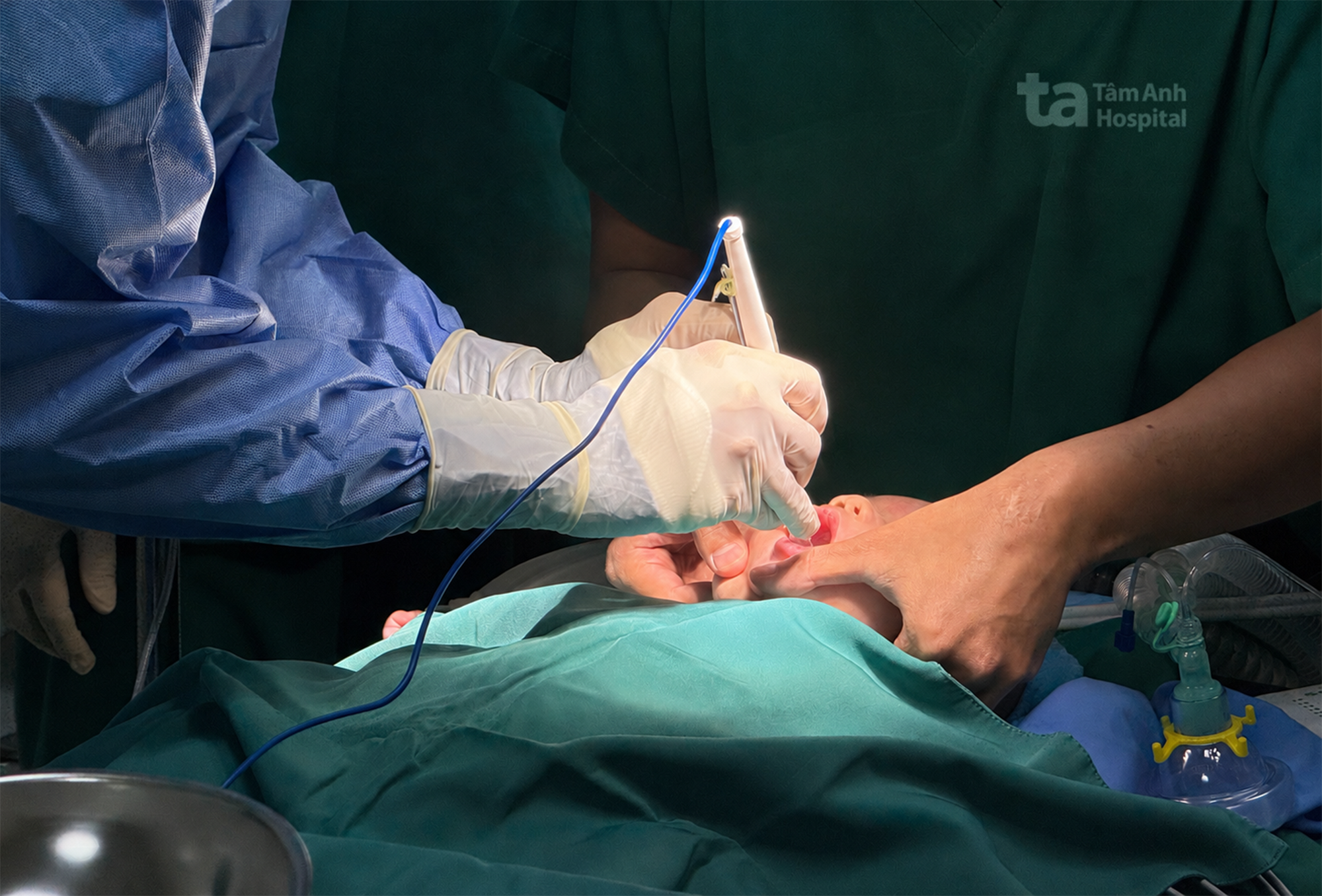 |
The pediatric surgery team performs a tongue-tie release procedure for a child patient. *Photo: Gian Don*. |
Dr. Dung also noted that families should not arbitrarily apply various leaves, folk remedies, or self-medicate with painkillers or antibiotics for children, to prevent the risk of severe infection or allergies.
Tongue-tie release in children can be performed under laryngeal mask anesthesia, ensuring the child feels no pain during the intervention. Doctors may use a bipolar electrocautery device to release the tongue-tie, simultaneously controlling bleeding at the site and minimizing damage to surrounding tissues. The procedure typically takes about 10-15 minutes, depending on the child's condition.
After the procedure, children are monitored until they are awake and can breastfeed or have light food a few hours later if their health is stable. Some cases may be discharged on the same day. Parents are instructed on how to care for and clean the treated area, and to monitor for any abnormal signs at home.
Bao Anh
| Readers can submit questions about childhood illnesses here to receive answers from doctors. |