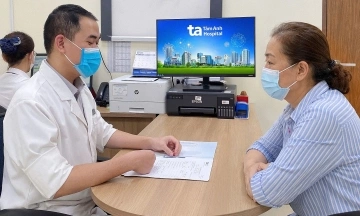
An online seminar titled "Understanding, Preventing, and Effectively Treating Aortic Valve Stenosis" was recently organized by Health & Life Newspaper, in collaboration with Medtronic Vietnam. The program featured People's Physician, Professor, Doctor Vo Thanh Nhan, Director of the Interventional Cardiology Center and Deputy Director of the Cardiology Center at Tam Anh General Hospital, TP HCM, and Professor, Doctor Nguyen Hoang Dinh, Deputy Director of University Medical Center, TP HCM.
 |
Speakers participating in the online seminar. Photo: Minh Minh |
According to Professor Vo Thanh Nhan, with increased life expectancy, cardiovascular disease patterns in Vietnam are changing. Previously, valvular heart disease was primarily a sequela of rheumatic heart disease. Today, age-related degenerative aortic valve stenosis is increasingly common and has become a frequent valvular heart disease among the elderly. Given the current pace of population aging, the number of people affected in Vietnam is projected to continue rising in the coming years.
Professor Nguyen Hoang Dinh explained that when the valve narrows, the heart must generate greater pressure to pump blood. This process can occur over a long period, with patients often noticing no abnormalities. The three typical symptoms of aortic valve stenosis are: shortness of breath during exertion, chest pain or heaviness, and dizziness or fainting during activity. However, these symptoms are often mistaken for signs of aging.
 |
People's Physician, Professor, Doctor Vo Thanh Nhan, Director of the Interventional Cardiology Center, Deputy Director of the Cardiology Center, Tam Anh General Hospital, TP HCM. Photo: Minh Minh |
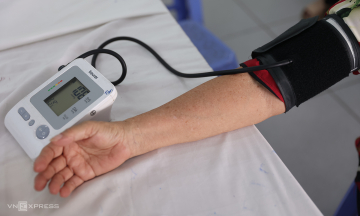
Experts recommend that individuals over 65, especially those with risk factors such as hypertension, diabetes, dyslipidemia, chronic kidney disease, or smoking, should undergo regular health check-ups and echocardiograms when indicated for early disease detection.
Doctor Nguyen Hoang Dinh stated that in the severe stage, patients may face serious complications such as heart failure, cardiac arrhythmias, fainting, or sudden death if not treated promptly. Notably, not all patients show clear symptoms from the outset. Some cases are only detected when heart function has declined or mobility is significantly affected.
Disease assessment should be comprehensive, based on the degree of valve narrowing, heart condition, age, co-existing conditions, and the individual patient's treatment responsiveness.
 |
Professor, Doctor Nguyen Hoang Dinh, Deputy Director of University Medical Center, TP HCM. Photo: Minh Minh |
Experts noted that while heart valve replacement surgery was previously the primary treatment for aortic valve stenosis, patients now have an additional option with transcatheter aortic valve implantation (TAVI). With TAVI, a prosthetic valve is delivered to the narrowed valve site via a catheter system. This is currently the most advanced minimally invasive solution, enabling patients to recover faster, reduce hospital stays, and return to daily activities sooner.
According to Professor Nguyen Hoang Dinh, the decision to choose TAVI or valve replacement surgery should be made after evaluation by a multidisciplinary heart team, involving internal medicine cardiologists, interventional cardiologists, cardiac surgeons, and imaging specialists.
"There is no single treatment method suitable for all patients. Each case must be considered based on the anatomical characteristics of the heart valve, co-existing conditions, life expectancy, and the patient's treatment goals", Doctor Nguyen Hoang Dinh emphasized.
As Vietnam's population rapidly ages, experts believe that raising awareness about aortic valve stenosis, early detection, and appropriate treatment access will help many elderly individuals maintain mobility, improve their health, and have more opportunities to enjoy life.
Hai My