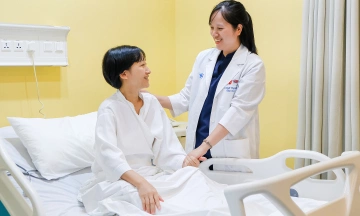
Han had previously undergone unsuccessful fertility treatments at three other centers. Upon examination at the Center for Reproductive Assistance, Tam Anh General Hospital Ho Chi Minh City (IVF Tam Anh TP HCM), her ovarian reserve (AMH) was 0,8 ng/mL.
Master, Doctor Giang Huynh Nhu, Director of IVF Tam Anh TP HCM, noted that Han's previous in vitro fertilization attempts only yielded day 3 embryos and resulted in failed transfers, indicating suboptimal embryo quality. The doctor recommended oocyte pooling, culturing embryos to day 5, and preimplantation genetic testing for aneuploidy (pgt-a) to select the most viable embryos, thereby increasing her chances of successful pregnancy.
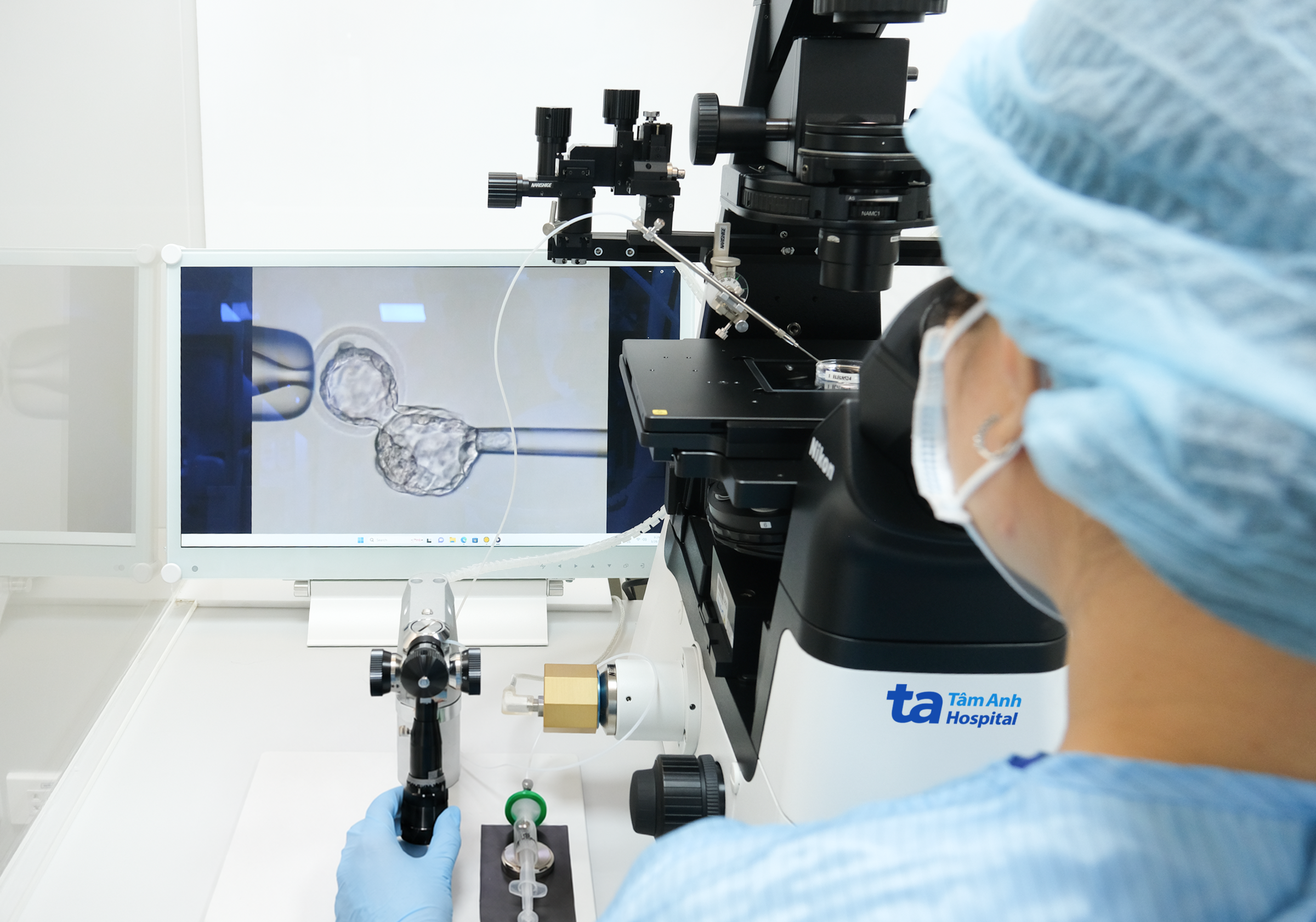 |
Embryologists perform preimplantation genetic testing for aneuploidy (pgt-a) to assess chromosomal abnormalities. *Photo: IVF Tam Anh* |
After two cycles of oocyte pooling and in vitro fertilization, Han had 8 day 3 embryos. The embryos were cultured in a time-lapse system with continuous monitoring cameras and integrated artificial intelligence (ai), allowing for constant observation and assessment of embryo development, resulting in 5 day 5 embryos. Three embryos were suitable for preimplantation genetic testing but all showed chromosomal aneuploidy and mosaicism, with mosaic rates of 35%, 45%, and 60% respectively.
According to Doctor Nhu, mosaic embryos contain both normal and chromosomally abnormal cells, resulting from errors during cell division. Embryos with a mosaicism level below 50% are categorized as low-level mosaic and can still implant, develop, and lead to the birth of a healthy child when transferred to the uterus. However, the risk of miscarriage or pregnancy failure is higher compared to embryos without chromosomal abnormalities. Discarding these three embryos would leave Han and her husband with no further opportunities.
Before embryo transfer, Doctor Nhu performed a hysteroscopy to examine the uterine cavity. The results revealed that Han had endometriosis and chronic endometritis. The doctor prescribed medication to suppress endometriosis and an antibiotic regimen to treat the endometritis for Han over two weeks.
Once the endometrium reached an appropriate thickness, Doctor Nhu transferred the 35% mosaic embryo into the uterus, but Han did not become pregnant. Five months later, Han and her husband returned to the hospital, taking a 'gamble' on the 45% mosaic embryo as their last chance. The couple tried to remain relaxed, and 14 days after the embryo transfer, Han was pregnant.
She adhered to all prenatal appointments throughout her pregnancy, only breathing a sigh of relief after ultrasounds confirmed her baby's normal development and healthy heartbeat. In her 39th week of pregnancy, she gave birth to a baby boy weighing 3,5 kg.
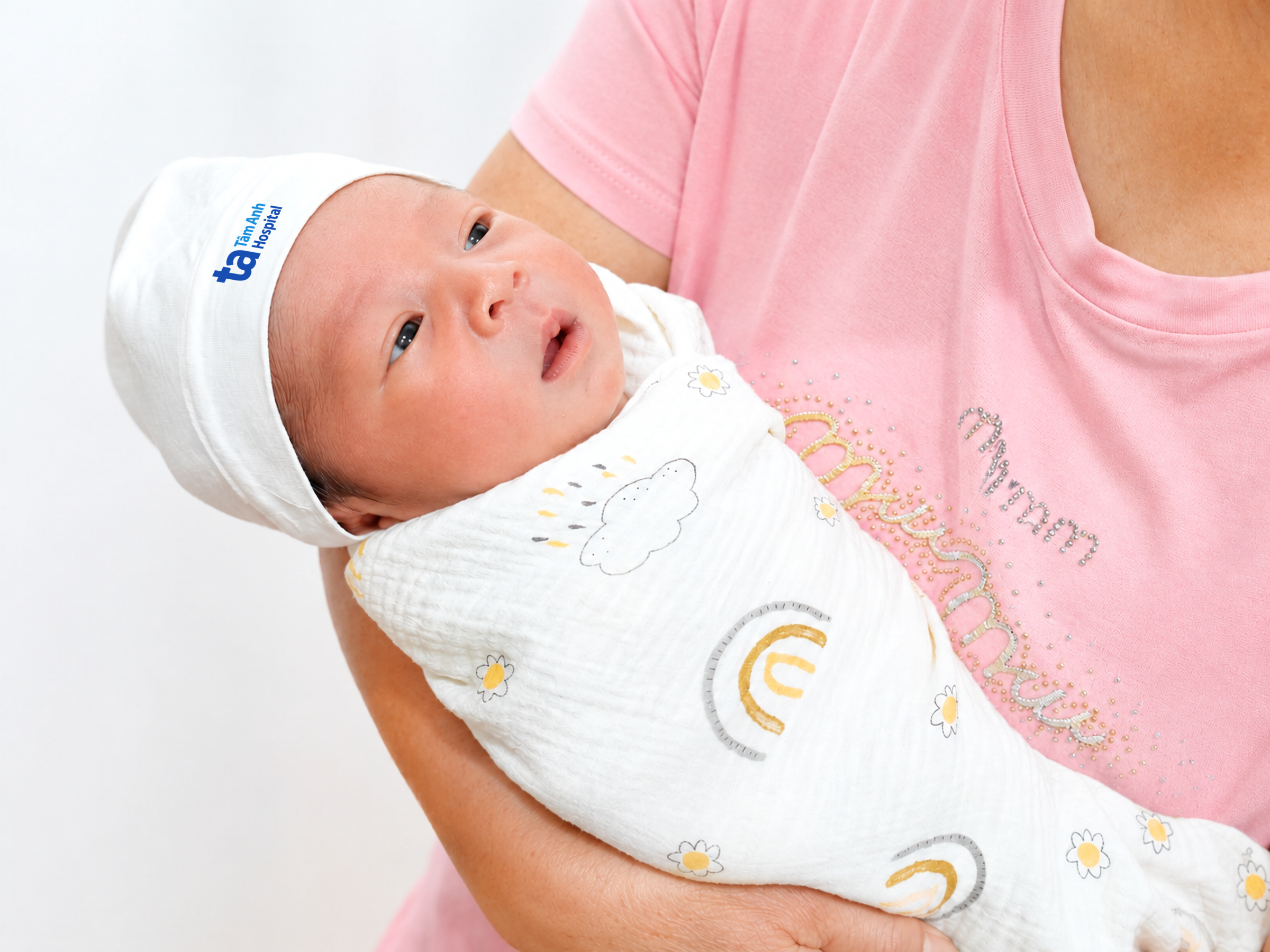 |
Han's son was born in mid-July at Tam Anh General Hospital Ho Chi Minh City. *Photo: Nguyet Nhi* |
Doctor Nhu explained that age increases the risk of creating chromosomally abnormal embryos. Mosaicism occurs in approximately 90% of day 3 embryos and 15-30% of day 5-6 embryos, due to errors during cell division. Thanks to preimplantation genetic testing for aneuploidy (pgt-a) at the IVF Tam Anh system, some cases of mosaic embryos can still result in healthy pregnancies and births if the embryo transfer is correctly indicated and closely monitored.
Nguyet Nhi