The face not only reflects external changes but can also hint at health problems. However, a single sign is not enough to diagnose an illness; it must be considered alongside accompanying symptoms.
Yellow eyes, yellow skin
Yellowing of the whites of the eyes or facial skin is an easily recognizable sign that should not be ignored, especially if new or persistent. According to WebMD, jaundice in adults can be linked to hepatitis, liver disease, gallbladder issues, or pancreatic problems. The Times of India notes that when the liver or bile duct system is affected, bilirubin can accumulate, causing the whites of the eyes to turn yellow, sometimes appearing in the eyes before the skin clearly yellows.
Dark urine or pale stools are accompanying signs that warrant attention. If the condition appears suddenly or with other symptoms, individuals should seek medical examination to determine the cause.
Sudden drooping eyelids
When one or both upper eyelids droop, it can make a face appear tired or sleepy. This condition, known as ptosis, is sometimes painless. Ptosis can be present from birth or develop with age, but in some cases, it may be related to issues with the brain, nerves, or eye socket. Specifically, ptosis that appears within hours or days, accompanied by double vision, muscle weakness, difficulty swallowing, or severe headaches, requires prompt medical evaluation.
Crooked mouth, difficulty moving one side of the face
Sudden weakness on one side of the face, a crooked mouth, or difficulty closing one eye might lead many to simply think of facial nerve paralysis. A common cause is Bell's palsy, a condition that causes temporary weakness or paralysis of muscles on one side of the face.
However, facial paralysis can also be a symptom of a stroke, especially when it occurs with numbness or weakness in the limbs, speech difficulties, double vision, dizziness, or trouble swallowing. WebMD warns that these symptoms require immediate emergency care.
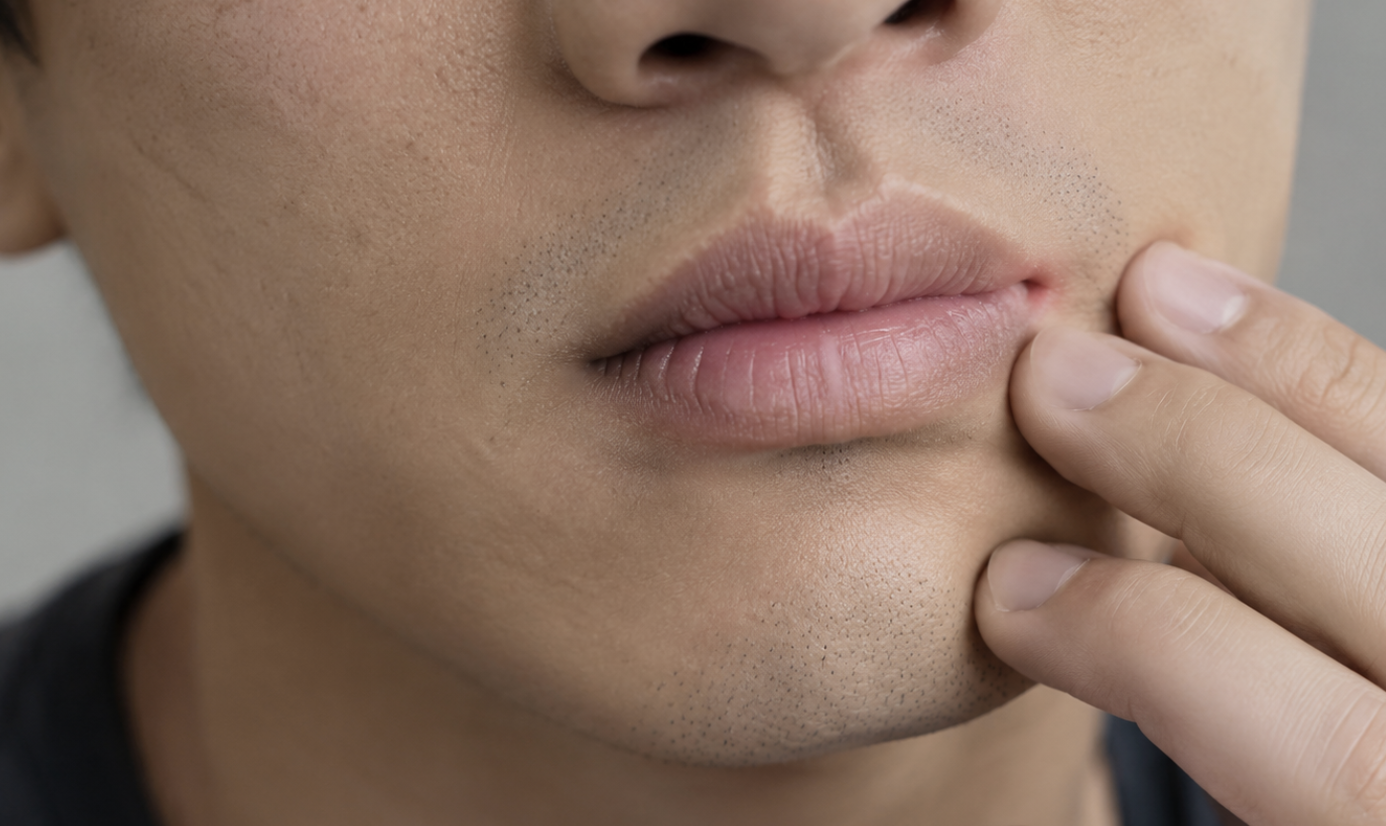 |
A crooked mouth and difficulty moving one side of the face can be warning signs of a stroke. Image created by AI.
Butterfly-shaped rash on the face
A red area or rash spreading across both cheeks and over the bridge of the nose, forming a butterfly shape, is a characteristic manifestation of systemic lupus erythematosus (SLE).
While not all facial rashes are serious, an unexplained rash with this shape, especially when accompanied by fever, pain, or joint stiffness, should be evaluated by a doctor. This sign is easily mistaken for allergies or skin irritation, so self-treatment should not be prolonged if the rash recurs or is accompanied by other abnormalities.
Yellow plaques around the eyelids
Raised yellow plaques or nodules on the upper or lower eyelids are called xanthelasma, formed by cholesterol deposits under the skin. Xanthelasma is usually painless and rarely dangerous, but it can indicate high cholesterol or an elevated risk of cardiovascular disease.
Some individuals develop xanthelasma even with normal blood cholesterol levels. Those with this condition should have their cholesterol and cardiovascular risk factors checked, rather than viewing it solely as a cosmetic issue. Additionally, xanthelasma can be associated with certain liver and bile duct diseases, including primary biliary cholangitis, which increases cholesterol.
Swollen eyes, facial changes
Swelling under the eyes or eye bags often makes the face appear tired. Lack of sleep, high salt intake, hot and humid weather, hormonal changes, or age can all cause this condition; allergies can also lead to red, itchy, and swollen eyes.
Isolated eye bags are not a specific sign of a disease. However, if the swelling is prolonged, recurs unusually, or is accompanied by other bodily changes, individuals should seek to identify the cause rather than treating it merely as a cosmetic concern.
Not all facial changes indicate illness. Accompanying signs and overall health status must be considered. Disease diagnosis requires appropriate examination, tests, and imaging.
Bao Bao (Compiled)