The Mental Health Institute, Bach Mai Hospital, admitted a 10th-grade female student for examination with multiple injuries on her arms. This followed days of online ridicule and family conflicts, according to information from Master of Science, Doctor Nguyen Viet Ha, M5 Department, on 14/9.
According to Doctor Ha, the situation began on the school's "confession" page, where the student became the target of peer ridicule. At home, she constantly argued with her parents. This feeling of isolation pushed the student away from real-life connections, immersing herself in virtual spaces. She restlessly scrolled on her phone from 11 p.m. until 2-3 a.m., searching for content related to sadness and loneliness.
"Prolonged sleep deprivation eroded her physical health, exhausting her nervous system and diminishing her ability to maintain psychological balance. She experienced reduced concentration, declining academic performance, and fell into a state of melancholy", the doctor recounted.
Recalling images seen online, the student began self-harming by cutting her arms to find immediate relief. This false sense of comfort led her to repeat the behavior whenever stressed. She anonymously posted photos of her injuries to a private online group. Shares and expressions of sympathy from the online community provided a false sense of understanding, but also trapped her in a negative spiral. She frequently wore long-sleeved shirts to hide the injuries from her parents. Her family only discovered the self-harm and brought her to Bach Mai Hospital when she intended to continue harming herself.
The doctor prescribed medication combined with psychological therapy for the patient. Parents were also advised on how to adjust their child's screen time management.
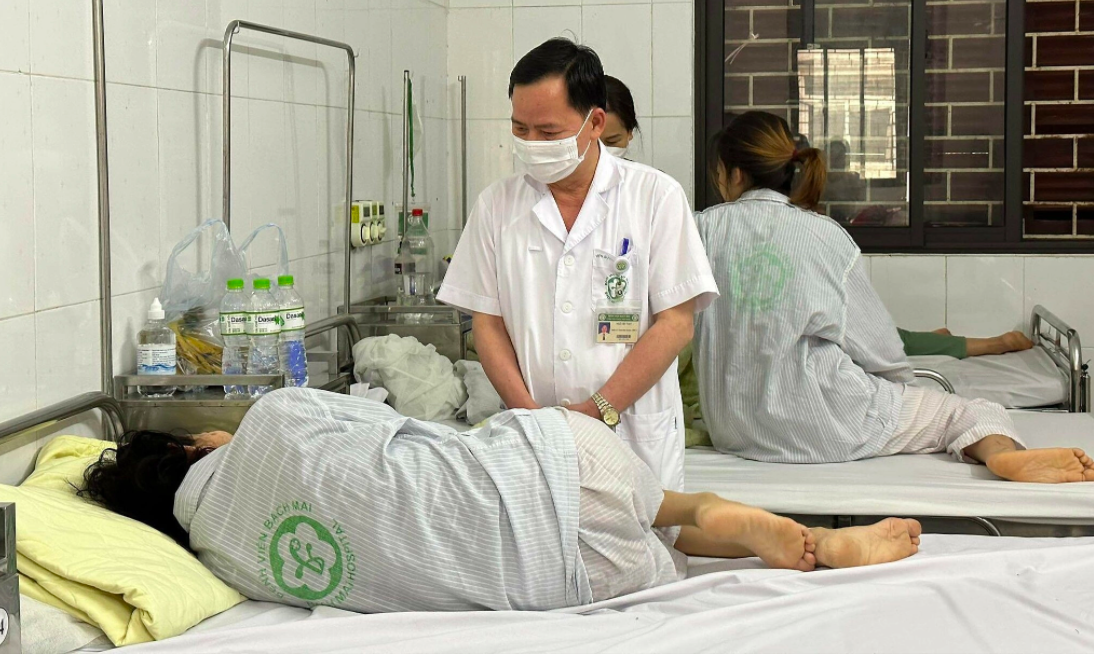 |
A patient receiving treatment at the Mental Health Institute. Photo: Le Nga
According to Master of Science, Doctor Nguyen Thanh Long of the Mental Health Institute, self-harm not intended for suicide is a way children intentionally hurt their bodies to release pent-up frustration or to punish themselves. Social media exacerbates this risk through social contagion and passive exposure. Platform algorithms automatically suggest negative content based on a child's initial browsing habits. Furthermore, young users joining private groups can create a mimicry effect, while late-night phone use disrupts the biological clock, making children irritable and anxious.
Doctor Long advises parents and schools against unilateral phone bans. Adults need to maintain open dialogue and observe warning signs such as sudden withdrawal, declining academic performance, sleep disturbances, or unusual scratches on the body. When discovering self-harm, parents should remain calm, avoid scolding or negative prohibitions, and instead listen to help their child address the root causes of their stress.
Le Nga