The "Hospital Management Asia 2026" (HMA 2026) forum, focusing on hospital and healthcare system management, convened on 2-3/9 in Bangkok, Thailand. The event gathered over 2,000 hospital leaders, policymakers, health experts, and technology representatives. Discussions centered on hospital governance, patient quality and safety, digital transformation, and the application of artificial intelligence (AI) in healthcare.
At the event, Niru Rajakumar, CEO of Amalga—a hospital information system provider in New Zealand and Southeast Asia—emphasized that hospitals must shift their focus from mere digitization to robust data connection. He asserted that technology generates value only when information is seamlessly shared across the organization, empowering medical staff to make quicker, more precise decisions.
Experts also highlighted growing pressures on Asian healthcare systems. In Thailand, the population aged 60 and above is projected to rise from 20% to 28% within the next decade. Globally, a shortage of 11 million healthcare workers is anticipated by 2030. This aging demographic fuels demand for chronic and multi-morbidity care, a need the existing healthcare workforce struggles to address.
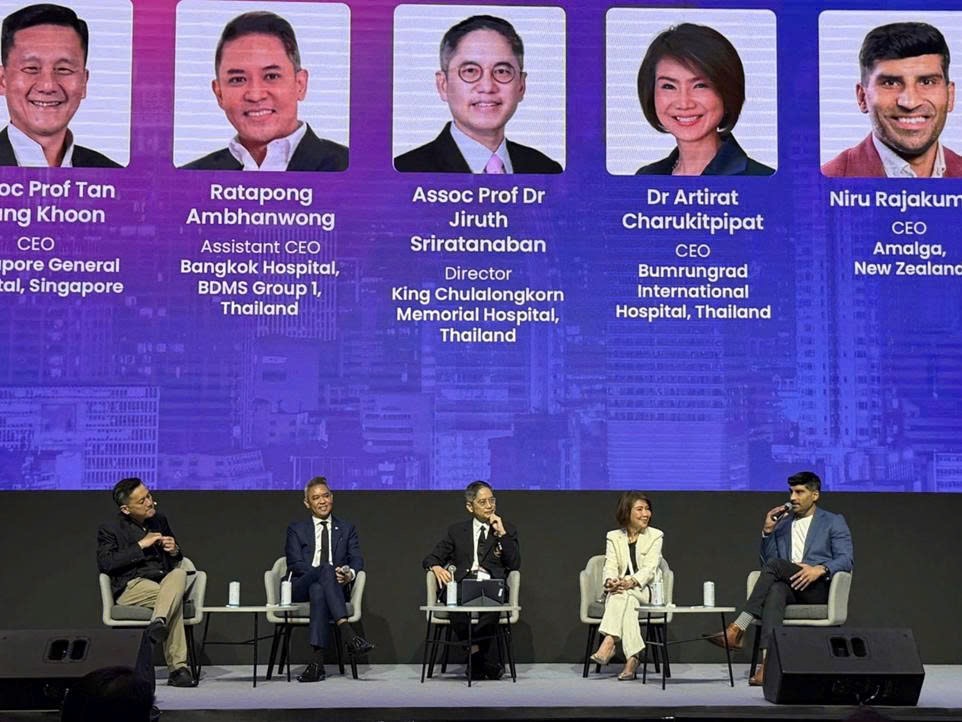 |
Experts sharing insights at "Hospital Management Asia 2026", Bangkok, Thailand. Photo: Amalga |
Experts sharing insights at "Hospital Management Asia 2026", Bangkok, Thailand. Photo: Amalga
A key challenge identified is the fragmentation of patient data, which is often stored across various systems within a single hospital or between different facilities. This forces doctors to search multiple software platforms for information, and patients to repeatedly provide their medical history when moving between departments or institutions.
This data fragmentation, experts noted, also diminishes the effectiveness of AI applications. For instance, while some AI-powered note-taking tools can save doctors 10-15 minutes per consultation, if the generated content isn't integrated into a centralized medical record, data remains siloed. This necessitates manual input or information retrieval by medical staff.
The experience at Bumrungrad International Hospital in Bangkok, Thailand, further illustrates this point. Testing AI for diagnostic imaging took three years before specialists trusted the technology enough to integrate its results into their workflow. This demonstrates that AI requires clinical evaluation and seamless integration into doctors' workflows, beyond mere algorithmic accuracy.
Experts commonly stressed that AI should not be implemented as an extra technology layer atop fragmented data systems. To leverage AI effectively, hospitals must first ensure data is standardized, connected, and contextually accessible. Furthermore, medical staff must review and confirm all AI-generated results before their use in patient care.
Niru stated that establishing a centralized, patient-centric record is fundamental for AI to deliver value. Rather than data remaining isolated in individual departments, rooms, or software, information needs to be interconnected to form a comprehensive picture of each patient's treatment journey.
One approach involves standardizing data using connectivity standards like HL7 and FHIR, enabling different systems to exchange information. With data organized on a unified platform, hospitals can implement AI applications for note-taking support, data analysis, alerts, or decision support without needing to re-process data from the beginning.
Amalga, developed by the team behind Orion Health, currently operates hospital information systems in over 30 facilities across New Zealand, Thailand, and Vietnam, serving more than 10 million patients. The company advocates for a model of unifying patient data before implementing AI applications.
"AI is only useful when the data environment behind it is reliable", Niru remarked. He further emphasized that hospitals must establish connected data platforms before deploying any AI applications.
Amidst an aging population and healthcare worker shortages, experts at HMA 2026 concluded that the hospital's challenge extends beyond merely integrating more technology. Effective digital transformation hinges on the ability to connect systems, ensuring data continuously serves doctors and patients rather than remaining siloed in separate software.
Hai My