Doctor Nguyen Viet Chung, Head of the Mental Health Department, reported the case on 14/9. After two months of intensive psychological treatment, the patient gained good control over the urge to pull hair, significantly reducing psychological pressure and associated anxiety.
Previously, the boy's father noticed numerous patchy bald spots on his son's scalp. Despite cutting his hair very short to deter him, the boy persisted in pulling out the shorter strands.
Clinical examination and psychological assessment revealed the patient was experiencing extreme stress, leading to uncontrollable behavior. Doctors diagnosed him with trichotillomania, a disorder categorized under obsessive-compulsive spectrum conditions.
Trichotillomania causes an irresistible urge to pull hair, providing momentary relief from feelings of restlessness and anxiety. However, this brief satisfaction soon gives way to regret and low self-esteem, perpetuating the hair-pulling cycle.
Typical manifestations include irregular bald patches on the scalp, with uneven hair lengths, yet no scarring on the underlying skin. Many individuals engage in this behavior unconsciously during stressful periods, some even targeting specific hairs.
The condition often emerges between the ages of 12 and 13, frequently affecting children experiencing exam pressure, family conflicts, or those with underlying depression or attention deficit hyperactivity disorder.
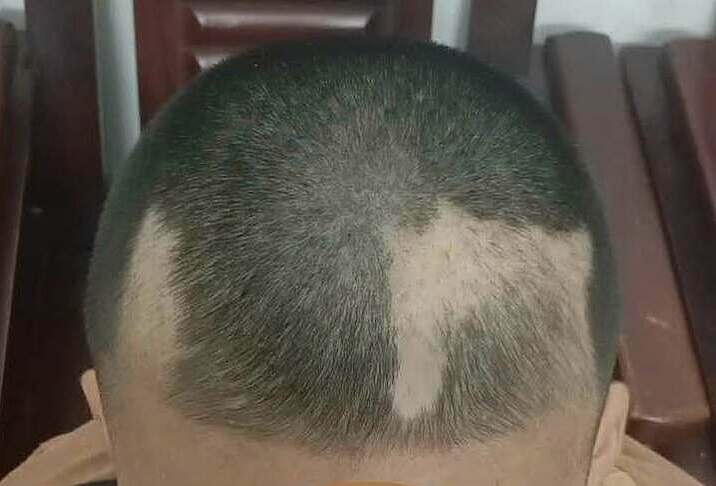 |
The patient's hair pulling resulted in significant bald patches, even after his hair was cut short. *Photo: Doctor provided* |
If left unaddressed by families, persistent hair pulling can lead to scalp abrasions, infections, and eventually develop into social phobia. More critically, some individuals swallow the pulled hair, which can form hairballs in the stomach, risking intestinal obstruction and necessitating emergency surgery.
Doctor Chung advises parents against dismissing repetitive behaviors such as hair pulling, nail biting, or skin scratching as simple childhood mischief. If a child exhibits these actions continuously, coupled with insomnia and irritability, parents should seek a mental health assessment. Families must avoid scolding or pressuring their child; instead, they should offer support and listen to help address the underlying causes of stress.
Thuy Quynh