Tongue cancer typically originates in the cells lining the surface of the tongue. It can lead to slow-healing sores, pain, bleeding, lumps, or difficulty chewing and swallowing. Treatment options vary based on the tumor's location and size, lymph node involvement, disease stage, and the patient's overall health.
According to Master of Science, Doctor Vuong Ngoc Duong, Deputy Head of the Radiation Therapy Department at Tam Anh General Hospital Hanoi, surgery is a common treatment for tongue cancer. Doctors may also prescribe chemotherapy or radiation therapy, balancing cancer control with preserving the patient's speech and swallowing functions, and overall quality of life.
Early-stage tongue cancer
In this early stage, when the tumor is small and localized, radiation therapy can be used to completely eradicate cancer cells. Depending on the tumor's location and size, doctors may opt for external beam radiation therapy or brachytherapy, where a radioactive source is placed close to the tumor.
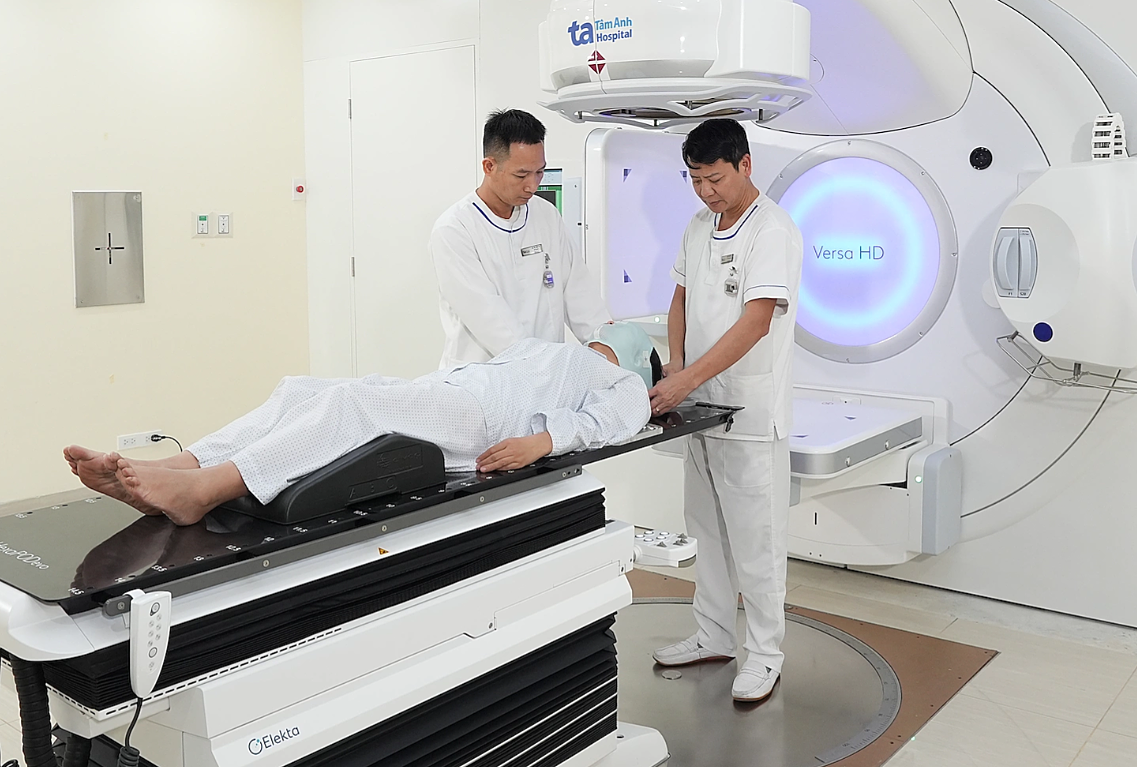 |
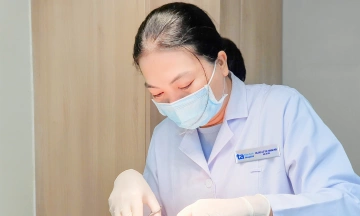
A radiation therapist positions a patient with tongue cancer. Photo: Tam Anh General Hospital
Post-surgical tongue cancer
Not all patients who undergo surgery require post-surgical radiation therapy. Doctors evaluate the risk of recurrence based on tumor and lymph node pathology results and the extent of the surgery.
Radiation therapy may be indicated if the tumor was large or deeply invasive, if cancer cells are found at the surgical margins, if the cancer has spread to neck lymph nodes, or if other characteristics suggest a high risk of recurrence.
If the risk of recurrence is very high, for example, if cancer cells remain at the surgical site or have spread beyond the lymph nodes, doctors may combine chemotherapy with radiation therapy, provided the patient is healthy enough. The aim is to eliminate any microscopic cancer cells that might remain after surgery.
Locally advanced or lymph node-positive tongue cancer
When tumors are large, have spread to adjacent areas, or involve neck lymph nodes, patients typically require a multidisciplinary treatment approach.
In many cases, surgery is performed first, followed by radiation therapy to reduce the risk of recurrence. If the tumor is inoperable or surgery is unlikely to control the disease, radiation therapy may become the primary treatment, sometimes combined with chemotherapy.
Recurrent or metastatic tongue cancer
Doctors may prescribe radiation therapy if tongue cancer recurs after initial treatment and the affected area has not been previously irradiated. When the disease has progressed and a complete cure is no longer possible, radiation therapy plays a palliative role, alleviating symptoms such as pain, bleeding, difficulty swallowing, or tumor-related functional impairments.
According to Doctor Duong, radiation therapy for the tongue region demands high precision because this area is directly involved in many vital functions: eating, chewing, swallowing, and speaking. Doctors must carefully calculate the radiation dose to control the tumor while minimizing impact on healthy tissues.
Before treatment, patients undergo a simulation CT scan, and their head and neck are immobilized with specialized devices. The resulting images are then used to precisely identify the target radiation area and create a treatment plan.
During radiation therapy, patients may experience oral pain, dry mouth, altered taste, difficulty swallowing, or fatigue. The severity of side effects varies among individuals and depends on the irradiated area. Oral hygiene, adequate nutrition, and symptom management during treatment help patients maintain better physical condition.
Hieu Nguyen
| Readers can submit questions about cancer here for doctors to answer |