An ultrasound at Tam Anh General Hospital, TP HCM, revealed Philip Allan's gallbladder was significantly distended, measuring approximately 65 mm in transverse diameter, compared to a normal 40 mm. Its wall was 6 mm thick, and a large mass of gallstones was present within the lumen. Master, Doctor, Level 1 Specialist Le Khoa, from the Hepato-Biliary-Pancreatic Department, Endoscopy and Endoscopic Digestive Surgery Center, noted that the patient's pain intensified upon palpation of the right upper quadrant. This led to a diagnosis of acute calculous cholecystitis. The gallstones obstructed the gallbladder's outflow, causing bile stasis, increased pressure, and exacerbating the inflammation.
Philip Allan's medical history included gastroesophageal reflux disease, prior laparoscopic surgery, and prostate cancer treatment involving chemotherapy and hormone therapy. These factors heightened his risk of developing intra-abdominal adhesions.
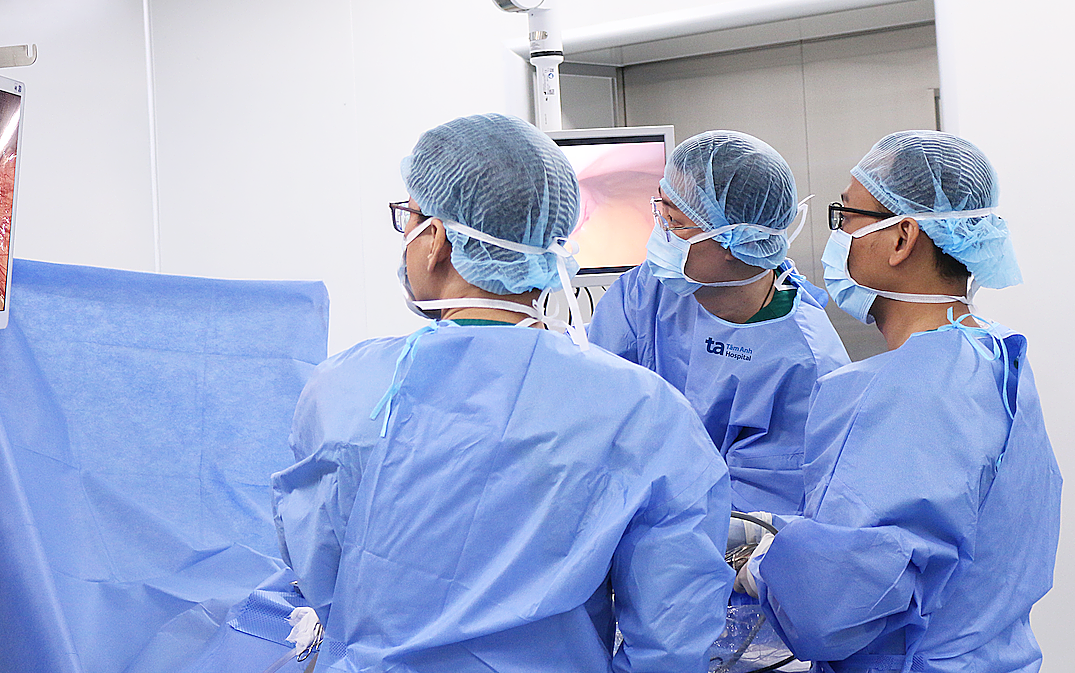 |
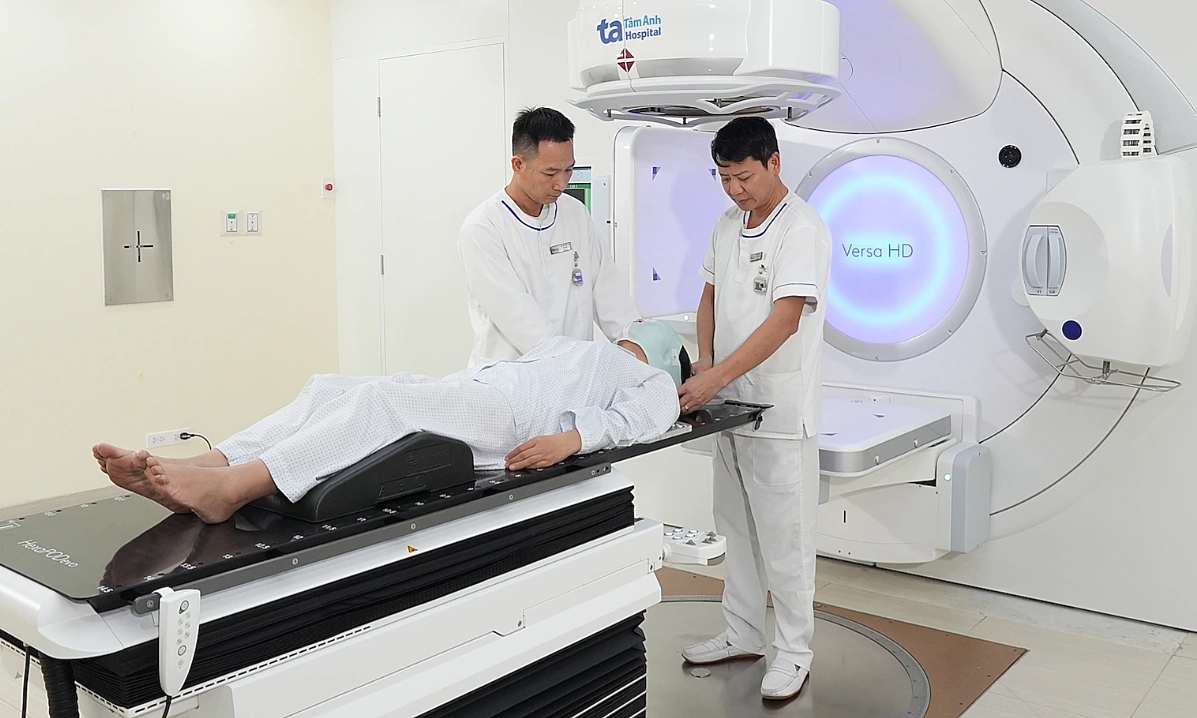
Doctors performing a cholecystectomy on Allan. *Photo: Tam Anh General Hospital.* |
The surgical team performed a laparoscopic cholecystectomy on Allan. They discovered the subhepatic region was obscured by the greater omentum and transverse colon, forming a mass of inflammatory adhesions. The team carefully dissected these adhesions to reach the distended and entirely necrotic gallbladder. After ligating the cystic duct, they extracted over one thousand yellow gallstones, each measuring approximately 1-3 mm. After the operation, Allan's pain significantly decreased, and he was discharged two days later.
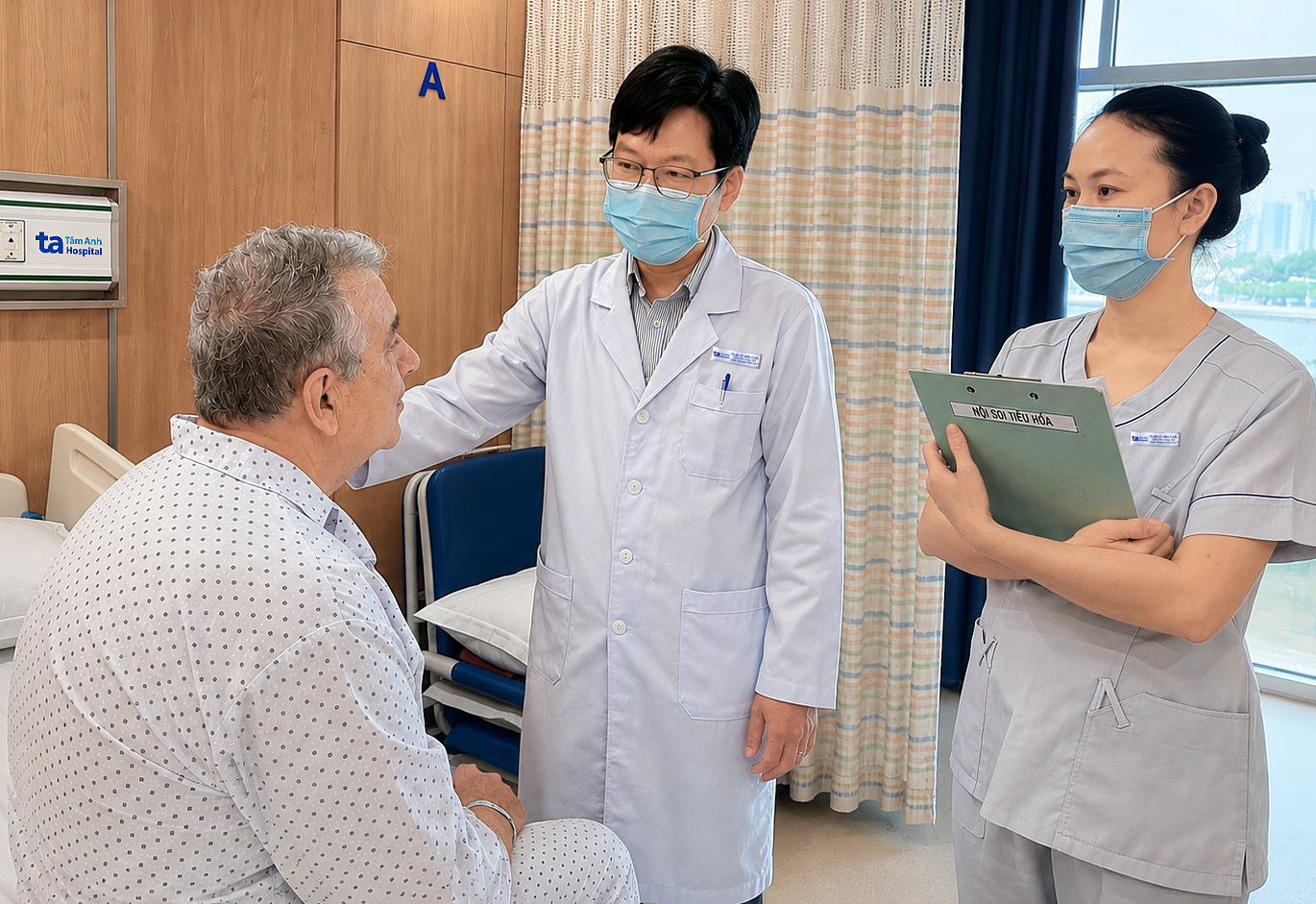 |
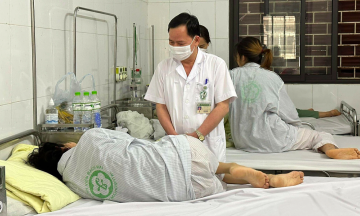
A doctor consulting Allan before his discharge. *Photo: Tam Anh General Hospital.* |
Acute calculous cholecystitis is a frequent cause of acute abdominal pain. If left untreated, this inflammation can progress to gallbladder wall ischemia, necrosis, abscess formation, or even perforation.
Doctor Le Khoa highlighted that in elderly individuals or those with underlying health conditions, typical symptoms like fever and inflammatory responses might be absent. Patients may only experience abdominal pain, nausea, bloating, or digestive disturbances, often mistaken for food poisoning or gastric problems. If the gallbladder becomes necrotic and perforates, bile and inflammatory fluid can spill into the abdominal cavity, potentially causing peritonitis and sepsis.
Doctors advise individuals diagnosed with gallstones to remain vigilant, even without current symptoms. Regular follow-up appointments are crucial for ongoing monitoring. Should prolonged pain in the epigastric or right upper quadrant occur, particularly with fever, nausea, or vomiting, patients must seek immediate hospital care for examination, diagnosis, and timely treatment.
Quyen Phan
| Readers can send questions about digestive diseases here for doctors to answer |