Before this flight, doctors at Binh Duong General Hospital made every effort to save a male patient with a severe traumatic brain injury. However, a miracle did not occur, and the patient was declared brain dead. In a moment of profound grief, the family decided to donate his organs to save others.
Under the coordination of the National Organ Transplant Coordination Center, medical teams from various hospitals nationwide were immediately mobilized. On the morning of 11/3, a team of doctors from 108 Military Central Hospital flew to TP HCM. Meanwhile, in Hanoi, the hospital's liver and heart transplant teams urgently completed tests and procedures for the organ recipients.
 |
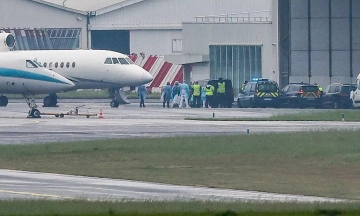
Doctors transport organs to the airport. Photo: Hospital provided
That afternoon, the patient moved to Cho Ray Hospital. In the operating room, doctors prepared for the organ retrieval surgery. The heart and right lobe of the liver went to Hanoi for two patients at 108 Military Central Hospital. The left lobe of the liver was allocated to a pediatric patient at the National Children's Hospital. Hue Central Hospital received the two kidneys. 103 Military Hospital and Bach Mai Hospital received the two corneas.
At midnight, the preservation containers holding the heart and liver were taken to the airport to catch the flight to Hanoi. "Throughout the flight, our attention was focused on the organ containers and the patients waiting at the other end. In organ transplantation, every minute is invaluable," shared Dr. Ho Van Linh, from the Department of Hepato-Pancreato-Biliary Surgery, 108 Military Central Hospital.
Doctor teams at both ends continuously updated every time milestone: from when the heart was retrieved, the aortic clamp time, and the estimated transport duration. This information helped the transplant team in Hanoi prepare every step, ensuring the heart could be transplanted immediately upon arrival.
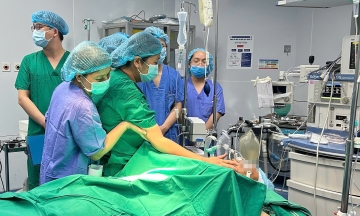
After 2 h on 12/3, the team of doctors and the organ containers arrived at 108 Military Central Hospital. Two operating rooms were lit and ready. The first room was for a heart transplant for a 53-year-old male patient with end-stage heart failure due to dilated cardiomyopathy. The other room was for a liver transplant for a 42-year-old patient suffering from acute liver failure on a background of chronic hepatitis B and severe cirrhosis.
Colonel, Dr. Ngo Vi Hai, Head of the Department of Thoracic Surgery, stated that the heart transplant proceeded with urgency every minute. Thanks to the close coordination among the organ retrieval, transport, and surgical teams, the heart's ischemic time was minimized. Just over 50 minutes after arriving at the hospital entrance, the heart was transplanted into the recipient's chest. After about 30 minutes of anastomosis, the heart began its first beats. This was the 9th heart transplant and the 3rd trans-Vietnam heart transplant performed by 108 Military Central Hospital.
By the afternoon of 12/3, both patients were conscious, extubated, breathing independently, and hemodynamically stable. They continue to be monitored under special care. Patients who received organ transplants at other hospitals also underwent safe procedures.
 |
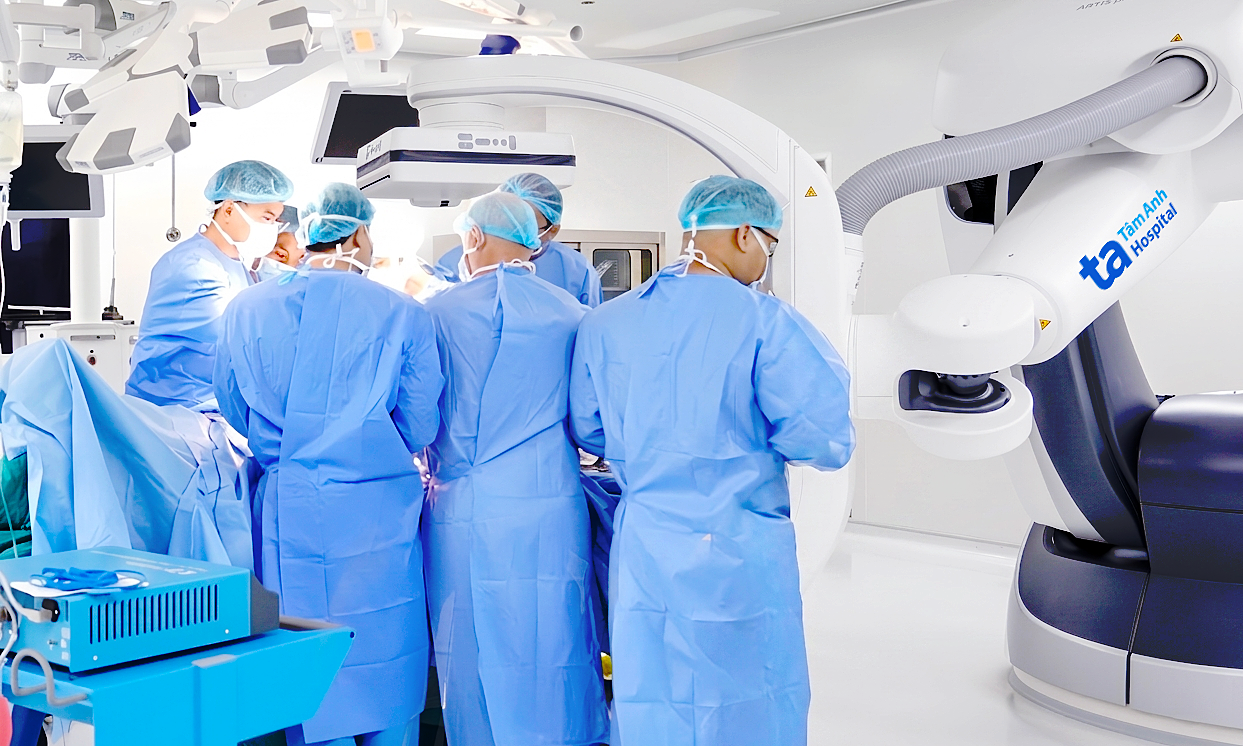
Doctors continuously consult and communicate with the organ transport team to meet transplant timelines. Photo: Hospital provided
Professor, Dr. Le Huu Song, Director of 108 Military Central Hospital, recognized the overnight organ transplants as a result of the dedication, coordination, and silent sacrifices of many individuals, from operating rooms and airports to night flights. This journey extended life from TP HCM to Hanoi, Hue, and many other hospitals.
"Thanks to the noble gesture of the organ donor and their family, 7 patients have been given a new chance at life," said Professor Song.
Organ transplantation is currently the only measure to sustain life for patients with end-stage organ failure. To date, Vietnam's healthcare sector has successfully performed thousands of transplants involving six types of human organs. Since 2010, the system has recorded nearly 270 brain-dead donors. Specifically, during the 2024-2025 period, thanks to effective hospital advocacy teams and more open-minded patient relatives, the number of organ donations from brain-dead individuals nearly doubled compared to all previous years combined. This positive development has helped Vietnam lead Southeast Asia in the number of organ transplants, maintaining over 1,000 procedures annually since 2022.
Le Nga