Answer:
Current scientific evidence indicates that the HPV vaccine does not affect physical growth, cause infertility, or increase early sexual activity in adolescents.
The HPV vaccine works by stimulating the immune system to create antibodies against the HPV virus. Its components are primarily the HPV virus's capsid proteins, produced using recombinant technology, combined with immune adjuvants and stabilizers. The HPV vaccine contains no hormones or substances that could affect the endocrine system, which plays a crucial role in a child's height development.
Vaccine safety monitoring data from the World Health Organization (WHO) and the US Centers for Disease Control and Prevention (CDC) demonstrate a high safety profile for the HPV vaccine. Global immunization programs have also used the HPV vaccine for over 10 years, with hundreds of millions of doses administered to children and adolescents. Several US states and territories, including Hawaii, Puerto Rico, Rhode Island, Virginia, and Washington, currently require HPV vaccination for adolescents attending school.
Most post-vaccination reactions are mild and temporary, such as injection site pain, fatigue, headache, or low-grade fever. Severe side effects are rare, and there is no evidence that the HPV vaccine causes infertility or affects fertility.
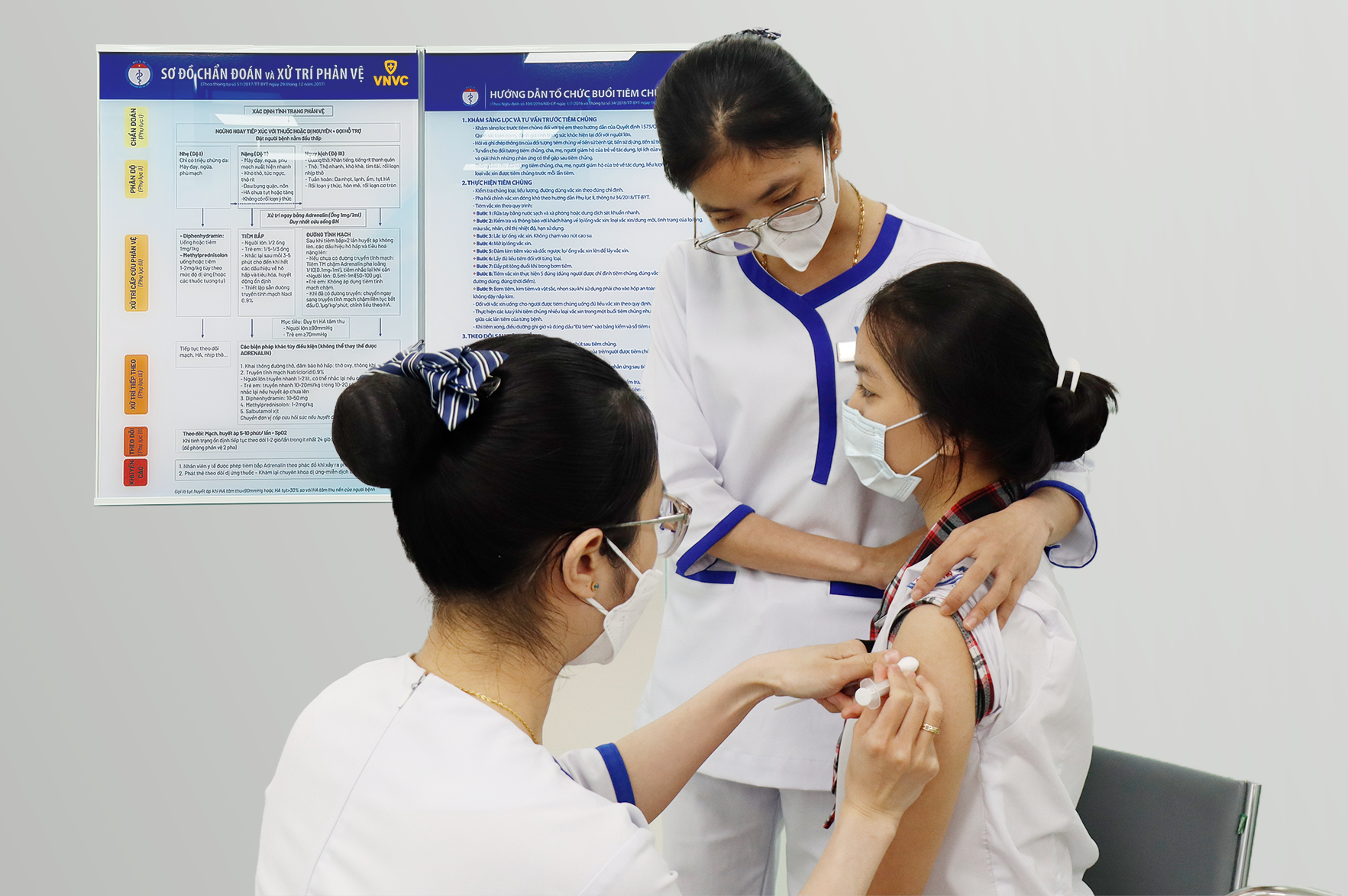 |
Adolescents receive the Gardasil vaccine to prevent HPV virus-related diseases at VNVC Vaccination System. Photo: Binh An. |
Adolescents receive the Gardasil vaccine to prevent HPV virus-related diseases at VNVC Vaccination System. Photo: Binh An.
The World Health Organization also states that ages 9-14 are the optimal time for HPV vaccination because children in this age group have had less exposure to the virus through sexual contact. Antibodies from the vaccine can remain at high levels, not diminishing over time. Furthermore, as young people tend to become sexually active earlier, vaccination helps protect children before sexual initiation.
Currently, Vietnam offers two types of HPV vaccines: Gardasil and Gardasil 9. The Gardasil vaccine protects against four HPV strains: 6, 11, 16, and 18, and is for females aged 9-26. Girls aged 9 to under 14 years require two doses, while those aged 14-26 years need three doses within six months.
The second type is the newer generation vaccine, Gardasil 9, which protects against an additional five strains compared to Gardasil: 31, 33, 45, 52, and 58. It is suitable for both males and females. Children aged 9 to under 15 years need two doses of Gardasil 9, while those aged 15-45 years require three doses.
Dr. CKI Nguyen Le Nga
Medical Manager, VNVC Vaccination System
Readers can submit vaccine-related questions for a doctor's response here.