Eng English
China 中国人

Eng English
China 中国人
  • News
  • World
  • Business
  • Entertainment
  • Sports
  • Law
  • Education
  • Health
  • Lifestyle
  • Travel
  • Science
  • Digital
  • Automobiles
  • Trở lại Thể thao
  • Health
Tuesday, 14/7/2026 | 21:51 GMT+7

‘freezing’ the body saves young man after three cardiac arrests

a 24-year-old man, who suffered multiple prolonged cardiac arrests, deep coma, multi-organ failure, and severe lung damage, was ‘frozen’ by doctors and dramatically revived.

on 14/7, representatives from Phu Tho General Provincial Hospital announced the patient’s health recovered with no neurological sequelae after special treatment. to prevent future sudden cardiac arrest, doctors implanted an implantable cardioverter-defibrillator (ICD) before his discharge.

previously, the young man, who had a healthy medical history, unexpectedly became cyanotic and lost consciousness during his lunch break at the office. colleagues immediately rushed him to the nearest medical facility for emergency care. however, his condition quickly worsened, causing him to suffer circulatory arrest during transfer to Tuyen Quang General Provincial Hospital. after 15 minutes of intensive resuscitation, his heart resumed beating. doctors intubated him, administered vasopressors, and continued transferring him to a central-level hospital.

the challenges continued during transport, as the patient experienced two more episodes of circulatory arrest. the emergency team had to resuscitate him in the ambulance to maintain his life. facing this critical situation, his family decided to change the course of treatment, admitting him to the Intensive Care and Toxicology Department (on-demand service) at Phu Tho General Provincial Hospital.
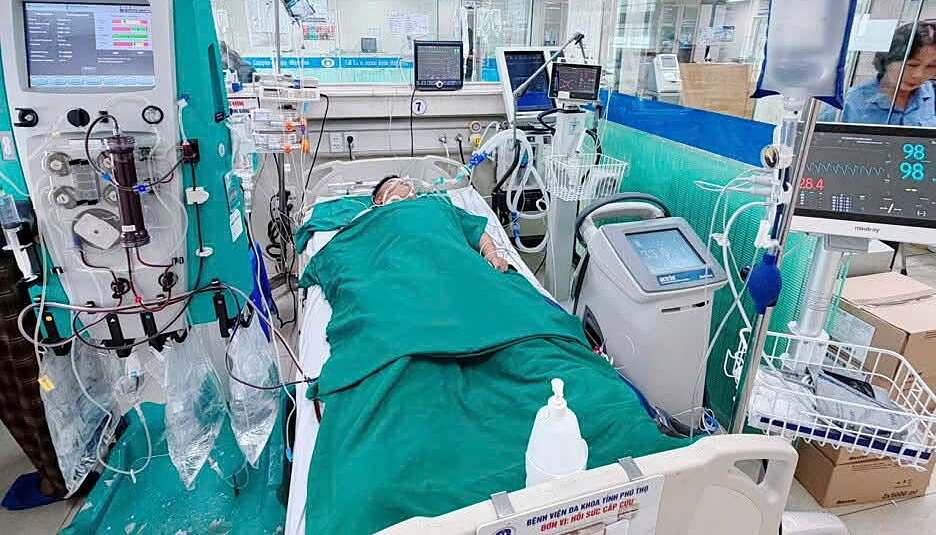
the patient undergoing treatment at the hospital. *Photo: Hospital provided*

upon admission, the young man was in a deep coma, with a high fever of 39,6 degrees Celsius, and his blood pressure was entirely dependent on high-dose vasopressors. tests revealed severe lung damage, critically reduced blood oxygenation, metabolic acidosis, and severe multi-organ failure. recognizing the brain as the most vulnerable organ to oxygen deprivation after circulatory arrest, doctors immediately activated the most advanced resuscitation protocol, focusing on targeted temperature management.

doctor Nguyen Thi Thanh Mai, head of the Intensive Care and Toxicology Department (on-demand service), explained that this artificial "hibernation" state maintains the patient's body temperature at 33-36 degrees Celsius. this process minimizes metabolic demand and oxygen consumption, thereby preventing brain edema, visceral hemorrhage, and inhibiting neurotoxic substances. global medical literature records that this therapy reduces mortality by 14% and severe sequelae by 11% if applied within the "golden hour" of the first six hours after the event.

concurrently with hypothermia, the treatment team implemented continuous hemodialysis, mechanical ventilation, and closely monitored vital signs. after 24 hours of cooling, the patient’s body temperature was gradually raised according to protocol. when sedatives were discontinued, his consciousness began to recover. brain magnetic resonance imaging (MRI) results showed only very minor damage due to oxygen deprivation, an unexpected outcome for a case with multiple cardiac arrests. on the next day, the patient improved significantly, able to breathe independently and discontinue all hemodialysis support or vasopressors.

thuy quynh
By VnExpress: https://vnexpress.net/dong-lanh-co-the-cuu-song-chang-trai-ngung-tim-3-lan-5097401.html
Tags: body cooling induced hypothermia circulatory arrest cardiac arrest targeted temperature management

News in the same category

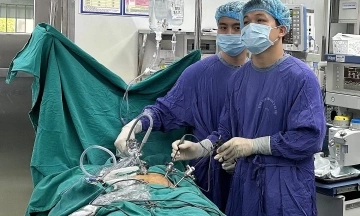
Gift of life: brain-dead man saves seven patients

Gift of life: brain-dead man saves seven patients

A 49-year-old man, declared brain-dead after a traffic accident, has given seven patients a new lease on life through multi-organ donation by his family.

Is playing in the rain good for children?

Is playing in the rain good for children?

While visiting their grandparents in the countryside, my 8-year-old daughter was allowed to play in the rain, with the hope of boosting her immunity. Is this practice beneficial? (Hong Van, 33, Hanoi)

How to soothe your digestive system in the evening

How to soothe your digestive system in the evening

Reduce stress after dinner, avoid eating too close to bedtime, prioritize easily digestible foods and nutrient-rich drinks to support a stable gut.

Should cancer patients attend funerals?

Should cancer patients attend funerals?

Many believe that a cancer diagnosis combined with attending a funeral can lead to rapid tumor spread; is this true? (Hoang, 49, Thai Binh).

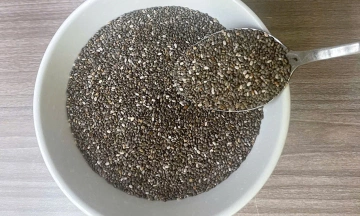
What happens when women regularly consume chia seeds?

What happens when women regularly consume chia seeds?

Rich in fiber, omega-3, protein, and minerals, chia seeds can support weight management and maintain bone health in women.

5 seemingly harmless habits that can harm your lungs

5 seemingly harmless habits that can harm your lungs

Mouth breathing, keeping doors closed, or exercising outdoors in polluted air can frequently increase the risk of lung damage.

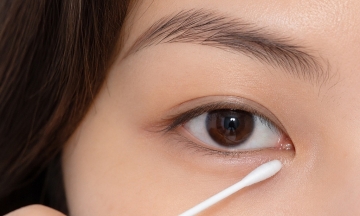
How eye discharge can signal illness

How eye discharge can signal illness

Abnormal eye discharge, characterized by excessive secretion, discoloration, or accompanying symptoms like pain, redness, and blurred vision, indicates a need for early medical evaluation.

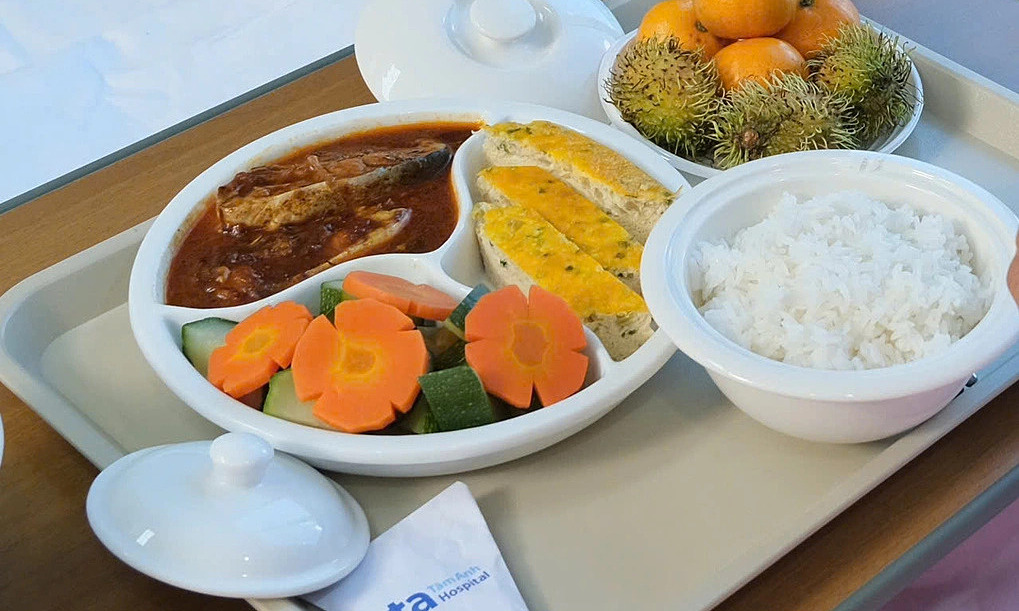
What to eat with gastroesophageal reflux disease?

What to eat with gastroesophageal reflux disease?

Individuals with gastroesophageal reflux disease should prioritize fiber-rich foods, consume smaller meals, and avoid fried items and alcohol to alleviate symptoms.

Child's face almost damaged by coin rubbing for facial paralysis

Child's face almost damaged by coin rubbing for facial paralysis

The Department of Traditional Medicine at Bach Mai Hospital is seeing numerous pediatric patients with peripheral facial nerve paralysis, whose parents often delay proper medical care by attempting self-treatment with traditional methods like coin rubbing, missing the critical window for effective intervention.

Is cervical length ultrasound needed to prevent preterm birth?

Is cervical length ultrasound needed to prevent preterm birth?

I am 13 weeks pregnant and previously had a preterm birth at week 33. Do I need an ultrasound to measure cervical length, and when should it be done? (Phuong, Quang Nam)

Eng English
China 中国人
  • News
  • World
  • Business
  • Entertainment
  • Sports
  • Law
  • Education
  • Health
  • Lifestyle
  • Travel
  • Science
  • Digital
  • Automobiles
FPT Tower, 10 Pham Van Bach Street, Dich Vong Ward,
Cau Giay District, Hanoi, Vietnam
Email: contacts@vnportal.net
Tel: 028 7300 9999 - Ext 8556
Advertise with us: 090 293 9644
Register
© Copyright 2026 vnnow.net. All rights reserved.
Terms of use Privacy policy Cookies