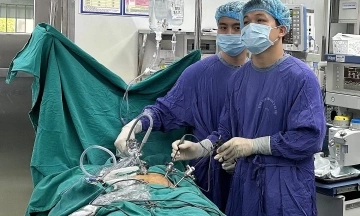
On the morning of 14/7, Xanh Pon General Hospital successfully performed a multi-organ retrieval from the brain-dead donor.
The patient sustained a traumatic brain injury after an accident. Despite undergoing two surgeries to remove blood clots and drain the cerebral ventricles, the damage proved too severe for recovery. A specialized medical council subsequently declared the patient brain-dead.
The most challenging moment occurred not in the operating room, but during the conversation between medical staff and the patient's family. Initially, relatives struggled to accept the patient's passing. However, after multiple explanations about the significance of post-mortem organ donation, the family decided to donate his multiple organs.
"This was a very difficult decision, but we believe that if he could still speak, he would agree to help others," shared the donor's younger sister, adding, "the family hopes he departs, but his life continues to extend."
This decision offered seven patients a chance at a new life. The donor's heart went to Ho Chi Minh City University of Medicine and Pharmacy Hospital for a patient with end-stage heart failure. Doctors divided the liver into two parts: one was transplanted into a patient at Viet Duc Friendship Hospital, and the other was transferred to National Children's Hospital for a critically ill child. This child had received a liver transplant a few days prior, but unfortunately, the new liver was rejected. Without this timely transplant, the child would have died.
Two kidneys were transplanted into two patients at Xanh Pon General Hospital. Two corneas were sent to Dong Do Hospital, helping two people regain their sight.
Currently, post-transplant patients are under intensive monitoring.
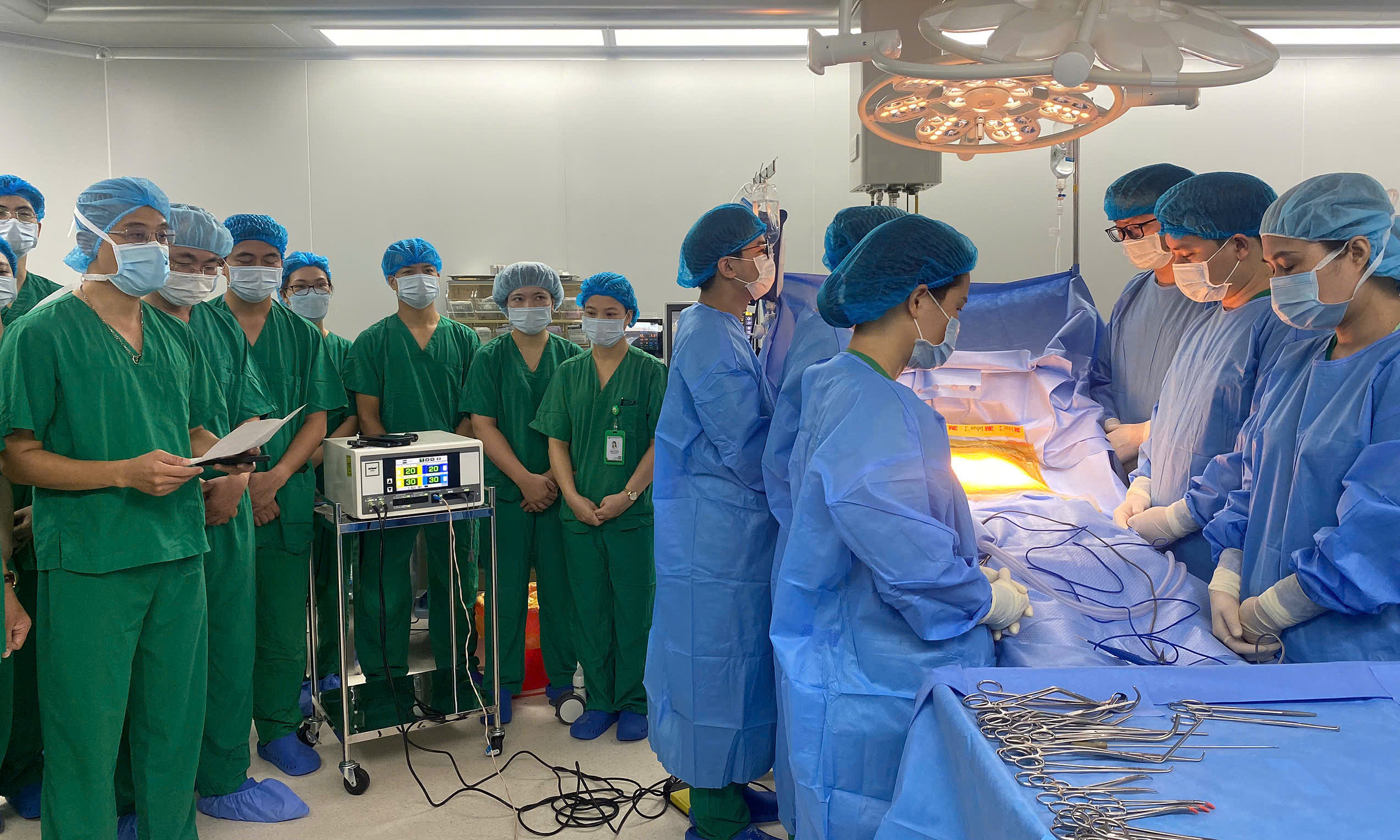 |
Doctors bow in gratitude to the organ donor before performing the retrieval and transplantation. *Photo: Hospital provided* |
In Vietnam, the number of patients suffering from heart failure, liver failure, kidney failure, and other conditions requiring organ transplants is growing. However, the supply of donated organs remains very limited, leaving thousands waiting with faint hope. To date, over 177,000 people nationwide have registered to donate tissues and organs after death. In 2025, 66 cases of brain-dead organ donors were recorded, a significant increase compared to previous years.
Nurse Dinh Thi Thu Nga from the Social Work Department at Xanh Pon General Hospital, shared that the most important aspect of counseling is not persuasion, but helping families truly understand brain death and the humanitarian value of organ donation. Many families, after overcoming the shock of losing a loved one, choose organ donation so that the life of the departed can continue within others.
Organ transplantation is one of the most significant achievements in global medicine since the 20th century. In this field, Vietnam lagged behind the world by 50 years and regional countries by about 20 years. However, today, the country's organ transplantation expertise is on par with many nations. The post-transplant survival rate in Vietnam is even higher than in some developed countries, while costs are significantly lower. In the past two years, hospitals have successfully performed over 1,000 organ transplants annually, the highest in Southeast Asia.
Le Nga