Ms. Lan suffered from headaches for over one month, initially self-medicating with painkillers. When her symptoms worsened recently, she sought treatment at Tam Anh General Hospital TP HCM. An ear, nose, and throat endoscopy revealed thick, cloudy discharge in her nasal passages. A subsequent CT scan showed thickened sinus membranes, sclerotic sinus walls, blockage of the right maxillary and left sphenoid sinuses, and a deviated septum.
Dr. Tran Thi Thuy Hang, Head of the Ear, Nose, and Throat Department, noted a high-density structure in Ms. Lan's right maxillary sinus, indicating probable fungal sinusitis. The doctor recommended surgery to remove the lesions and prevent further complications.
 |
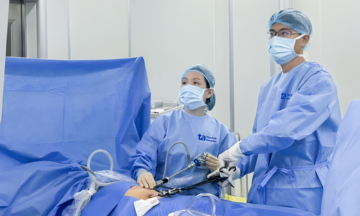
Dr. Hang performing an endoscopy on Ms. Lan. *Photo: Tam Anh General Hospital*
During the endoscopic procedure, Dr. Hang opened the left sphenoid sinus and the right maxillary sinus, observing that the sinus cavities were filled with pus and tissue suspected to be fungal. The middle meatus, bone structures, and ethmoid sinus mucosa were swollen and degenerated. The doctor meticulously removed all suspected tissue for pathological examination, suctioned out the pus, irrigated the sinus cavities, and performed turbinate plasty. Pathology results confirmed the presence of Aspergillus fungus, which Dr. Hang explained is typically dense and dry, often leading to complete obstruction of sinus drainage.
The sphenoid sinus is a deep sinus located close to the skull base and vital neurological structures, including the optic nerve, cavernous sinus, and pituitary gland. When this sinus cavity becomes filled with fungal tissue, inflammatory fluid, and pus, it cannot drain effectively, leading to prolonged pus retention. This creates pressure on the sinus walls and surrounding tissues, directly stimulating pain receptors and causing severe, persistent, and progressively worsening headaches. The fungus also triggers chronic inflammation, which thickens and degenerates the sinus lining, making it less responsive to medication and contributing to persistent headaches.
 |
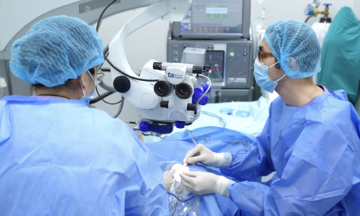
Dr. Hang (right) performing endoscopic sinus surgery on Ms. Lan. *Photo: Tam Anh General Hospital*
Post-surgery, Ms. Lan's health stabilized, and she was discharged after two days. A follow-up examination two weeks later showed good wound healing, resolution of her headaches and posterior neck pain, and no more nasal congestion.
The two primary types of fungi responsible for fungal sinusitis are Aspergillus sp. and Zygomycetes sp., with Aspergillus sp. being more prevalent. Common symptoms include nasal congestion, runny nose, reduced sense of smell, foul-smelling nasal discharge, sinus pain, and fever, often with a poor response to medical treatment. In elderly individuals, fungal sinusitis complications tend to be more severe due to weakened immune systems, which diminish their ability to identify and eliminate microorganisms. Furthermore, the sinus lining and structures in older adults often degenerate, leading to reduced mucus secretion and decreased ciliary movement, which impairs sinus drainage, promotes stagnation, and creates favorable conditions for fungal growth.
Dr. Hang advises individuals experiencing persistent nasal congestion, runny nose, or headaches that do not respond well to medication to consult an ear, nose, and throat specialist. Prevention strategies include wearing masks outdoors, maintaining household hygiene, avoiding damp and moldy environments, daily gargling and nasal rinsing, boosting immunity, and thoroughly treating episodes of rhinitis and pharyngitis.
Uyen Trinh
| Readers can ask questions about ear, nose, and throat conditions here for doctors to answer. |