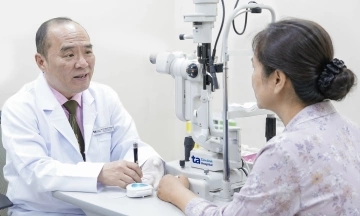
Master of Science, Doctor Nguyen Huu Hieu, from the Department of Pediatrics at Tam Anh Hanoi General Hospital, stated that An had chest indrawing, wheezing and rhonchi in her lungs, and tested positive for Covid-19. Doctors diagnosed her with acute bronchiolitis superimposed on Covid-19.
An was born full-term via C-section but was underweight due to fetal malnutrition. She often had stridor without chest retraction, so her family only monitored her. Doctors provided supportive care to the child with nebulization, mucolytics, and nasal hygiene. They also ordered a chest X-ray to assess lung damage and a nasopharyngeal swab culture to identify the causative agent.
Within hours, the child's respiratory condition deteriorated rapidly, and blood oxygen saturation (SpO₂) dropped to 92% (normal is above 95%). X-ray results showed lung parenchymal damage. Doctors diagnosed respiratory failure due to pneumonia and prescribed aggressive treatment with oxygen therapy and intravenous antibiotics.
After three days of treatment, the child no longer required oxygen. Nasopharyngeal swab culture results identified the causative agent as Methicillin-resistant Staphylococcus aureus (MRSA). Doctor Hieu explained that this is a strain of Staphylococcus aureus bacteria that has developed resistance to many beta-lactam antibiotics, including Methicillin.
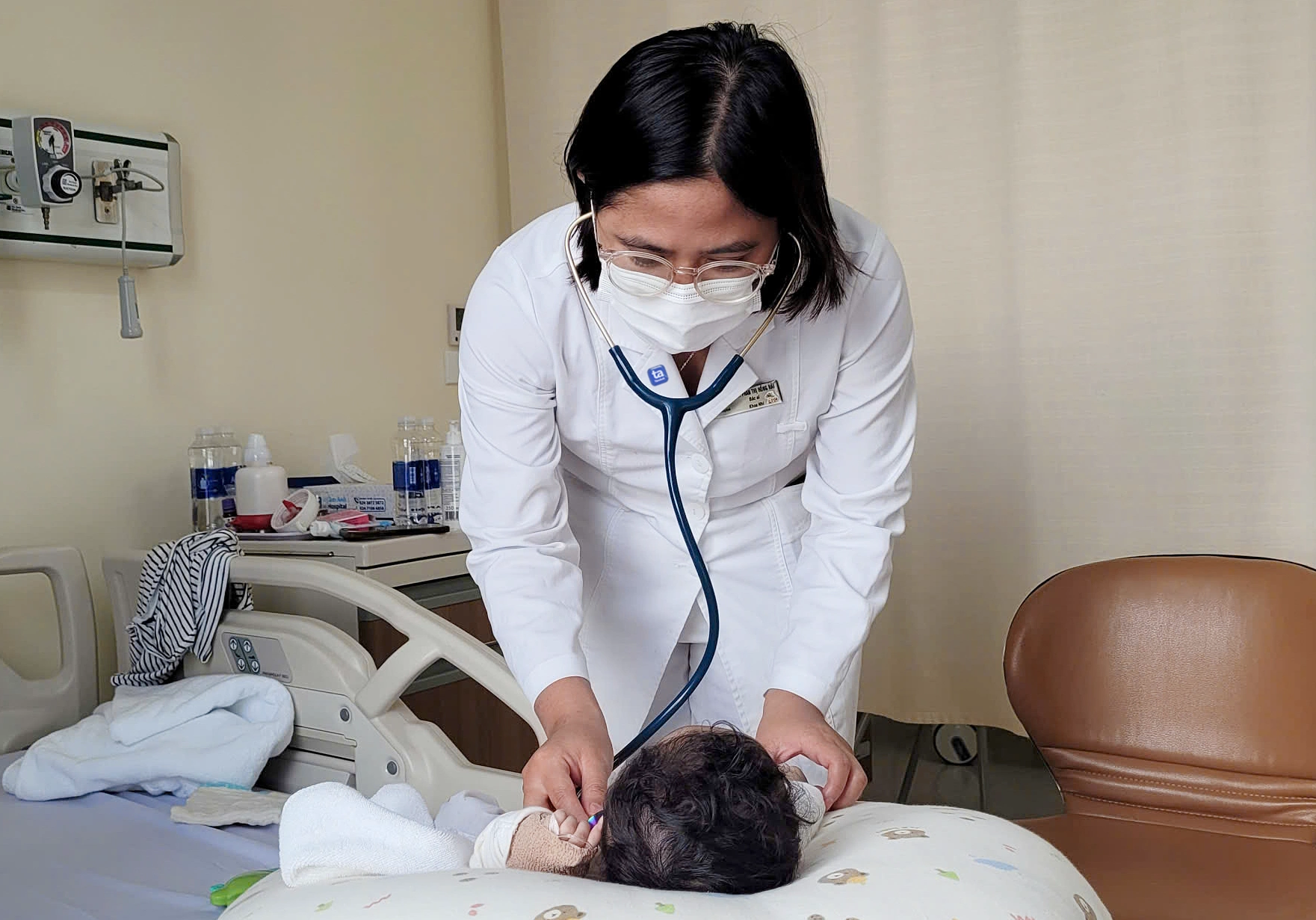 |
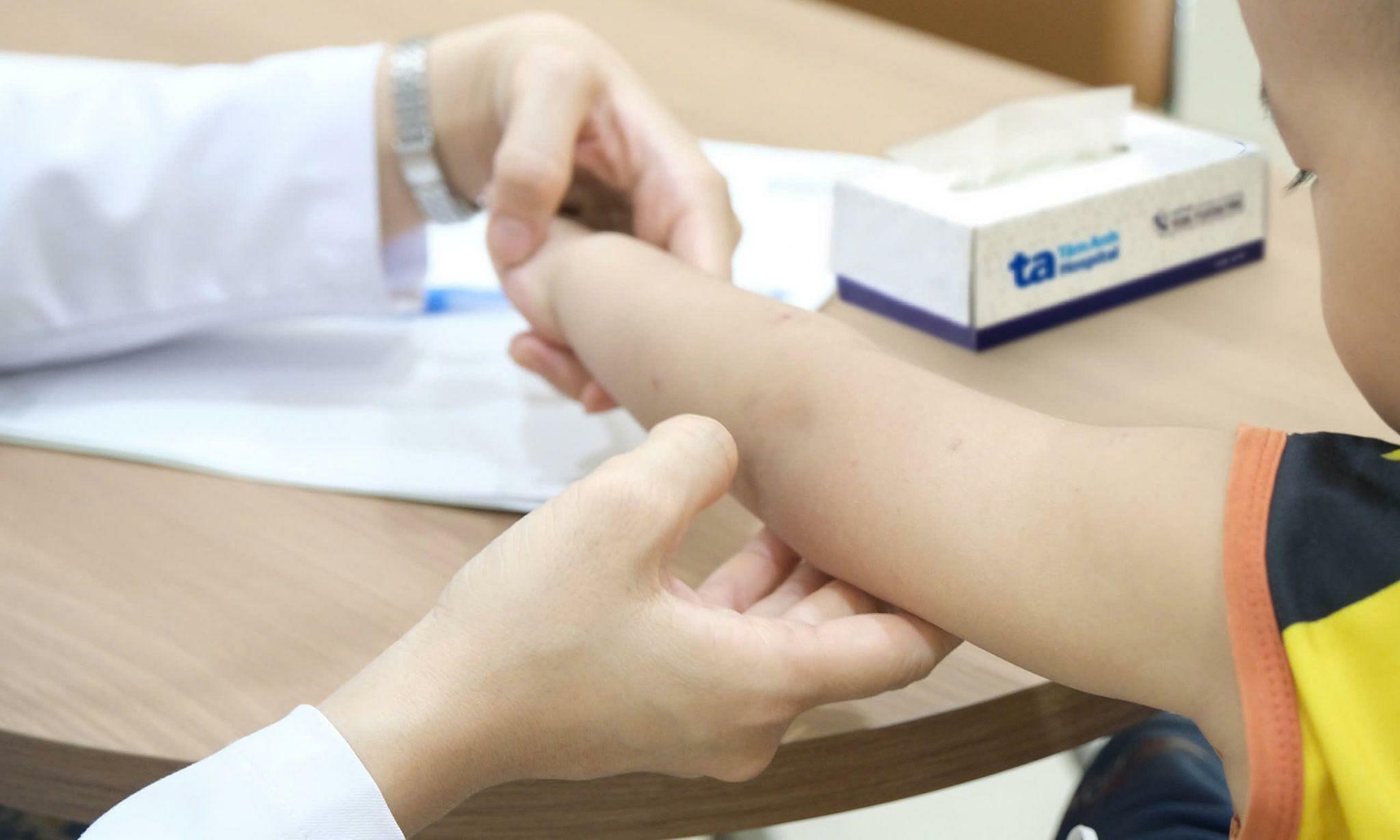
A pediatrician examining An. Photo: Vu Hoang |
A pediatrician examining An. Photo: Vu Hoang
Co-infection with viruses and bacteria is common in young children with respiratory illnesses. When co-infection occurs, the disease often progresses rapidly, with severe symptoms and a high risk of respiratory failure.
Doctor Hieu suggested that in An's case, SARS-CoV-2 damaged the respiratory tract lining, creating conditions for golden staphylococcus, which typically resides on the skin and nasopharyngeal mucosa, to invade deep into the lungs. The bacteria then triggered a strong inflammatory response, leading to widespread lung damage and respiratory failure. Without timely treatment, children can face complications such as lung abscess, necrotizing pneumonia, empyema, and sepsis.
Doctors ordered an antibiogram to determine the susceptibility of golden staphylococcus to specific antibiotics, allowing them to choose appropriate treatment. An responded well, quickly recovered from fever, fed adequately, her breathing rate returned to normal, SpO₂ stabilized on spontaneous breathing, and her lungs were clear.
Given the child's history of prolonged stridor since birth, doctors advised the family to continue screening for airway abnormalities after full recovery. Planned investigations, such as echocardiography and chest CT scans, will help identify the cause of the stridor and assess for airway narrowing if present.
According to Doctor Hieu, the transitional season, with its fluctuating temperatures and humidity, creates favorable conditions for many respiratory pathogens to circulate and spread. Parents should closely monitor children with respiratory illnesses. If a child has a fever lasting over three days, progressively worsening cough, poor feeding, fatigue, poor response to antipyretics, chest indrawing, wheezing, bluish lips, lethargy, or refuses to feed, they should be taken to a medical facility immediately.
To prevent respiratory illnesses, parents should maintain personal hygiene for children and caregivers. Additionally, children should receive all scheduled vaccinations and those recommended for their age, and contact with individuals exhibiting respiratory symptoms should be limited.
Trinh Mai
| Readers can submit questions about children's diseases here for doctors to answer. |