Gallbladder polyps are growths within the gallbladder, often asymptomatic and incidentally found during abdominal ultrasounds. Most gallbladder polyps are benign, with cholesterol polyps being the most common type. A small percentage of polyps, however, carry a risk of malignancy.
The risk of malignancy is assessed based on several factors. Key considerations include the polyp's size, morphology (whether it is pedunculated or sessile), thickening of the gallbladder wall, its growth rate, and the patient's age.
For a 25-year-old patient like you, Tran Tuan Nghia, with a 5 mm polyp, the likelihood of malignancy is low if the gallbladder wall is not thickened and there are no co-occurring hepatobiliary diseases, such as primary sclerosing cholangitis. In such cases, treatment is not typically required. However, it is advisable to consult a doctor for a comprehensive evaluation and appropriate follow-up recommendations.
For gallbladder polyps 15 mm or smaller, cholecystectomy (gallbladder removal) may be recommended if the patient meets surgical criteria. Polyps measuring 10-14 mm with suspicious imaging features, such as being sessile, adjacent gallbladder wall thickening, or significant growth, require surgical cholecystectomy. If polyps 10-14 mm do not exhibit suspicious signs, doctors may consider either monitoring or surgery. Polyps 6-9 mm with suspicious features in patients over 50 years old may also be monitored or surgically removed, depending on their overall health.
Beyond size, the decision for cholecystectomy is made in conjunction with other overall patient factors.
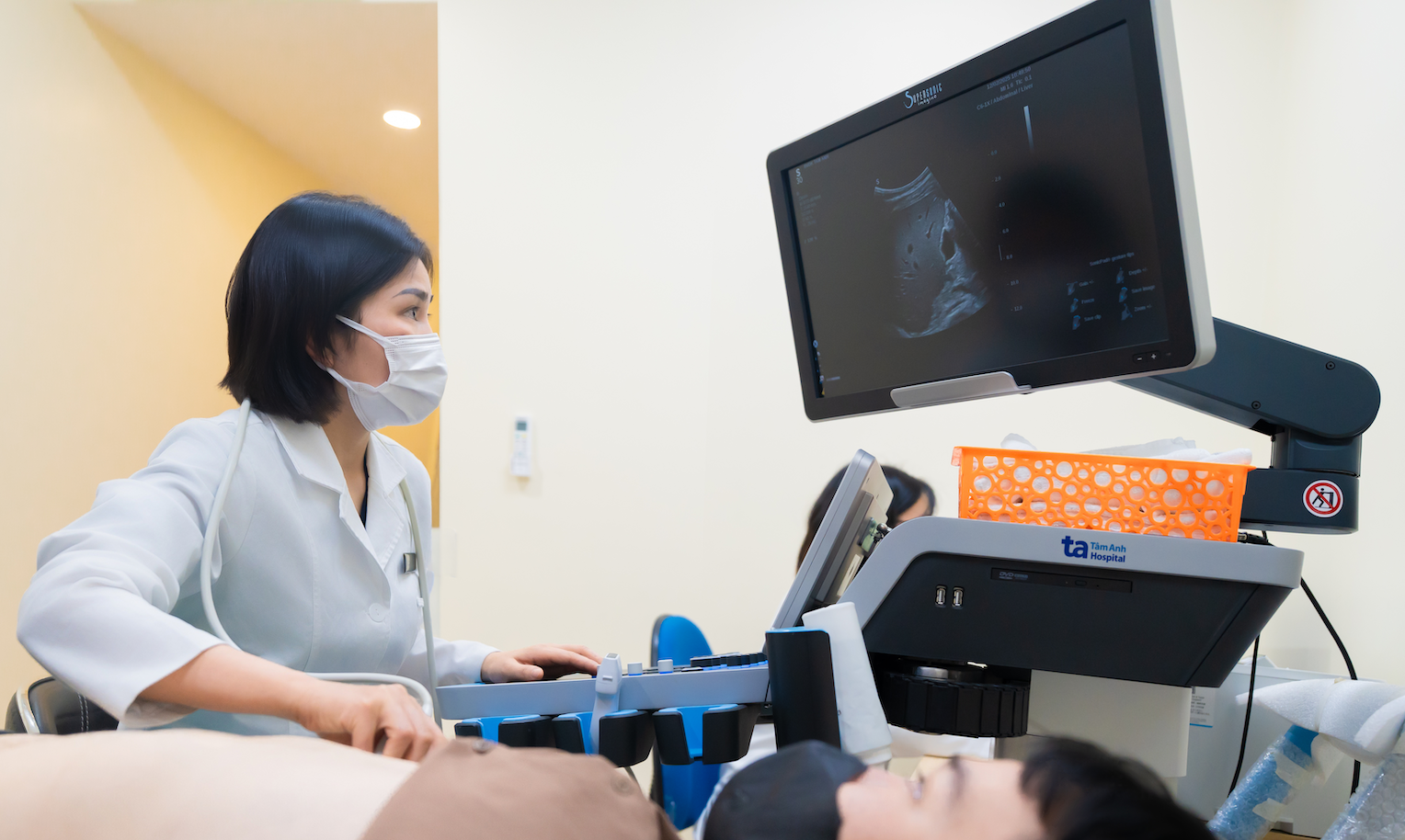 |
A doctor performs an ultrasound to evaluate the patient's liver and gallbladder. Illustration: Benh vien Da khoa Tam Anh
There is no need for excessive worry if small polyps are discovered via ultrasound. Some polyps may change in size or disappear over time. A slight increase in polyp size by a few millimeters does not necessarily indicate malignant transformation.
To protect digestive health, maintain a healthy weight, eat a balanced diet, increase intake of green vegetables and fiber, limit foods high in saturated fat, and engage in regular physical activity. If monitoring is recommended by a doctor, adhere strictly to follow-up appointments and ultrasounds to detect any abnormal changes early.
If experiencing persistent abdominal pain, fever, jaundice, or other unusual symptoms, patients should seek medical attention to determine the cause and receive timely treatment.
Master of Science, Doctor Ha Thi Loan
Department of Gastroenterology, Hepatology, and Pancreatology
Benh vien Da khoa Tam Anh Hanoi
| Readers can submit questions about digestive diseases here for doctors to answer. |