Doctor Nguyen Bach, Head of the Nephrology - Dialysis Department at Thong Nhat Hospital, reported that the male patient was diagnosed with chronic kidney failure due to IgA glomerulonephritis upon emergency admission for severe headaches. His kidney function had severely deteriorated, necessitating regular hemodialysis three times a week.
“At an age when he was just starting his career, his daily life is now tied to dialysis sessions at the hospital,” the doctor shared.
A 38-year-old woman also coincidentally discovered high blood pressure during a vaccination appointment. Perceiving no abnormalities, she did not seek further specialized examination or re-evaluation. A few years later, when she sought medical attention for back pain and swollen legs, she was diagnosed with stage 3 chronic kidney failure. Since then, she has required monthly follow-ups and consistent medication to preserve kidney function and prevent disease progression, as reaching stage 5 necessitates dialysis.
Associate Professor Bach noted that previously, kidney failure was primarily diagnosed in older adults, often linked to hypertension and diabetes. Currently, an increasing number of young patients are being diagnosed with kidney disease, with many cases involving individuals in their early 20s.
In this age group, IgA glomerulonephritis is a common cause. Additionally, uncontrolled medication use, particularly drugs with potential kidney-damaging effects, is a notable concern.
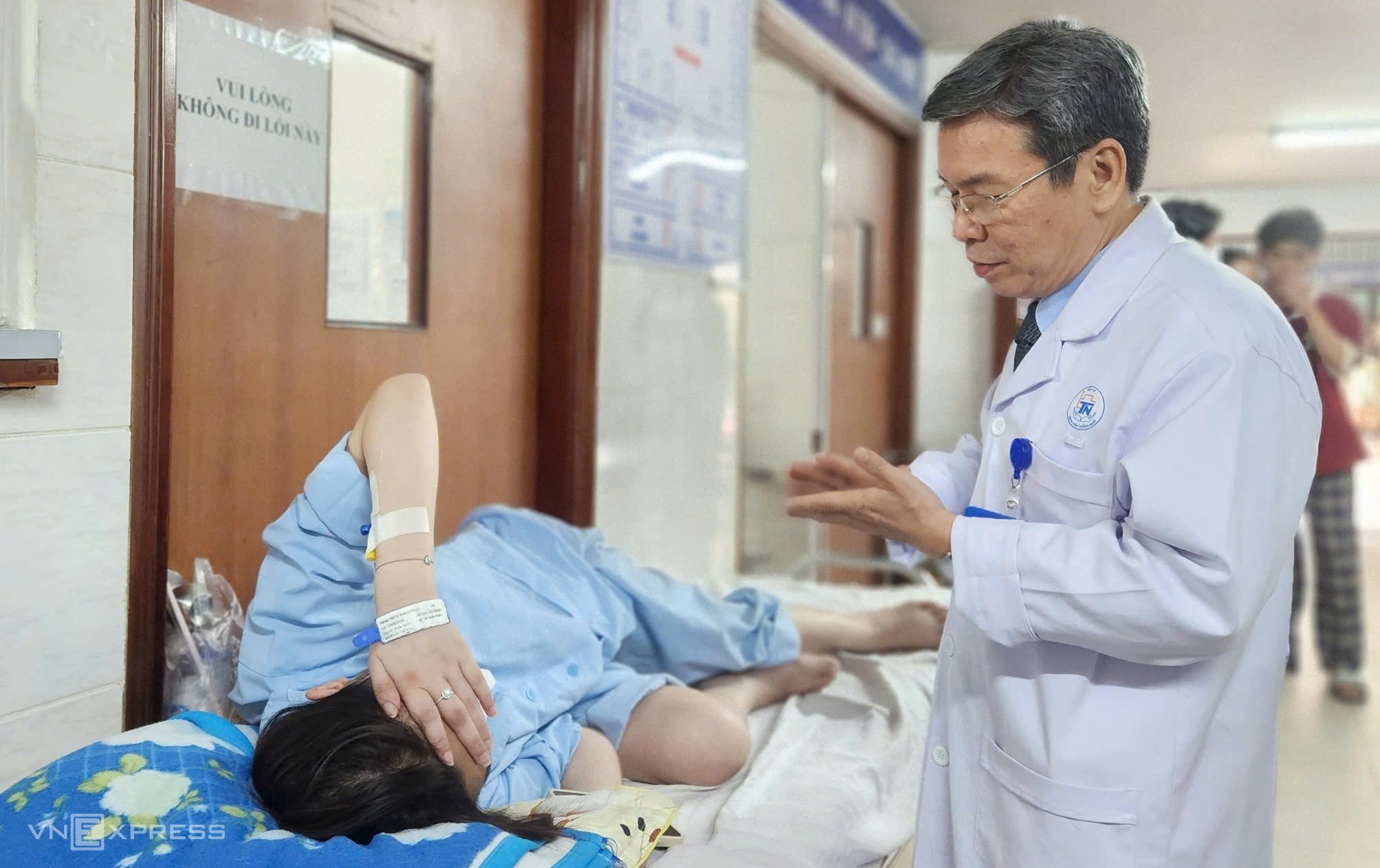 |
Associate Professor, Doctor Nguyen Bach advises a kidney patient. Photo: Le Phuong.
Doctor Bach explained that hypertension and kidney damage form a two-way pathological cycle. Prolonged high blood pressure destroys microvessels and erodes the glomerular filtration membrane. Conversely, impaired kidney function leads to a loss of salt and water excretion, triggering a surge in intravascular pressure. This damage progresses silently, allowing patients in the early stages to maintain normal activities without noticeable symptoms. Young people often believe kidney disease only affects middle-aged or elderly individuals, leading to complacency.
“Many people know they have high blood pressure but feel healthy, so they either don't seek treatment or discontinue medication on their own. By the time symptoms become evident, their kidneys are severely damaged,” Doctor Bach observed. In the later stages, patients experience facial swelling, leg swelling, chronic fatigue, nocturia, loss of appetite, nausea, or paleness due to anemia. Most cases only present to the hospital when the disease has reached stage 3-4 or end-stage, at which point filtration function is irreversible.
Experts advise young individuals who consistently record blood pressure above normal limits across multiple checks to seek immediate hospital screening. Those with a family history of IgA glomerulonephritis or chronic kidney failure should undergo regular blood tests to check creatinine levels, assess glomerular filtration rate, and urine tests for proteinuria to detect the disease early. Patients with high blood pressure or diabetes must adhere strictly to prescribed medication and never stop treatment simply because they feel well.
Adopting habits like reducing salt intake, exercising, maintaining a healthy weight, quitting smoking, and limiting alcohol consumption protects both the cardiovascular system and the kidney's filtration membranes. Furthermore, regular health check-ups, including blood pressure monitoring and urine tests, are simple measures that can aid in early detection of kidney disease.
“When kidney function is still preserved, treatment is far more favorable than when the disease has progressed to the stage requiring dialysis,” Doctor Bach stated.
Le Phuong